

From client onboarding to audit readiness. See how Egnyte helps replace fragmented file servers with a secure, FINRA/SEC-compliant content cloud.
Secure Architecture File Sharing Made Simple
Architecture firms manage some of the most sensitive and complex project data in any industry. From BIM models to client contracts, every file carries financial, legal, and intellectual property risk. Architecture file sharing systems help firms move data safely across teams, offices, job sites, and external partners without slowing project delivery.
Modern cloud storage solutions make it easier to protect large design files while enabling fast collaboration. By strengthening architecture document management and improving file sharing for architects, AEC leaders can reduce operational risk while increasing productivity across projects.
Let’s jump in and learn:
- Main Takeaways
- What Is Secure Architecture File Sharing?
- Why You Need Secure File Sharing in Architecture
- How Secure Architecture File Sharing Works
- When Should Firms Switch to Secure Architecture File Sharing?
- When Complying with Regulatory Standards
- Where to Implement Secure Architecture File Sharing in Your Workflow
- Conclusion
Main Takeaways
- Secure architecture file sharing protects CAD files, BIM models, and specifications with encryption and strict access controls.
- Centralized architecture document management eliminates version confusion and data silos.
- Modern cloud storage solutions support large files without FTP limitations.
- File sharing for architects must include audit trails and compliance reporting.
- Secure collaboration improves speed across design, bidding, and construction workflows.
- Integrated AEC tools enable safer AEC project management across distributed teams.
What Is Secure Architecture File Sharing?
Architecture file sharing refers to the secure transfer of design files, drawings, models, and documents between internal teams and external partners.
Modern platforms combine several security and governance capabilities, including:
- End-to-end encryption
- Role-based access controls
- Secure link sharing
- File activity tracking
- Centralized architecture document management
Unlike consumer tools or email attachments, structured systems create a governed environment where project data remains protected.
With professional cloud storage solutions:
- Every file has defined ownership
- Every access request is authenticated
- Every change is recorded for audit visibility
For example, a global design firm may need to share a 5GB Revit model with consultants in multiple regions. Instead of using unsecured FTP servers, the firm generates a protected link that includes:
- Expiration dates
- Download restrictions
- Watermark protection
- Edit-only permissions for specific collaborators
This approach improves file sharing for architects while maintaining strong control over sensitive intellectual property.
Why You Need Secure File Sharing in Architecture
Architecture firms face growing challenges related to collaboration, cybersecurity, and data governance.
Growing Cyber Threats
AEC firms increasingly face ransomware attacks because they manage valuable project data.
Sensitive information often includes:
- Proprietary building designs
- Financial contracts
- Infrastructure plans
Without proper controls around architecture file sharing, firms risk:
- Project delays
- Intellectual property theft
- Reputation damage
- Contract disputes
- Regulatory penalties
Secure platforms ensure that design files remain protected throughout the collaboration process.
Increasing File Sizes
Modern architecture document management must support extremely large files such as:
- BIM models
- Reality capture datasets
- 3D visualizations
- Drone imagery
Traditional tools like email and FTP servers cannot handle these files efficiently. Advanced cloud storage solutions support large design datasets while maintaining encryption and version control.
Collaboration Across Multiple Stakeholders
Today’s construction projects involve multiple participants including:
- Architects
- Structural engineers
- Contractors
- Consultants
- Clients
Without structured file sharing for architects:
- Version conflicts increase
- Teams access outdated drawings
- Errors propagate to job sites
Modern architecture document management platforms improve coordination by providing:
- Version control
- Real-time syncing
- Centralized construction file management
- Secure external collaboration
Regulatory and Contractual Compliance
Many construction projects must comply with documentation standards such as ISO 19650. These frameworks require:
- Traceable document revisions
- Defined document ownership
- Controlled distribution
Structured architecture file sharing systems support compliance by maintaining complete audit trails across project files.
How Secure Architecture File Sharing Works
A structured process ensures that project data remains protected throughout its lifecycle.
Selecting a File
Users upload or select files from a centralized platform. The system automatically:
- Classifies file types
- Identifies sensitive content
- Applies security policies
- Tags metadata for architecture document management
This ensures files remain organized and searchable.
Encrypting the File
Files are encrypted using AES-256 standards. This ensures:
- Encryption at rest in cloud storage solutions
- Encryption during file transfers
- Zero-trust authentication before access
Encryption ensures intercepted files remain unreadable.
Transferring the File
Secure links allow controlled distribution with features such as:
- Expiration dates
- Password protection
- Download restrictions
- Activity monitoring
These controls are critical when sharing:
- Construction specification documents
- Large BIM models
- Reality capture datasets
Modern cloud storage solutions also accelerate transfers using edge caching across offices and construction sites.
Decrypting the File
When recipients access shared files:
- The system verifies their identity
- Authorized users automatically decrypt files
- No manual encryption keys are required
This ensures a smooth user experience while maintaining security.
Accessing the File
Users can perform multiple actions depending on permissions:
- View files
- Comment on documents
- Edit drawings
- Collaborate in real time
Role-based permissions ensure unauthorized users cannot modify project files.
This structured workflow enables efficient file sharing for architects without sacrificing security.
When Should Firms Switch to Secure Architecture File Sharing?
Many firms delay modernization until problems appear. However, proactive adoption significantly reduces risk.
When Handling Sensitive Client Data
Projects often include confidential information such as:
- Proprietary building designs
- Government infrastructure plans
- Financial documentation
Modern architecture file sharing solutions protect this data using controlled permissions and activity logs.
During Multi-Team Collaboration
Large projects require coordination across multiple firms and locations. Without centralized file sharing for architects:
- Email threads create confusion
- Local storage fragments project data
- Teams lose visibility over updates
Integrated architecture document management improves collaboration within broader AEC project management workflows.
As Project Size and Complexity Increase
large projects require support for:
- Massive BIM models
- Continuous design revisions
- Construction file management across teams
Modern cloud storage solutions allow firms to scale file management without performance bottlenecks.
When Complying with Regulatory Standards
Organizations that must demonstrate compliance with regulations like ISO 19650, data privacy regulations, and client security requirements benefit from structured architecture file sharing environments that track:
- Access history
- File revisions
- Permission controls
Where to Implement Secure Architecture File Sharing in Your Workflow
Secure file collaboration should support the entire project lifecycle.
Design Phase
- Share conceptual drawings securely with clients
- Control edits during internal design reviews
- Protect intellectual property during early collaboration
Bidding and Tendering
- Distribute construction specification documents securely
- Restrict competitor access
- Track downloads and document activity
Construction Phase
- Provide secure access to updated drawings on-site
- Share reality capture in construction datasets across teams
- Maintain synchronized architecture document management
Ongoing Project Governance
- Integrate secure file sharing for architects with AEC project management tools
- Maintain centralized construction file management
- Ensure document continuity across project milestones
For example, a mid-sized architecture firm managing multiple construction projects implemented modern architecture file sharing tools across design and field teams. Within six months they achieved:
- Fewer version conflicts
- Faster synchronization across offices
- Improved compliance visibility during audits
Conclusion
Secure architecture file sharing has become essential for modern AEC firms managing complex projects, distributed teams, and sensitive design data. As file sizes grow and collaboration expands across architects, engineers, contractors, and clients, traditional sharing methods such as email attachments and unsecured file servers create unnecessary risks. Implementing structured systems enables firms to protect intellectual property, maintain accurate version control, and streamline collaboration across the entire project lifecycle, from design reviews and bidding to construction and long-term governance. By combining encryption, centralized architecture document management, and scalable cloud storage solutions, organizations can ensure that critical project information remains protected while teams collaborate more efficiently.
Egnyte enables architecture file sharing through a purpose-built content cloud platform designed for AEC organizations. With advanced encryption, role-based permissions, audit trails, and integrations with leading AEC tools, Egnyte supports secure collaboration across offices, partners, and construction sites. Its centralized approach to architecture document management and construction file management ensures that teams always work with the latest project files while maintaining full visibility and control over sensitive design data.
Frequently Asked Questions
The best time is before a security incident occurs. Firms should implement architecture file sharing solutions when project teams expand, file sizes grow, or compliance requirements increase.
End-to-end encryption protects files during storage and transmission. Only authenticated users can decrypt and access the files, ensuring that intercepted data remains unreadable.
Yes. Modern cloud storage solutions allow secure access through web portals and mobile applications, enabling teams to collaborate from offices, job sites, or remote locations.
No. Most modern platforms integrate with existing AEC tools and allow gradual migration of project files. This makes the transition manageable without disrupting architecture document management workflows.
Important capabilities include:
- End-to-end encryption
- Role-based access controls
- Version tracking
- Audit logs
- Large file optimization
- Integration with AEC project management systems
Encryption converts files into unreadable code during storage and transfer. Even if intercepted, the data remains unusable without authorized credentials.
Yes. Secure platforms allow granular permissions based on role, project, folder, or file type. This ensures precise control in file sharing for architects, engineers, and all those who utilize architecture document management systems.
Egnyte has experts ready to answer your questions. For more than a decade, Egnyte has helped more than 22,000+ customers with millions of users worldwide.
Last Updated: 21st April 2026
Additional Resources

One Platform for Every Engineering File
Streamline collaboration and reduce rework across teams.
Read More

Architectural Workflows, Simplified
Fast, secure access to all project files in one place.
Read More
Secure File Sharing Made Simple
Share content safely while keeping full visibility and control.
Read More
Document Management Strategies for Architecture and Engineering Teams
Architecture and engineering firms generate thousands of drawings, models, contracts, RFIs, and submittals across every project. Without clear structure, teams waste valuable time searching for files, reviewing outdated plans, or resolving disputes.
Effective document management for architects and engineers brings order to this complexity. It aligns office and field teams, protects intellectual property, reduces rework, and helps projects move forward without delays. By implementing strong document management strategies and the right architecture document management software, firms can manage large volumes of technical documentation while maintaining accuracy and accountability.
Let’s jump in and learn:
- Main Takeaways
- Why Is Document Management Vital for Architecture and Engineering Teams?
- What Does an Effective Document Management Strategy Look Like?
- Key Elements of a Successful Document Management Strategy
- Vital Features of a Potent Document Management System
- How a Document Management System Contributes to Risk Management in Architecture and Engineering
- How Egnyte Supports Architecture and Engineering Teams
- Conclusion
Main Takeaways
- Centralized repositories reduce search time and eliminate scattered storage systems.
- Version control prevents costly errors caused by outdated drawings and specifications.
- Role-based access and encryption protect sensitive project data.
- Automation accelerates approvals, RFIs, and submittals.
- Mobile access keeps field teams aligned with the latest revisions.
- Integrated software for file management improves visibility across BIM, CAD, and construction platforms.
Why Is Document Management Vital for Architecture and Engineering Teams?
Architecture and engineering teams operate in highly collaborative environments involving multiple stakeholders. A single project may include:
- CAD drawings and BIM models
- Contracts and compliance documents
- RFIs and change orders
- Submittals and specifications
- Site photos and inspection reports
Without structured document management for architects, firms face:
- Delays caused by version confusion
- Rework due to outdated files
- Compliance risks during audits
- Security vulnerabilities
- Productivity loss from manual file sharing
For example, imagine an engineering team coordinating structural revisions across multiple offices. If a contractor downloads an outdated drawing from email rather than the shared system, the result can be material waste, redesign costs, and project delays.
Strong document management for architects and engineers prevents these issues by ensuring every stakeholder works from a verified and centralized source of truth.
What Does an Effective Document Management Strategy Look Like?
Successful document management strategies combine structure, governance, and technology. They ensure teams can store, manage, and access project files efficiently throughout the project lifecycle.
Clear Organizational Structure
A logical file structure reduces confusion and improves collaboration. Best practices include:
- Organizing folders by project, phase, and discipline
- Standardizing naming conventions
- Creating templates for new project setup
- Automating folder structures for consistency
Modern architecture document management software can automatically provision project folders, ensuring every project starts with the same organized framework.
Strong Access Control and Security
Architecture and engineering firms manage sensitive intellectual property and client data. Effective document management for architects must include strong security controls such as:
- Role-based access permissions
- Multi-factor authentication
- Encryption at rest and in transit
- Ransomware detection and monitoring
These safeguards ensure architects, engineers, consultants, and contractors access only the files relevant to their responsibilities.
Version Control
Version confusion is one of the most expensive risks in construction. Effective version control provides:
- Automatic revision tracking
- Time-stamped histories
- Rollback capability
- Clear identification of the latest file version
Modern engineering document management software eliminates uncertainty by ensuring every stakeholder works from the most current document. These capabilities are also fundamental to strong construction document control practices.
Automation and Integration
Manual document workflows slow projects and increase the risk of human error. Modern systems automate routine tasks and integrate with design and construction tools. Key automation capabilities include:
- Automated approval notifications
- Workflow triggers for RFIs and submittals
- Seamless integration with Autodesk and Procore
- Automatic metadata tagging
When integrated into broader AEC solutions, these features strengthen document management for architects by improving visibility and reducing manual work.
Key Elements of a Successful Document Management Strategy
Centralized Repository
A centralized repository serves as the single source of truth for project documentation. It helps organizations:
- Eliminate file duplication
- Reduce reliance on email attachments
- Ensure universal access to current documents
- Simplify backup and disaster recovery
Cloud-based software for file management enables architecture and engineering teams to store large BIM and CAD files securely without performance limitations.
Consistent Metadata and Tagging
Metadata improves search accuracy and document retrieval. Common tagging practices include:
- Assigning project IDs and disciplines
- Identifying document status such as draft or approved
- Applying revision numbers automatically
- Using searchable attributes for faster discovery
These practices enhance document management for architects and engineers and allow distributed teams to locate critical documents quickly.
Compliance and Regulatory Adherence
Engineering firms must comply with documentation standards such as ISO 19650 and contractual record-keeping requirements. An effective system should support:
- Immutable audit trails
- Document retention policies
- Secure long-term archiving
- Detailed activity tracking
These capabilities ensure document management for architects supports regulatory compliance and protects firms during audits or disputes.
User-Friendly Interface
Even the most advanced architecture document management software will fail if teams struggle to use it. User-friendly systems should provide:
- Intuitive dashboards
- Fast search functionality
- Document previews without downloads
- Mobile-ready interfaces
Ease of use encourages adoption and ensures teams consistently follow established document management strategies.
Vital Features of a Potent Document Management System
Document Indexing and Search Functionality
Modern systems use AI-driven indexing to help teams quickly locate files. Advanced search features allow users to:
- Search inside CAD drawings and PDFs
- Filter results using metadata
- Identify recent revisions
- Locate files instantly
These capabilities dramatically improve document management for architects by reducing time spent searching for documents.
Collaboration Tools
Real-time collaboration tools improve coordination across project stakeholders. Key collaboration features include:
- Inline comments and feedback
- Markups and design annotations
- Secure external sharing portals
- Integration with design review tools
These features strengthen project documents management and enable smoother collaboration between architects, engineers, and contractors.
Audit Trails and Activity Logs
Transparency is essential in large construction projects. Detailed activity logs allow teams to:
- Track who accessed a document
- Monitor edits and revisions
- Review download histories
- Support claims and dispute resolution
These features strengthen governance within engineering document management systems.
Mobile Access
Field teams require reliable access to project documentation while working on-site. Mobile-ready software for file management provides:
- Secure mobile access to project files
- Offline viewing capabilities
- Large file preview capabilities
- Performance optimization in low-bandwidth environments
Mobile accessibility ensures consistent document management for architects across both office and field environments.
How a Document Management System Contributes to Risk Management in Architecture and Engineering
Risk mitigation is one of the primary benefits of strong document management strategies. A structured document system reduces:
- Financial losses caused by rework
- Legal exposure due to missing documentation
- Cybersecurity threats
- Compliance violations
- Project delays caused by miscommunication
For example, a contractor referencing an outdated structural drawing can cause significant material waste and delays. Centralized engineering document management software prevents these situations by ensuring stakeholders always access verified document versions.
Integrated AEC platforms further strengthen governance by linking engineering document management with project execution tools.
How Egnyte Supports Architecture and Engineering Teams
Egnyte’s content cloud is purpose-built to address the complexity of document management for architects and engineers. Key capabilities include:
- Centralized cloud repository for large BIM and CAD files
- Deep integrations with Autodesk and Procore
- Automated project folder provisioning
- Secure collaboration portals for partners and contractors
- Advanced ransomware detection
- Granular permission controls
Egnyte aligns with emerging data management trends in the AEC industry by combining AI-powered search, governance automation, and hybrid cloud flexibility. For architecture and engineering firms, Egnyte provides scalable document management for architects and engineers that support distributed teams without compromising security or performance.
Conclusion
Architecture and engineering firms operate in environments where precision, collaboration, and accountability are essential. Poor documentation practices often lead to delays, costly rework, compliance issues, and disputes among stakeholders. Implementing strong document management for architects enables firms to maintain centralized control over project files, ensure version accuracy, support regulatory compliance, and improve collaboration between teams. By adopting structured document management strategies and modern engineering document management software, organizations can reduce operational risk while improving project efficiency and transparency.
Platforms like Egnyte address these challenges by delivering secure and scalable software for file management tailored to the AEC industry. Egnyte’s content cloud centralizes project documentation, integrates with leading design and construction platforms, and provides advanced security, version control, and collaboration capabilities. This enables architecture and engineering teams to manage complex project documentation more effectively and maintain full visibility across every stage of the project lifecycle.
Frequently Asked Questions
Effective document management for architects centralizes project files so teams can quickly access the latest drawings, models, and specifications. It reduces time spent searching for documents and prevents confusion caused by outdated versions. With automated workflows and organized storage, teams collaborate faster and focus more on design and project delivery.
Yes, a document management system reduces risk by maintaining version control and ensuring teams work with the most current documents. It also protects sensitive project data through secure access controls and detailed audit trails. These capabilities help firms avoid costly errors, compliance issues, and disputes.
In engineering document management, workflows usually follow a lifecycle of document creation, review, approval, distribution, and archiving. Architects and engineers produce design documents that move through internal reviews before being shared with contractors and project stakeholders. Modern systems automate these steps to maintain consistency and efficiency.
An effective strategy combines a centralized repository, standardized file structures, version control, and secure access permissions. It should also include metadata tagging and integration with design tools such as BIM or CAD platforms. These document management strategies ensure teams can manage large volumes of project files efficiently.
Choose a platform that supports large design files, integrates with AEC tools, and offers strong security features. Ease of use, workflow automation, and mobile access are also critical for project teams working across offices and sites. The right engineering document management software should scale with project complexity.
Egnyte provides a secure content cloud platform designed for architecture and engineering document management. It centralizes project files, integrates with tools like Autodesk and Procore, and offers advanced version control and access management. This enables teams to collaborate securely while maintaining full visibility across projects.
Yes, a strong document management strategy improves team productivity and reduces project delays. Organized files, clear version control, and streamlined collaboration help teams work more efficiently. Over time, this leads to faster project delivery and better overall performance.
Egnyte has experts ready to answer your questions. For more than a decade, Egnyte has helped more than 22,000+ customers with millions of users worldwide.
Last Updated: 21st April 2026
Additional Resources
Build Faster With Connected Engineering
Access, share, and secure project files from anywhere.
Read More

Design Together, Anywhere
Share drawings, models, and reviews seamlessly across teams.
Read More

Modern Document Management, Simplified
Organize, secure, and control documents across your entire organization.
Read More
How and What User Behavior Analytics Reveals About How Enterprise Data Is Accessed and Shared
Enterprise data moves constantly. Employees open files, share folders, collaborate externally, and sync content across devices. Without visibility into these actions, risk grows quietly.
User behavior analytics helps organizations understand exactly how enterprise data is accessed and shared. It reveals patterns, detects anomalies, and strengthens governance, all without slowing productivity.
Let’s jump in and learn:
- Main Takeaways
- What Is User Behavior Analytics?
- Why Is User Behavior Analytics Essential in Modern Business?
- How User Activity Monitoring Contributes to User Behavior Analytics
- Where to Integrate User Activity Monitoring for Efficient Data Access
- How Egnyte Can Improve User Behavior Analysis and Activity Monitoring
- Where to Integrate User Activity Monitoring for Efficient Data Access
- When Should an Organization Consider Implementing User Activity Monitoring?
- How AI Is Changing User Behavior and Introducing New Security Threats
- Common Challenges in User Behavior Analytics Implementation
- Conclusion
Main Takeaways
- User behavior analytics helps organizations detect unusual data access patterns early, enabling faster responses to potential data breaches or insider threats.
- File access monitoring provides complete visibility into who accessed, edited, or shared files, helping organizations maintain stronger governance and compliance readiness.
- Access monitoring reveals how employees interact with enterprise data, allowing teams to identify inefficiencies, reduce oversharing, and improve collaboration workflows.
- User activity monitoring captures detailed file interactions such as downloads, edits, and link sharing, helping security teams quickly identify risky or unauthorized behavior.
- Behavioral baselines built through user behavior analysis make it easier to detect abnormal activity triggered by compromised accounts, insider threats, or AI-driven attacks.
- Platforms like Egnyte centralize user behavior analysis, file access monitoring, and access monitoring across cloud and hybrid environments, giving organizations unified visibility and control over enterprise data.
What Is User Behavior Analytics?
User behavior analytics uses machine learning and contextual data to analyze how individuals interact with enterprise systems and files.
Instead of reviewing static logs, it:
- Collects file activity data across cloud and on-prem systems
- Establishes baselines for normal behavior by role, department, and location
- Detects anomalies such as bulk downloads, unusual login times, or atypical folder access
- Assigns risk scores to suspicious actions
For example, a finance manager typically accesses quarterly reports between 9 a.m. and 6 p.m. Suddenly, their credentials download thousands of HR files at midnight from a new device. User behavior analytics flags this deviation instantly.
Organizations exploring what is user behavior analytics quickly realize that it transforms raw system logs into contextual intelligence. When combined with strong user management practices, it ensures users only access what they truly need.
Why Is User Behavior Analytics Essential in Modern Business?
Hybrid work, SaaS adoption, and large-scale file sharing collaboration have increased data exposure. Traditional perimeter security is no longer enough. User behavior analysis provides continuous visibility into how enterprise data moves.
Ensuring Data Security
File access monitoring strengthens protection during data sharing by tracking:
- Who accessed a file
- When they accessed it
- From which device or IP address
- Whether they downloaded, edited, or externally shared it
Key security advantages include:
- Real-time anomaly alerts
- Faster breach detection
- Reduced insider threat exposure
- Clear audit trails for compliance
Consider this example. A healthcare organization detected unusual access to patient records. Behavioral analysis revealed a compromised account. Security teams responded before ransomware deployment occurred.
Access monitoring also helps organizations meet regulatory requirements such as GDPR and HIPAA by maintaining verifiable logs of sensitive file interactions.
Enhancing Business Operations
Security is only half the story. Behavior analytics also improves operational efficiency.
It helps teams:
- Identify redundant file storage
- Reduce oversharing across departments
- Detect inactive or orphaned shared folders
- Improve collaboration workflows
A manufacturing enterprise analyzed access monitoring data and discovered employees were repeatedly searching for outdated versions of technical drawings. By restructuring folder permissions and improving governance, they reduced file search time significantly.
Understanding how data is accessed directly improves productivity.
How User Activity Monitoring Contributes to User Behavior Analytics
User activity monitoring is the foundation of behavior analytics. Without granular data, meaningful behavioral insights are impossible.
User activity monitoring captures:
- File views, edits, downloads, and deletions
- Shared link creation and expiration
- Device types and geolocation
- External collaboration activity
- Permission changes
This continuous tracking enables:
- Accurate baseline creation
- Peer-group comparisons
- Context-aware anomaly detection
- Risk prioritization
Consider this scenario:
- A software company executive’s account begins accessing engineering source code.
- User activity monitoring detects the anomaly.
- User behavior analytics compares it against normal executive access patterns.
- The system flags it as high risk.
- Security teams intervene before intellectual property leaves the organization.
Granular monitoring transforms passive logs into proactive defense.
Where to Integrate User Activity Monitoring for Efficient Data Access
Shared folders often represent the highest-risk area in enterprise environments.
To monitor shared folder activity effectively, organizations should:
- Track external user access
- Identify publicly accessible links
- Review stale shared folders
- Enforce expiration policies
- Monitor bulk downloads from shared drives
For example, a professional services firm discovered multiple legacy shared folders still accessible to former contractors. File access monitoring exposed the oversight. Automated governance removed outdated permissions.
Monitoring shared folder activity reduces accidental data leaks while supporting secure collaboration.
How Egnyte Can Improve User Behavior Analysis and Activity Monitoring
Egnyte’s content cloud platform delivers advanced user behavior analytics across hybrid environments.
Its capabilities include:
- AI-driven anomaly detection
- Centralized file access monitoring dashboards
- Real-time access monitoring alerts
- Automated policy enforcement
- Risk scoring for suspicious activity
- Integrated governance controls
Egnyte provides visibility into what data gets shared across internal and external users. Administrators can:
- Monitor shared folder activity in real time
- Identify risky external links
- Automatically revoke access upon suspicious behavior
- Generate compliance-ready audit reports
A global financial services firm used Egnyte to consolidate file access monitoring across multiple repositories. The platform surfaced abnormal download patterns linked to a compromised account. Automated controls restricted access instantly.
By unifying user behavior analytics with governance and collaboration, Egnyte reduces manual oversight while improving control.
Where to Integrate User Activity Monitoring for Efficient Data Access
To maximize impact, integrate monitoring across critical environments, including:
- Cloud storage platforms
- Microsoft 365 and Google Workspace
- CRM and ERP systems
- Engineering repositories
- Sensitive financial and HR directories
- External file sharing collaboration portals
Organizations should prioritize areas where:
- Sensitive IP resides
- Third-party collaboration occurs
- Regulatory compliance applies
- Data volume is high
By aligning user activity monitoring with business risk zones, companies improve both security and operational clarity.
When Should an Organization Consider Implementing User Activity Monitoring?
Organizations should not wait for a breach.
Implementation becomes urgent when:
- Hybrid or remote work expands
- Mergers or acquisitions increase data complexity
- Compliance audits grow more frequent
- External collaboration rises
- AI tools introduce new access patterns
- Insider threat risks increase
Early adoption ensures organizations build behavioral baselines before incidents occur.
How AI Is Changing User Behavior and Introducing New Security Threats
AI tools have reshaped how employees interact with enterprise content.
New risks include:
- Shadow AI tools accessing confidential files
- Prompt injection attacks extracting sensitive information
- Automated scripts downloading large datasets
- Deepfake impersonation attempts
These threats alter traditional access patterns.
User behavior analytics helps detect:
- Unusual spikes in file queries
- Unexpected data aggregation activity
- Behavioral deviations triggered by AI misuse
Egnyte applies AI safeguards that respect permissions and prevent unauthorized data exposure. Behavioral baselines make it easier to identify when AI-enabled activity deviates from expected norms.
Common Challenges in User Behavior Analytics Implementation
Organizations often face obstacles such as:
- High data volumes
- False positives
- Integration complexity
- Privacy concerns
- Fragmented monitoring tools
Best practices to overcome these include:
- Leveraging AI-driven risk scoring
- Centralizing monitoring into a unified platform
- Applying role-based access controls
- Regularly tuning anomaly thresholds
Selecting a scalable cloud solution reduces operational overhead and improves accuracy.
Conclusion
User behavior analytics provides critical visibility into how enterprise data is accessed and shared. It strengthens security, improves compliance readiness, and enhances operational efficiency. By combining user activity monitoring, file access monitoring, and intelligent access monitoring, organizations gain actionable insight instead of fragmented logs.
Egnyte unifies analytics, governance, and secure collaboration into a single platform built for modern enterprises. With deeper visibility into data access patterns, organizations can proactively reduce risk, strengthen governance, and ensure sensitive information remains protected across distributed teams.
Frequently Asked Questions
User activity monitoring records every interaction with enterprise files, including views, edits, downloads, and sharing actions. This visibility helps organizations detect unauthorized access, prevent data leaks, and investigate security incidents quickly. It also creates detailed audit trails that support regulatory compliance. Without continuous monitoring, unusual or risky access patterns can go unnoticed until significant damage has already occurred.
A reliable platform strengthens user behavior analytics by centralizing activity logs from multiple applications and applying AI-driven anomaly detection. It establishes contextual behavioral baselines, reducing false positives and highlighting genuinely risky activity. By integrating analytics with governance controls, such platforms allow security teams to focus on high-risk events instead of manually reviewing thousands of routine file interactions.
The best time to implement user activity monitoring is before a security incident occurs. Organizations should consider it when expanding remote work, managing sensitive intellectual property, preparing for regulatory audits, or increasing external collaboration. Establishing monitoring early allows businesses to build behavioral baselines, strengthen governance, and detect suspicious activity faster.
Organizations often face challenges such as excessive alerts, fragmented data across multiple cloud platforms, and limited visibility into shared folder activity. Security teams may also struggle to correlate individual actions with broader behavioral patterns. Modern platforms address these issues using AI-driven filtering, centralized access monitoring, and contextual analytics that prioritize meaningful threats while reducing unnecessary alerts.
Cloud-based solutions deliver comprehensive monitoring by collecting activity data across distributed environments in real time. They provide scalable data processing, centralized dashboards, automated policy enforcement, and continuous compliance reporting. By integrating user behavior analytics directly into collaboration workflows, cloud platforms give organizations deeper visibility into data access patterns while maintaining strong governance and secure file sharing.
Egnyte has experts ready to answer your questions. For more than a decade, Egnyte has helped more than 22,000+ customers with millions of users worldwide.
Last Updated: 21st April 2026
Additional Resources
AI Intelligence for Your Content
Instantly detect risks, classify data, and boost productivity.
Read More
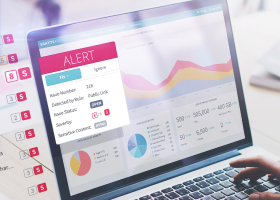
Turn Content Into Intelligence
Get real-time visibility, context, and automated actions.
Read More

Understand User Behavior Instantly
AI-driven insights to identify abnormal user behavior.
Read More
How Document Intelligence Helps Organizations Understand and Use Unstructured Data
Organizations generate vast amounts of content every day. Much of it exists in emails, contracts, PDFs, images, reports, and collaboration tools. While this information holds valuable insights, it often remains difficult to access, analyze, and use effectively because it exists as unstructured data.
Document intelligence addresses this challenge by applying AI-driven technologies to understand, extract, and organize information from documents. Instead of manually reviewing files or searching through scattered repositories, organizations can automatically convert unstructured content into structured, searchable, and actionable data. In today’s data-driven environment, this capability is becoming essential. By transforming documents into usable insights, document intelligence helps organizations improve efficiency, strengthen compliance, and make faster, more informed decisions.
Let’s jump in and learn:
- Main Takeaways:
- Understanding Document Intelligence
- The Evolution of Document Intelligence
- The Power and Prevalence of Unstructured Data
- Types of Unstructured Data in Organizations
- Challenges Associated with Managing Unstructured Data
- How Does Document Intelligence Help Decode Unstructured Data?
- Enhancing Data Analysis and Decision-Making
- Overcoming Security Challenges with Structured Data
- Using Document Intelligence to Drive Organizational Efficiency
- Modern Strategies for Successfully Implementing Document Intelligence
- Realizing the Potential of Document Intelligence with Egnyte
- Conclusion
Main Takeaways:
- Document intelligence unlocks value from the 80–90% of enterprise data that exists outside structured databases.
- AI document processing automates data extraction and classification, reducing manual effort by up to 70% in document-heavy workflows.
- AI document management improves governance, security, and compliance by tagging and structuring sensitive information.
- Intelligent automation accelerates decision-making across legal, finance, life sciences, AEC, and other industries.
- Egnyte’s AI content intelligence integrates extraction, security, and governance within a unified content cloud platform.
Understanding Document Intelligence
Defining Document Intelligence
Document intelligence uses AI to analyze, interpret, and extract meaningful information from documents.
It combines:
- Optical Character Recognition (OCR) to read scanned files
- Natural Language Processing (NLP) to understand context
- Machine learning models to classify and extract key data
- Layout detection to interpret tables, forms, and structured elements
AI document intelligence transforms messy documents into structured outputs that systems can analyze and use. For example:
- A healthcare provider extracts patient details from intake forms
- A bank captures financial data from loan applications
- A law firm identifies key clauses across thousands of contracts
Instead of manual review, systems process content automatically and consistently.
The Evolution of Document Intelligence
Document intelligence has evolved significantly over the last three decades:
- 1990s: Rule-based OCR systems with limited adaptability
- 2010s: Machine learning improves recognition accuracy
- Today: AI-powered contextual understanding with generative models
Modern AI document processing handles:
- Complex layouts
- Handwritten notes
- Multi-language documents
- Audio and video transcripts
Unlike earlier systems, today’s platforms continuously learn and scale across millions of files.
The Power and Prevalence of Unstructured Data
What Is Unstructured Data and Why Is Structuring It Crucial?
Unstructured data does not follow a predefined format like database rows and columns.
Examples include:
- Emails
- PDFs
- Word documents
- Images
- Video files
- Chat conversations
Industry estimates suggest that over 80% of enterprise data is unstructured. Without structure:
- Teams struggle to search effectively
- Automation becomes impossible
- Compliance risks increase
- Decision-making slows
Understanding the difference between structured vs unstructured data is critical for modern data strategy.
Structuring this content allows organizations to:
- Enable analytics and reporting
- Improve AI model accuracy
- Strengthen governance
- Reduce operational inefficiencies
Types of Unstructured Data in Organizations
Most enterprises manage:
Contracts and legal agreements
Financial reports and invoices
Engineering drawings and specifications
Clinical trial documentation
Customer emails and support tickets
Multimedia training materials
Each category holds valuable insights. But without document intelligence, extracting that value requires manual effort.
Challenges Associated with Managing Unstructured Data
Organizations face consistent pain points while managing unstructured data:
- Massive data growth across cloud and on-prem systems
- Poor searchability due to lack of metadata
- Data silos between departments
- Manual document review processes
- Security risks from untagged sensitive information
- Compliance challenges in regulated industries
Traditional document management systems cannot fully address these issues without AI-driven structuring capabilities.
How Does Document Intelligence Help Decode Unstructured Data?
Extraction of Useful Information
Document intelligence automatically extracts key fields such as:
- Names
- Dates
- Invoice numbers
- Contract clauses
- Payment terms
- Regulatory references
Using AI document processing, systems:
- Identify patterns without fixed templates
- Adapt to different document formats
- Improve accuracy over time
- Output structured datasets for downstream systems
For example, a financial institution processes thousands of loan documents daily.
Instead of manual entry, AI extracts applicant data and populates core systems instantly. This dramatically reduces turnaround time.
Enhancing Data Analysis and Decision-Making
Once structured, document data becomes actionable.
Leaders can:
- Identify contract risks across portfolios
- Track compliance obligations
- Analyze vendor performance
- Detect anomalies in financial reports
Consider this example. A private equity firm uses AI to analyze due diligence documents across acquisitions. Insights that once took weeks now surface in hours. With structured outputs, analytics tools deliver real-time dashboards and predictive insights.
Overcoming Security Challenges with Structured Data
Security improves when systems understand content.
Document intelligence enables:
- Automatic identification of PII and sensitive data
- Policy-based encryption
- Role-based access controls
- Audit-ready logs
Egnyte’s AI content intelligence strengthens governance by embedding intelligence directly into the content layer.
So, organizations can:
- Prevent unauthorized sharing
- Enforce retention policies
- Simplify regulatory audits
Structured visibility reduces risk exposure significantly.
Using Document Intelligence to Drive Organizational Efficiency
Operational efficiency improves when repetitive work disappears.
With AI document management, organizations can:
- Automatically classify documents upon upload
- Route files through intelligent workflows
- Summarize long reports instantly
- Generate metadata automatically
- Trigger compliance alerts
For example, a global law firm processes 10,000 contracts annually. Document intelligence helps reduce review time by 50%. This allows attorneys to focus on strategic advisory work instead of manual scanning.
Similarly, a life sciences company accelerates regulatory submissions by extracting structured data from trial documentation.
An AEC firm quickly locates project drawings across distributed teams.
Efficiency gains translate directly into cost savings and faster decision cycles across industries.
Modern Strategies for Successfully Implementing Document Intelligence
Successful deployment requires strategic planning.
Organizations should:
- Conduct a full audit of unstructured content sources
- Identify high-impact use cases (e.g., invoices, contracts, compliance files)
- Launch pilot projects in document-heavy departments
- Integrate with existing ERP, CRM, and analytics systems
- Establish governance policies for AI-driven workflows
- Train teams to interpret AI outputs effectively
- Continuously monitor accuracy and retrain models
Cloud-native platforms accelerate deployment and scalability.
Integration with secure document management systems ensures intelligence and governance work together seamlessly.
Realizing the Potential of Document Intelligence with Egnyte
Egnyte’s content cloud combines security, governance, and document intelligence in one platform.
With Egnyte, organizations can:
- Deploy AI document processing across enterprise repositories
- Leverage AI document intelligence for contextual extraction
- Automate classification and metadata tagging
- Search across text, images, audio, and video
- Maintain enterprise-grade compliance and data protection
Egnyte’s AI content intelligence provides:
- Deep semantic search
- Automated summaries
- Smart content recommendations
- Policy enforcement at scale
How different industries leverage Egnyte:
- Investment firms use Egnyte to gain visibility into regulatory documents.
- Compliance teams respond to audits faster.
- Risk teams identify sensitive data instantly.
Unlike disconnected tools, Egnyte unifies intelligence and governance within a single secure environment. If your organization depends on high-volume document processing, Egnyte helps transform static files into strategic assets.
Conclusion
Unstructured data dominates the modern enterprise landscape. When left unmanaged, it slows decision-making, increases operational risk, and consumes valuable time and resources. Document intelligence changes this dynamic by extracting, organizing, and activating information at scale. When combined with AI document processing and AI document management, it transforms static documents into structured, governed, and actionable data that organizations can use to drive better outcomes.
By automating manual work, strengthening compliance processes, accelerating access to insights, and improving data security, document intelligence enables organizations to unlock the true value of their enterprise content. Egnyte brings these capabilities together within a secure and scalable content cloud platform, helping organizations turn information into a strategic advantage.
Frequently Asked Questions
Document intelligence uses AI technologies such as OCR and natural language processing to analyze and extract information from files like PDFs, emails, and images. It converts unstructured content into structured, searchable data, making it easier for organizations to manage large volumes of documents and access insights quickly.
Yes. Document intelligence automates repetitive tasks such as data extraction, document classification, and information retrieval. This reduces manual work, speeds up workflows, and allows teams to focus on higher value activities like analysis and decision-making.
Organizations should begin by identifying document-heavy workflows where automation can deliver the most value. Running pilot projects, integrating AI tools with existing systems, and continuously monitoring accuracy can help ensure successful and scalable implementation.
Yes. Egnyte’s content cloud provides built-in document intelligence capabilities that combine AI document processing with secure document management and governance. This allows organizations to extract insights from documents while maintaining strong security and compliance.
Yes. Organizations across industries are benefiting from document intelligence. Les Mills used Egnyte’s AI-powered lifecycle management to analyze 100TB of data and identify 1.6 million duplicate files, improving governance and reducing storage costs. Meanwhile, Endpoint Clinical built an audit data management platform with Egnyte to securely deliver clinical trial audit logs to investigators and regulators, strengthening compliance and protecting data integrity.
Egnyte has experts ready to answer your questions. For more than a decade, Egnyte has helped more than 22,000+ customers with millions of users worldwide.
Last Updated: 21st April 2026
How AI Knowledge Management Connects Information Across the Organization
Organizations generate massive volumes of data every day. Yet, most teams still struggle to find the right information at the right time. AI knowledge management solves this problem by intelligently connecting content across systems, teams, and workflows. Instead of acting as passive storage, modern platforms actively surface insights, automate processes, and protect sensitive information. Here’s how organizations can use AI to transform knowledge into a strategic advantage.
Let’s jump in and learn:
- Main Takeaways
- Why Is AI Knowledge Discovery Essential in Modern Organizations?
- Understanding the Connection Between AI and Knowledge Management
- How AI Transforms Information Connectivity in Businesses
- Ensuring Efficient Access to Relevant Information Using AI
- Streamlining Company-Wide Data Exchange With AI Tools
- Boosting Workplace Collaboration Through AI-Driven Knowledge Management
- Organizational Benefits Derived From Implementing AI in Knowledge Management
- Safeguarding Connected Knowledge
- Your Secret to Enhancing Information Connectivity and Accessibility
- How to Integrate MCP Server and Client Into Your AI Knowledge Management
- Upkeeping Security and Admin Level Controls for AI Knowledge Management
- Conclusion
Main Takeaways
- AI knowledge management connects fragmented data across departments and systems.
- AI knowledge discovery reduces search time and improves decision speed.
- An AI-based knowledge management system automates tagging, classification, and content recommendations.
- The role of artificial intelligence in knowledge management extends beyond search to security, compliance, and workflow automation.
- Modern knowledge management software strengthens collaboration while maintaining enterprise-grade governance.
Why Is AI Knowledge Discovery Essential in Modern Organizations?
Businesses store information across:
- Cloud drives
- CRM systems
- Collaboration tools
- Email threads
- On-prem repositories
This fragmentation creates silos. Employees waste hours searching for documents, policies, contracts, or project files.
AI knowledge discovery addresses this challenge by:
- Scanning structured and unstructured data across systems
- Using semantic search to understand user intent
- Automatically tagging files with intelligent metadata
- Ranking results based on relevance, role, and behavior
For example, a sales leader searching for “enterprise pricing deck” will find the most current approved version at the top of the results. A legal team preparing a contract instantly surfaces compliance clauses from past agreements.
According to McKinsey, employees spend nearly 20% of their workweek searching for internal information. AI reduces that friction dramatically.
Understanding the Connection Between AI and Knowledge Management
Traditional knowledge management software focused on storage and organization. AI elevates this into a dynamic, intelligent system.
The role of artificial intelligence in knowledge management includes:
- Natural Language Processing (NLP) to interpret conversational queries
- Machine learning models that learn from user behavior
- Automated content classification
- Predictive recommendations
Instead of manually organizing folders, AI systems:
- Detect document types
- Identify sensitive data
- Suggest collaborators
- Recommend next actions
So, for example, a healthcare organization can link patient research, compliance policies, and regulatory updates automatically. Or, an engineering firm can connect design files with project documentation across global teams.
This shift turns content repositories into intelligent ecosystems.
How AI Transforms Information Connectivity in Businesses
Siloed data slows innovation. AI knowledge management builds connective tissue across the enterprise.
Key transformation mechanisms include:
- Centralized intelligent indexing across cloud and hybrid environments
- Federated search that queries multiple platforms without moving data
- Semantic linking between related documents
- Context-aware recommendations
Egnyte’s AI-driven platform enhances connectivity through capabilities like AI content intelligence, enabling deeper visibility into content patterns and usage trends.
In practice, this means:
- Marketing can access engineering specs instantly.
- Finance can retrieve updated contracts without emailing legal.
- Leadership teams can view dashboards powered by unified information streams.
The result: faster execution and fewer operational bottlenecks.
Ensuring Efficient Access to Relevant Information Using AI
Access is not just about speed. It’s about relevance.
AI improves access by:
- Prioritizing results based on role and department
- Highlighting the latest approved versions
- Filtering outdated or duplicate files
- Delivering proactive recommendations
Consider a global product launch scenario:
- Legal teams receive compliance documentation automatically.
- Marketing teams access brand assets instantly.
- Regional teams retrieve localized materials without manual coordination.
AI knowledge management ensures everyone works from a single source of truth.
Streamlining Company-Wide Data Exchange With AI Tools
Data exchange often relies on email attachments and manual sharing. AI eliminates that inefficiency.
An advanced AI-based knowledge management system enables:
- Automated file routing and approval workflows
- Smart collaborator suggestions
- Real-time co-authoring insights
- Version tracking and rollback
Capabilities such as AI workflow automation allow organizations to:
- Trigger approval chains automatically
- Escalate tasks when deadlines approach
- Reduce manual oversight
We can better understand this through an example. A financial services firm can automate loan approval documentation reviews. Or, a pharmaceutical company can streamline regulatory submissions across regions.
This reduces risk while accelerating throughput.
Boosting Workplace Collaboration Through AI-Driven Knowledge Management
Collaboration improves when knowledge flows freely and securely.
AI strengthens collaboration by:
- Recommending subject matter experts
- Suggesting relevant project files
- Detecting duplicate efforts
- Integrating with collaboration tools like Microsoft Teams
For distributed enterprises, this ensures:
- Global teams remain aligned
- Knowledge persists beyond employee turnover
- Institutional expertise becomes searchable and reusable
Knowledge management software powered by AI reduces dependency on tribal knowledge and informal communication channels.
Organizational Benefits Derived From Implementing AI in Knowledge Management
Executives evaluating AI knowledge management typically focus on measurable outcomes.
Proven benefits include:
- Faster strategic decision-making
- Reduced operational redundancy
- Improved compliance posture
- Stronger data governance
- Increased employee productivity
For enterprises, AI delivers:
- Scalable infrastructure for hybrid environments
- Reduced IT overhead
- Enhanced visibility into content risk
When implemented correctly, AI knowledge management becomes a growth enabler, not just a productivity tool.
Safeguarding Connected Knowledge
Connectivity must never compromise security.
Modern platforms incorporate AI in data security examples such as:
- Anomaly detection for unusual access patterns
- Automated classification of sensitive data
- Policy-based access controls
- Real-time risk scoring
Let’s understand this better with a real-world scenario. Consider an employee who is attempting to download large volumes of confidential data. AI flags the behavior immediately. Security and intelligence must work together. AI ensures both.
Your Secret to Enhancing Information Connectivity and Accessibility
Organizations seeking stronger connectivity need more than search functionality. They need an integrated platform that combines:
- Intelligent discovery
- Secure collaboration
- Automated governance
- Scalable cloud architecture
Many leaders exploring what is data management software discover that the next evolution includes embedded AI capabilities. An AI-based knowledge management system unifies content while preserving compliance and visibility.
How to Integrate MCP Server and Client Into Your AI Knowledge Management
For enterprises operating hybrid environments, integration is critical.
An MCP (Managed Content Platform) Server and Client configuration enables:
- Secure synchronization between on-prem and cloud repositories
- Unified indexing across environments
- Seamless user authentication
- Controlled data flows
Integration typically involves:
- Deploying the MCP server in your infrastructure
- Configuring endpoints through the client interface
- Connecting AI indexing engines
- Testing cross-system queries
This ensures that AI knowledge discovery works across every data source without compromising control.
Upkeeping Security and Admin Level Controls for AI Knowledge Management
Governance remains essential at scale.
Best practices include:
- Role-based access controls
- Encryption at rest and in transit
- Real-time administrative dashboards
- Automated lifecycle management
- Immediate access revocation
The role of artificial intelligence in knowledge management also extends to compliance monitoring. AI can detect policy violations and enforce corrective action automatically. This level of oversight is critical for industries such as healthcare, finance, and life sciences.
Conclusion
AI knowledge management helps organizations transform scattered data into connected, usable knowledge. By enabling faster discovery, improving collaboration, and ensuring secure access to information, AI allows teams to work more efficiently and make better decisions. As businesses generate more data across systems and departments, intelligent knowledge management becomes essential for maintaining productivity, reducing operational friction, and ensuring that the right information reaches the right people at the right time.
Egnyte enables organizations to unlock these advantages through its AI-powered content cloud platform. By combining advanced AI knowledge discovery, intelligent content classification, secure collaboration tools, and automated governance capabilities, Egnyte enables enterprises to connect information seamlessly across teams and systems. Features such as AI-driven search, intelligent workflow automation, and built-in security controls ensure that organizations can access critical knowledge quickly while maintaining compliance and data protection. For enterprises seeking a scalable AI-based knowledge management system, Egnyte provides the intelligence, visibility, and control needed to manage content securely and efficiently.
Frequently Asked Questions
Companies adopt AI knowledge management to eliminate information silos and make enterprise knowledge easier to access and use. AI can analyze large volumes of content, surface relevant insights quickly, and automate the organization of files and data. This allows teams to find information faster, make better decisions, and maintain stronger governance across the organization’s growing knowledge assets.
AI significantly improves workplace productivity by making knowledge easier to discover and use. It automatically categorizes documents, delivers contextual search results, and highlights relevant information based on user roles and activity. As a result, employees spend less time searching for files and more time focusing on strategic tasks, collaboration, and execution.
Yes, AI can greatly improve enterprise collaboration by helping teams discover relevant knowledge and connect with the right people. Intelligent systems recommend subject matter experts, suggest useful documents, and ensure employees always access the latest versions of shared files. This reduces confusion, prevents duplication of work, and enables smoother collaboration across departments and locations.
Businesses gain faster access to critical information, improved operational efficiency, and stronger data governance when they implement AI-driven knowledge management. By automating discovery, organization, and compliance processes, AI reduces manual effort while enabling smarter decision-making. It also improves employee productivity and supports innovation by making valuable knowledge easier to access and reuse.
AI-powered tools improve information sharing by intelligently connecting data across platforms, departments, and workflows. They can automate secure document sharing, identify sensitive data, and enable unified search across multiple systems. This ensures employees can access the information they need quickly while maintaining strong security and governance across the organization’s content ecosystem.
Egnyte has experts ready to answer your questions. For more than a decade, Egnyte has helped more than 22,000+ customers with millions of users worldwide.
Last Updated: 21st April 2026
Key Quality Management Challenges in Biopharma Organizations
Biopharma companies operate in one of the most tightly regulated environments in the world. Every document, batch record, and data point must stand up to regulatory scrutiny. At the same time, organizations must innovate quickly to bring complex biologics to market. Biopharma quality management sits at the center of this balancing act. It drives compliance, safeguards patient records, and protects revenue. Yet, many organizations struggle with fragmented systems, rising regulatory expectations, and growing data complexity. Let’s better understand the most pressing challenges in biopharma quality management and explore practical strategies to overcome them using modern, cloud-based solutions.
Let’s jump in and learn:
- Main Takeaways
- Understanding Quality Management in Biopharma
- Regulatory Challenges and Compliance Issues
- Integration of Tools and Systems
- Data Integrity and Security Concerns
- Training and Skill Gaps in the Pharma Workforce
- Maintaining Consistency and Accuracy in Digital Processes
- Overcoming Resistance to Change
- Future Trends and Opportunities in Pharma Quality Management
- Conclusion
Main Takeaways
- Biopharma quality management is increasingly complex due to evolving global regulations and advanced biologics manufacturing.
- Disconnected systems undermine pharma quality control and slow batch release cycles.
- Strong quality assurance in pharma depends on secure data governance and end-to-end traceability.
- A modern quality management system in pharma must integrate compliance, collaboration, and automation.
- Cloud-based life sciences software strengthens pharmaceutical compliance while improving agility and scalability.
Understanding Quality Management in Biopharma
Biopharma quality management must cover the full product lifecycle, including:
- Research and development
- Clinical trials
- Manufacturing and batch release
- Distribution and post-market surveillance
Unlike small-molecule drugs, biologics involve living cells and complex production environments. Even minor variations can affect product efficacy or safety.
A strong quality management system in pharma includes:
- Risk-based frameworks aligned with ICH Q9 and ICH Q10
- Documented procedures under 21 CFR Part 11
- Change control, CAPA, deviation management, and audit readiness
- Validated digital workflows
For example, a biologics manufacturer operating across multiple global sites must ensure that updated SOPs are instantly accessible at every facility. If centralized control is missing, teams may unknowingly rely on outdated documents, which increases compliance risk and exposes the organization during inspections.
This is where controlled document management becomes critical. A unified platform ensures:
- Version control with complete audit trails
- Automated approval workflows
- Secure collaboration across departments
- GxP-compliant storage and retrieval
Modern quality management in pharma depends on digital foundations that eliminate manual inefficiencies.
Regulatory Challenges and Compliance Issues
Global regulators continue to increase scrutiny around biopharma quality management, data integrity, and manufacturing controls.
Biopharma organizations must navigate:
- FDA requirements under 21 CFR Part 11
- EMA expectations for electronic records
- ICH guidelines for pharmaceutical compliance
- Increasing inspection frequency
Common compliance breakdowns include:
- Incomplete batch records
- Inconsistent SOP execution
- Weak change control documentation
- Poor audit trail visibility
For example, a company receiving an FDA Form 483 often faces delays in product release. In severe cases, consent decrees halt production entirely.
In such cases, effective biopharma quality management requires:
- Real-time audit readiness
- Automated documentation control
- Enforced ALCOA+ data integrity principles
- Role-based access controls
Cloud-based life sciences software helps organizations standardize processes across global sites. It ensures regulators can trace every action, approval, and modification.
Integration of Tools and Systems
Many biopharma organizations operate with fragmented IT ecosystems that include:
- ERP systems
- LIMS platforms
- Manufacturing execution systems
- Legacy document repositories
These silos create major risks as manual data transfers increase errors, duplicate entries slow workflows, and disconnected reporting limits visibility.
Poor integration directly affects pharma quality control. Batch release timelines may stretch from days to weeks due to inefficient reconciliation processes.
A unified content platform improves quality management in biopharma by:
- Connecting quality systems with operational tools
- Centralizing documentation across departments
- Enabling validated integrations
- Supporting multi-site collaboration
The benefit of document management system modernization is clear:
- Reduced bottlenecks
- Faster audits
- Improved cross-functional alignment
- Scalable infrastructure for growth
Decision-makers need biopharma quality management systems that reduce complexity, not add to it.
Data Integrity and Security Concerns
Data integrity remains a top enforcement focus globally. Regulators expect strict adherence to ALCOA+ principles:
- Attributable
- Legible
- Contemporaneous
- Original
- Accurate
- Complete
- Consistent
- Enduring
- Available
Challenges in biopharma quality management include:
- Manual data entry errors
- Unsecured legacy servers
- Lack of encryption
- Weak access controls
- Limited audit trail visibility
Consider this scenario. A manufacturing site discovers altered lab records during an internal audit. The company faces product recall, reputational damage, and regulatory penalties.
Implementing a strong data quality framework enables:
- Continuous monitoring of document activity
- Automated anomaly detection
- Ransomware protection
- Secure remote access
Robust quality management in pharma depends on protecting data across its lifecycle, from creation to archival.
Training and Skill Gaps in the Pharma Workforce
Technology adoption often outpaces workforce readiness.
Common workforce challenges include:
- Limited familiarity with digital biopharma quality management platforms
- Insufficient training on compliance workflows
- Resistance to automation
- Lack of cross-functional visibility
These issues undermine quality assurance in pharma and increase deviation risks.
For example, operators unfamiliar with digital batch records may bypass required fields. This creates compliance gaps and review delays.
Modern platforms address these gaps by:
- Embedding training resources within workflows
- Automating SOP acknowledgment tracking
- Providing intuitive user interfaces
- Enabling role-based dashboards
By simplifying systems, organizations strengthen adoption and improve biopharma quality management maturity.
Maintaining Consistency and Accuracy in Digital Processes
As companies digitize operations, consistency becomes critical. Without standardization:
- Batch records may vary across sites
- Documentation reviews become inconsistent
- Deviations go undetected
In pharmaceutical compliance environments, even minor inconsistencies can escalate into regulatory findings.
Effective pharma quality control requires:
- Automated document lifecycle management
- Standardized templates
- Real-time collaboration
- Controlled access permissions
Digital workflows reduce:
- Manual rework
- Approval delays
- Risk of outdated documentation circulation
Consistency strengthens quality management in biopharma by ensuring that every team operates from a single source of truth.
Overcoming Resistance to Change
Digital transformation often faces internal pushback.
Common barriers include:
- Comfort with paper-based and legacy systems
- Fear of validation complexity
- Concerns about inspection risk
- Lack of executive sponsorship
To overcome resistance:
- Demonstrate measurable ROI
- Start with high-impact workflows
- Provide structured onboarding
- Highlight faster review cycles
When leadership supports digital modernization, biopharma quality management evolves from reactive compliance to proactive risk prevention.
Future Trends and Opportunities in Pharma Quality Management
The future of biopharma quality management is data-driven and predictive. Emerging trends include:
- AI-powered deviation detection
- Real-time analytics for quality risk assessment
- Quality 4.0 frameworks
- Continuous validation models
- Personalized medicine traceability
As biologics grow more complex, quality management in pharma must support:
- End-to-end visibility
- Cross-border collaboration
- Secure cloud scalability
- Integrated risk management
Forward-looking organizations must invest in adaptable life sciences software that evolves with regulatory and technological change.
Conclusion
Biopharma companies operate under constant regulatory scrutiny while racing to bring innovative therapies to market. Fragmented systems, growing data volumes, evolving global regulations, and workforce skill gaps make maintaining pharmaceutical compliance increasingly complex. Effective biopharma quality management requires centralized document control, secure and validated infrastructure, seamless integration across systems, consistent workforce enablement, and automated compliance workflows. When these elements work together, organizations reduce risk, accelerate batch release timelines, improve pharma quality control, and strengthen overall inspection readiness.
Egnyte’s content cloud, built for life sciences organizations, brings these capabilities together in a single, AI-powered platform, helping teams protect sensitive data, maintain data integrity in pharmaceutical industry environments, and stay inspection-ready at all times.
Frequently Asked Questions
Quality management tools streamline documentation, automate approvals, and reduce manual errors. They accelerate batch release timelines and improve visibility across manufacturing operations. Digital systems enhance pharma quality control by enforcing standardized workflows and maintaining audit trails.
Organizations frequently struggle with regulatory complexity, data integrity failures, system silos, and workforce training gaps. In biopharma, added product variability increases compliance risks. Strong biopharma quality management addresses these issues through integrated digital systems.
Automation reduces human error, speeds up review cycles, and ensures documentation consistency. It supports pharmaceutical compliance by generating secure audit trails and enforcing standardized approval workflows. Automation transforms quality management from reactive to proactive.
Poor data integrity can trigger regulatory warnings, product recalls, and financial penalties. It damages trust and delays product approvals. Maintaining a structured data quality framework protects compliance and operational continuity.
Cloud platforms provide secure access, scalability, and validated infrastructure. They centralize documentation and improve cross-site collaboration. Modern life sciences software enhances quality assurance in pharma by ensuring data protection and real-time visibility.
Traceability ensures every change, approval, and deviation is documented. It simplifies audits and accelerates investigations. In complex biopharma environments, traceability strengthens risk management and regulatory readiness.
Companies should focus on clear communication, leadership sponsorship, and phased implementation. Demonstrating measurable improvements in efficiency and compliance encourages adoption. User-friendly digital platforms significantly reduce resistance.
Last Updated: 1st May 2026
Additional Resources

Data Quality
Ensures accurate, complete, and reliable data for life sciences workflows.

Life Sciences Quality Management
Streamline compliance with automated workflows, controlled documents, and audit‑ready quality processes.
Read More

Clinical Data Management
Overview of managing, cleaning, and securing clinical trial data to ensure accuracy, compliance, and study integrity.
Read More
Solving Data Interoperability Challenges in the Pharma Industry
Pharmaceutical organizations generate vast volumes of data across research labs, clinical sites, manufacturing plants, and commercial teams. Yet much of this information remains locked in disconnected systems. Data interoperability is the key to unlocking that value. When systems exchange and interpret data seamlessly, life sciences companies accelerate innovation, reduce compliance risk, and improve patient outcomes. Let’s better understand how data interoperability works and why it matters in the pharma industry.
Let’s jump in and learn:
- Main Takeaways
- What Is Data Interoperability?
- Why the Pharma Sector Needs Data Interoperability
- Addressing Pharma’s Data Interoperability Challenges with Enterprise Data Integration
- The Pressing Need to Address Data Interoperability Challenges in Pharma
- Unleash The Full Potential of Your Pharmaceutical Data with Egnyte’s Content Cloud Solution
- Conclusion
Main Takeaways
- Data interoperability enables systems to exchange and use information without manual intervention or data loss.
- Pharma organizations rely on data integration to connect R&D, clinical, regulatory, and manufacturing systems.
- Strong data integration & interoperability frameworks reduce trial delays, compliance risks, and operational inefficiencies.
- Modern interoperability software must support regulatory standards, secure collaboration, and cloud scalability.
- Egnyte helps life sciences organizations modernize pharmaceutical data management while maintaining compliance and security.
What Is Data Interoperability?
Let’s start with the data interoperability definition. At its core, it refers to the ability of different systems, applications, and devices to:
- Exchange data
- Interpret that data consistently
- Use it meaningfully without manual rework
In pharma, this means:
- Lab instruments share structured results with analytics platforms
- Clinical systems sync patient data across trial sites
- Manufacturing systems integrate quality data in real time
- Regulatory submissions draw from validated, traceable data sources
Data interoperability operates at three levels:
Technical Interoperability: Systems connect through APIs and secure file transfers.
Semantic Interoperability: Data retains meaning across systems through standards such as HL7 and FHIR.
Organizational Interoperability: Governance policies align across departments.
Without strong interoperability in data, pharma companies face duplication, inconsistent reporting, and increased regulatory risk.
Why the Pharma Sector Needs Data Interoperability
Pharmaceutical companies generate data at every stage of the product lifecycle, from early research to post-market surveillance. However, siloed systems block visibility. Without strong interoperability, insights remain trapped and decisions slow down. Here is why it is essential across the industry.
Facilitates Research
Drug discovery depends on combining genomics data, lab results, external research, and AI outputs. When systems do not connect, researchers spend time reconciling formats instead of analyzing findings.
Strong pharma data integration allows teams to unify datasets, identify patterns faster, reduce duplication, and accelerate target discovery. Effective data interoperability shortens research cycles and speeds innovation.
Enables Clinical Trials
Clinical trials run on data from EDC systems, site documentation, patient records, and monitoring tools. The interoperability of electronic health records improves recruitment, enables remote oversight, and strengthens real-time reporting.
When trial data flows seamlessly, discrepancies fall and decisions happen faster. Reliable data integration & interoperability reduces delays, enhances clinical trial data management, and protects trial timelines.
Ensures Regulatory Compliance
Regulators demand traceability, audit trails, and strict data integrity. Disconnected systems make compliance harder.
Strong data interoperability ensures validated datasets remain consistent across platforms. Effective life sciences document management improves audit readiness and reduces submission risk.
Supports Personalized Medicine
Personalized therapies rely on genomic data, clinical records, and real-world evidence. These datasets often sit in separate systems.
With proper interoperability, organizations combine and analyze complete datasets with confidence. This leads to more precise treatments and better outcomes.
Enhances Supply Chain Efficiency
Pharma supply chains connect sourcing, manufacturing, quality control, and distribution. Without integration, forecasting errors rise and recalls become harder to manage.
Enterprise-grade interoperability software creates end-to-end visibility. Integrated systems improve planning, reduce waste, and strengthen operational control.
Improves Patient Care
Better data exchange leads to better care. The interoperability of electronic health records reduces medication errors and improves coordination.
In such a data-driven industry, interoperability is not optional. It is foundational.
Addressing Pharma’s Data Interoperability Challenges with Enterprise Data Integration
The benefits of data interoperability are clear. However, achieving it is complex. Pharma organizations face structural, technical, and regulatory barriers that require deliberate enterprise data integration strategies.
Below are the most common barriers and how to address them.
Challenge – Fragmented Data Sources
Pharma data lives across legacy ERPs, LIMS platforms, clinical systems, shared drives, and email repositories. Each system stores information in different formats. This fragmentation creates reporting delays, inconsistent records, and duplicate storage. Without coordinated pharma data integration, teams struggle to establish a single source of truth.
Solution – Unified Data Platform
A unified platform consolidates structured and unstructured data into one controlled environment. API-based integrations connect core systems. Centralized metadata improves discoverability. Standardized access controls maintain consistency. This foundation strengthens pharmaceutical data management and enables reliable data interoperability across departments.
Challenge – Regulatory Compliance
Pharma operates under strict regulatory frameworks that demand traceability, validation, and audit readiness. Disconnected systems make it difficult to demonstrate data integrity. Manual processes increase the risk of gaps during inspections. Weak data integration & interoperability can delay submissions and expose compliance risks.
Solution – Data Governance Framework
A structured governance framework enforces controlled document lifecycles, retention policies, and audit logging. Standardized workflows align with good documentation practice and good lab practices. Clear lineage tracking ensures data remains inspection-ready. Governance transforms compliance from reactive to proactive.
Challenge – Data Security and Privacy
Pharma systems store patient health information, proprietary formulations, and sensitive trial data. Expanding system connections increases exposure risk. Poorly managed integrations create vulnerabilities. Organizations must balance data interoperability with strict data protection requirements.
Solution – Encryption and Access Controls
Strong encryption protects data in transit and at rest. Role-based access limits exposure. Secure external collaboration prevents unauthorized sharing. Continuous monitoring detects anomalies early. These controls enable safe interoperability without compromising confidentiality.
Challenge – Legacy Systems and Siloed Data
Many pharma organizations rely on aging infrastructure with limited integration capabilities. Systems lack modern APIs. Data exports remain manual. Inconsistent standards persist. These silos restrict scalable interoperability software adoption.
Solution – Integration Middleware
Middleware and API gateways connect legacy systems to modern platforms. Hybrid architectures support gradual modernization. Real-time synchronization reduces manual intervention. This approach enables interoperability in data without full system replacement.
Challenge – Data Standardization
Different departments use different terminologies, metadata models, and reporting formats. EHR schemas vary across regions. Inconsistent data definitions undermine analytics accuracy. Without standardization, data integration & interoperability cannot scale.
Solution – Data Mapping and Transformation
Structured data mapping aligns fields across systems. Controlled taxonomies maintain consistency. Automated tagging enforces uniform standards. Standardization ensures semantic accuracy and strengthens enterprise-wide interoperability.
Challenge – Cross-functional Collaboration
R&D, regulatory, manufacturing, and commercial teams often operate independently. Data remains confined within departments. Reporting overlaps. Decisions slow down. Siloed collaboration weakens overall pharma data integration efforts.
Solution – Collaborative Data Platforms
Integrated collaboration environments enable real-time document sharing, version control, and centralized dashboards. Controlled workspaces align teams around shared datasets. Improved visibility accelerates decisions and supports sustainable data interoperability.
Challenge – Scalability and Flexibility
Pharma data volumes continue to grow due to imaging, AI analytics, real-world evidence, and IoT-driven manufacturing systems. Rigid infrastructure cannot adapt quickly. Limited scalability restricts future innovation.
Solution – Cloud-based Data Integration
Cloud-native architectures provide elastic scaling and high availability. Hybrid deployment models offer flexibility across global operations. Automated backup and recovery strengthen resilience. Scalable systems ensure long-term data interoperability as volumes expand.
Challenge – Lack of Knowledge
Enterprise interoperability initiatives require regulatory expertise, architectural planning, and governance alignment. Many organizations underestimate complexity. Poor execution weakens integration outcomes.
Solution – Partner with Experts
Experienced partners reduce risk and speed implementation. Egnyte brings life sciences expertise and validated, compliance-ready architectures that support secure interoperability in data at scale.
The Pressing Need to Address Data Interoperability Challenges in Pharma
Pharma organizations that delay interoperability initiatives face:
- Slower product launches
- Increased compliance exposure
- Higher operational costs
- Reduced innovation capacity
COVID-19 demonstrated the importance of rapid, data-driven collaboration. Organizations with mature data interoperability frameworks adapted faster and executed trials more efficiently.
Decision-makers must treat interoperability as a strategic priority rather than an IT upgrade.
Unleash The Full Potential of Your Pharmaceutical Data with Egnyte’s Content Cloud Solution
Egnyte’s Content Cloud supports secure, compliant pharma data integration by combining:
- Enterprise-grade security
- Scalable cloud architecture
- Integrated collaboration tools
- Governance automation
- Validated compliance frameworks
With Egnyte, life sciences leaders modernize pharmaceutical data management while maintaining strict regulatory controls.
Conclusion
Pharma operates in a highly regulated, data-intensive environment where fragmented systems limit progress. Strong data interoperability connects critical information, strengthens compliance, improves clinical and research outcomes, and drives operational efficiency. Egnyte helps life sciences leaders unify systems securely and innovate with confidence.
Frequently Asked Questions
Pharma organizations struggle with fragmented systems, inconsistent data standards, regulatory complexity, security risks, and legacy infrastructure. These barriers slow innovation and increase compliance exposure.
Standardization ensures data retains meaning across systems, reduces integration errors, supports accurate regulatory reporting, and enables reliable analytics. Without it, data interoperability cannot scale.
A unified platform centralizes structured and unstructured data, reduces duplication, enables real-time collaboration, and simplifies audit readiness. It strengthens governance and supports scalable pharma data integration.
They must implement encryption, role-based access controls, continuous monitoring, and policy-driven governance. Effective interoperability software balances secure access with strict data protection.
Collaboration breaks down silos, aligns governance, improves decision-making, and accelerates submissions. Integrated platforms strengthen sustainable data integration & interoperability across departments.
Yes. APIs, secure connectors, middleware, and hybrid cloud architectures enable gradual modernization without full system replacement while maintaining data interoperability.
Scalability ensures systems handle growing data volumes, support AI and analytics, maintain trial continuity, and adapt to global expansion. Cloud-based data integration & interoperability enables long-term flexibility.
Egnyte has experts ready to answer your questions. For more than a decade, Egnyte has helped more than 22,000+ customers with millions of users worldwide.
Last Updated: 21st April 2026
Additional Resources

Clinical Trial Data Management
Streamline trial data and stay inspection‑ready across sites and CROs.
Read More

Good Documentation Practice
Guidelines to ensure reliable, compliant, and accurate documentation across the product lifecycle.
Read More

Good Laboratory Practice (GLP)
Overview of GLP standards ensuring quality, integrity, and reliability in nonclinical laboratory studies.
Read More
Stop searching and start finding. See how built-in AI can classify data, surface insights, and automate the heavy lifting of content management.
ALCOA+ Principles in Pharma
Pharmaceutical organizations operate in one of the most regulated industries in the world. Every data point, from lab results to clinical trial outcomes, must withstand intense regulatory scrutiny. ALCOA+ principles in pharma provide the foundation for ensuring that data remains trustworthy, traceable, and inspection-ready across its entire lifecycle.
Let’s jump in and learn:
Main Takeaways
- ALCOA+ principles in pharma define how regulated data must be captured, stored, and maintained.
- They support data integrity in pharma across research, manufacturing, clinical trials, and pharmacovigilance.
- The framework builds on traditional ALCOA principles and expands them for modern digital ecosystems.
- Strong ALCOA data integrity controls reduce FDA warning letters, compliance findings, and product recalls.
- Modern platforms like Egnyte’s life sciences content management solution help enforce ALCOA documentation principles through secure storage, audit trails, and access governance.
- Companies that embed the ALCOA plus principle into daily workflows improve inspection readiness and accelerate regulatory approvals.
What Are the ALCOA+ Principles?
The ALCOA principles originated from FDA guidance on good documentation practices. Regulators later expanded them to address digital systems, forming what we now call the ALCOA+ principles in pharma.
Core ALCOA Principles
Each data record must be:
Attributable -
- Clearly linked to the individual who created or modified it
- Supported by secure user IDs and timestamps
Legible -
- Readable and permanent throughout the retention period
- Protected from corruption or degradation
Contemporaneous -
- Recorded at the time the activity occurs
- Time-stamped automatically in electronic systems
Original -
- Preserved in its first capture form or as a verified true copy
- Free from unauthorized duplication or alteration
Accurate -
- Reflective of actual observations
- Verified through validated systems and calibrated equipment
The “Plus” in ALCOA+ - The expanded ALCOA plus principle adds four essential attributes:
Complete - Includes all metadata, audit trails, and even failed test results
Consistent - Maintains chronological order and standardized formats
Enduring - Stored securely for the required retention period
Available - Accessible quickly during audits or inspections
Together, these form the backbone of ALCOA documentation principles that govern electronic batch records, laboratory information systems, eTMF documentation, and clinical trial data.
The Importance of Data Integrity in Pharma
Data integrity in pharma directly impacts patient safety, product efficacy, and regulatory approval.
Without robust controls, organizations risk:
- Incomplete clinical datasets
- Manipulated or overwritten lab results
- Lost manufacturing batch records
- Delayed regulatory submissions
- Costly product recalls
Regulatory agencies including the FDA and EMA have repeatedly cited data integrity failures in warning letters. Many of these violations stem from poor audit trails, inadequate access control, or weak documentation standards.
Implementing strong ALCOA data integrity controls ensures:
- Reliable evidence for regulatory submissions
- Faster root cause investigations
- Greater trust during inspections
- Protection against internal and external data tampering
For life sciences companies operating globally, maintaining pharmaceutical data security is as critical as maintaining product quality.
ALCOA+ Principles and Regulatory Compliance in Pharma
Ensures Regulatory Adherence
The ALCOA principle in pharma aligns closely with global regulatory frameworks such as FDA 21 CFR Part 11, EU GMP Annex 11, WHO data integrity guidance, and MHRA data governance standards. When organizations embed ALCOA+ principles in pharma into their digital workflows, they strengthen compliance at a systemic level. Electronic signatures remain validated, audit trails become tamper-evident, and GxP records stay secure and retrievable throughout their retention period. This structured approach ensures that compliance is built into daily operations rather than treated as an afterthought.
Supports Audit and Inspection Readiness
Inspection readiness depends on real-time visibility into regulated data. Companies that follow ALCOA documentation principles can reconstruct every change made to a record and clearly identify who accessed or modified sensitive information. Complete audit trails are available instantly, allowing regulators to review documentation without delays. For example, a sponsor using an eTMF platform integrated with Egnyte can retrieve trial documents within seconds. Version histories and metadata remain intact, reducing inspection stress and demonstrating strong control over regulated content.
Improves Data Integrity for Manufacturing and Clinical Trials
Manufacturing environments require synchronized sensor data, immutable batch records, and fully traceable deviations. Clinical operations demand secure handling of patient-reported outcomes from eCOA clinical trials, complete study documentation within an eTMF system, and strict version control of protocol amendments. A centralized life sciences content management platform supports data integrity in pharma by ensuring end-to-end traceability, controlled access across sponsors and CROs, and secure collaboration across global teams. This unified approach reinforces consistent application of ALCOA data integrity standards across the product lifecycle.
Reduces Risk of Non-Compliance Penalties
Failure to comply with regulatory expectations can lead to warning letters, product recalls, suspended trials, and significant financial penalties. Organizations that institutionalize the ALCOA plus principles typically experience fewer inspection findings and shorter investigation timelines. They also reduce remediation costs because issues are identified early and documented properly. Proactive compliance, supported by strong pharmaceutical data security controls, is far more cost-effective than corrective action after regulatory enforcement.
Implementing ALCOA+ Principles in Pharma Companies
Establish Clear Documentation Standards
Organizations should:
- Define standardized SOPs aligned with ALCOA principles
- Implement structured templates for data capture
- Enforce mandatory metadata fields
- Eliminate uncontrolled spreadsheets
Clear documentation ensures consistent application of ALCOA data integrity practices.
Enhance Data Quality and Compliance
Modern platforms enhance pharmaceutical data security by:
- Enforcing role-based access controls
- Preventing unauthorized downloads
- Maintaining immutable audit logs
- Applying automated retention policies
Facilitate Efficient Audits and Inspections
With centralized systems, teams can:
- Search records by metadata, batch number, or study ID
- Export complete audit histories
- Demonstrate contemporaneous recording
This significantly reduces preparation time before inspections.
Improve Decision-Making
High-quality, reliable data enables:
- Faster regulatory submissions
- Accurate safety reporting
- Stronger manufacturing oversight
- Better pharmacovigilance monitoring
Executives can trust analytics derived from systems that adhere to ALCOA+ principles in pharma.
Ensuring Data Authenticity and Accuracy Under ALCOA+
Authenticity and accuracy form the heart of ALCOA documentation principles.
To ensure authenticity:
- Implement unique user authentication
- Disable shared credentials
- Capture automated timestamps
To ensure accuracy:
- Validate systems regularly
- Calibrate laboratory instruments
- Reconcile data between integrated systems
Overcoming Challenges in Adopting ALCOA+ Principles
Addressing Resistance to Change
Teams often resist:
- New digital workflows
- Stricter documentation controls
- Increased accountability
Organizations can overcome this by
- Conducting hands-on workshops
- Demonstrating audit trail visibility
- Linking compliance to patient safety
Integrating Legacy Systems with ALCOA+ Principles
Many pharma companies still rely on:
- Paper-based batch records
- Disconnected databases
- Aging on-premise storage systems
Modern cloud platforms like Egnyte bridge these gaps by:
- Migrating legacy data securely
- Maintaining metadata integrity
- Providing hybrid deployment models
This ensures smooth adoption of ALCOA+ principles in pharma without operational disruption.
Ensuring Adequate Training and Awareness
Training programs should:
- Cover practical use cases
- Simulate audit scenarios
- Reinforce ALCOA principles through real examples
- Include CRO and partner education
Overcoming Data Silos and Inconsistencies
Data silos weaken data integrity in pharma.
A unified content platform:
- Centralizes clinical, regulatory, and manufacturing data
- Standardizes document naming conventions
- Applies uniform retention rules
- Strengthens pharmaceutical data security across departments
The Future of ALCOA+ Principles in Pharma
The regulatory landscape continues to evolve.
Emerging trends include:
- AI-assisted anomaly detection
- Blockchain-based immutability models
- Real-time data validation
- Expanded oversight in decentralized trials
As digital transformation accelerates, the expectations around ALCOA+ principles in pharma will expand. Organizations currently investing in scalable life sciences content management systems position themselves for long-term compliance resilience.
Conclusion
ALCOA+ principles in pharma are the foundation of regulatory trust. They safeguard patient safety, strengthen inspection readiness, and support long-term compliance across clinical and manufacturing operations. When organizations embed strong ALCOA documentation principles, reinforce ALCOA data integrity, and modernize pharmaceutical data security systems, compliance shifts from a regulatory obligation to a strategic advantage. Egnyte’s Content Cloud enables life sciences organizations to centralize regulated content, apply granular access controls, maintain immutable audit trails, and support critical clinical, manufacturing, and pharmacovigilance workflows.
Frequently Asked Questions
ALCOA+ improves data quality by ensuring every record is attributable, traceable, and captured in real time. It protects data from unauthorized changes and preserves complete audit trails. This structured approach strengthens data integrity in pharma and reduces the risk of errors during regulatory submissions.
ALCOA+ principles ensure accurate capture of eCOA clinical trials data and complete documentation within the eTMF. They enforce clear version control for protocols and maintain transparent change tracking. This safeguards trial credibility and supports regulatory acceptance across global agencies.
Pharma companies often struggle with legacy system integration, inconsistent documentation practices, and data silos across departments. Limited employee training can further delay adoption. A centralized and compliant content platform like Egnyte helps streamline implementation and reduce these barriers.
Data authenticity confirms the origin of every record and ensures it has not been altered improperly. It prevents fraud, strengthens regulator confidence, and protects patient safety. Without authenticity, regulatory compliance and inspection readiness quickly break down.
Organizations that adopt ALCOA+ experience faster audits, fewer warning letters, and stronger pharmaceutical data security. They gain improved operational transparency and greater confidence in executive decision-making. Over time, this leads to lower compliance risk and better business outcomes.
Pharma companies can overcome silos by consolidating data into unified systems and standardizing naming and metadata conventions. Consistent access controls across departments further strengthen governance. Scalable life sciences content management platforms make it easier to maintain alignment with ALCOA+ principles in pharma.
ALCOA+ principles in pharma align closely with FDA 21 CFR Part 11, EU GMP Annex 11, and guidance from WHO and MHRA. By following these principles, companies meet global expectations for compliant digital recordkeeping and long-term data retention.
Egnyte has experts ready to answer your questions. For more than a decade, Egnyte has helped more than 22,000+ customers with millions of users worldwide.
Last Updated: 23rd April 2026
Additional Resources

eTMF Solutions for Clinical Trials
Inspection‑ready eTMF to manage clinical trial documents with real‑time visibility and compliance.
Read More

eCOA Clinical Trial Outcomes and Compliance
Digital assessments that improve data quality and real‑time patient reporting.
Read More

Pharmacovigilance in Clinical Research
Monitoring and assessing drug safety to detect and prevent adverse effects.
Read More