Featured eBook


Insurance organizations turn to Egnyte to unify collaboration, intelligence,
and governance across complex, regulated content
workflows without sacrificing productivity.
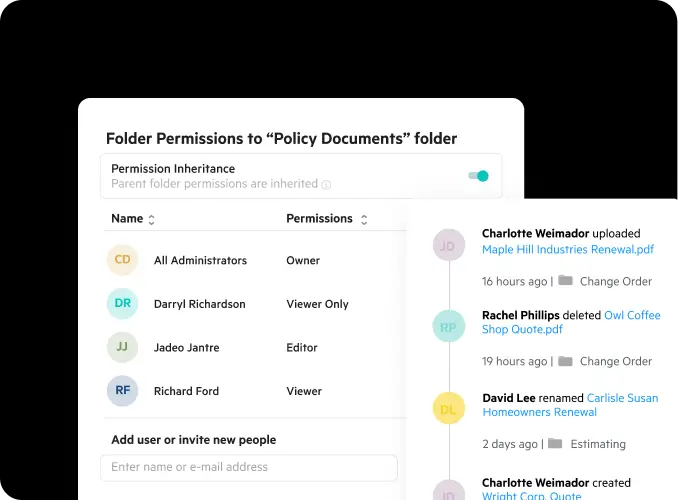
Manage policies, endorsements, bordereaux, and claims evidence in one secure system with version control and audit trails.
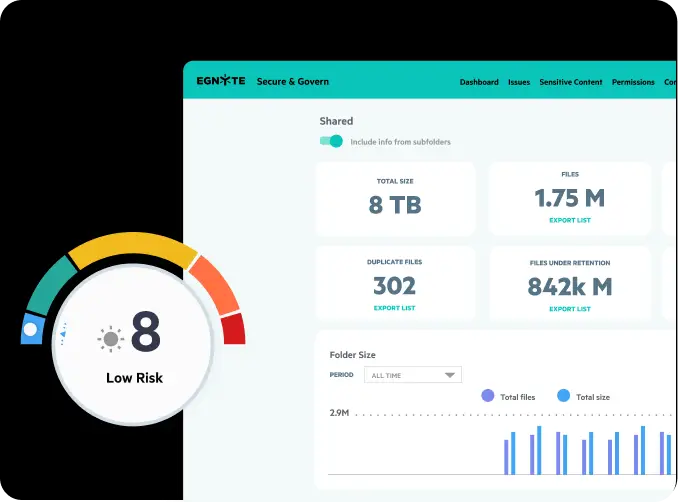
Rapidly migrate and govern data from acquired firms while preserving familiar workflows and minimizing disruption.
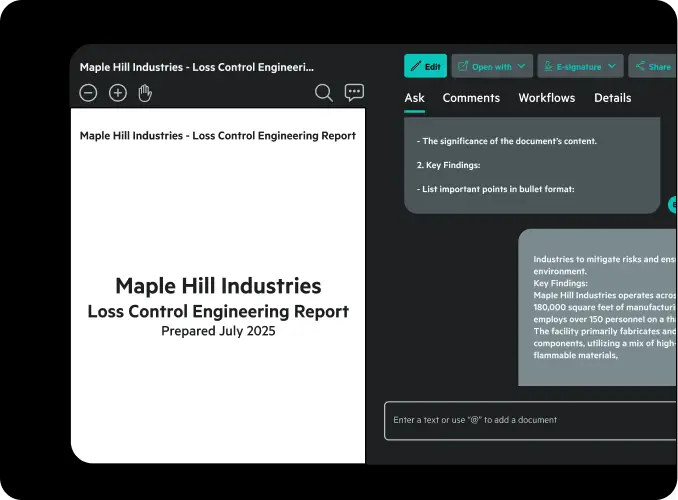
Give agents the precise context to search, summarize, and compare insurance documents while honoring permissions, data residency expectations, and compliance requirements at every step.
One platform for collaboration, intelligence, and governance



“Egnyte gives us the structure and governance we need for compliance, while still allowing advisors to work the way they’re used to. It’s been critical as we scale through acquisitions and increased regulatory scrutiny.”

“Egnyte is definitely up there with the best modern cloud applications for insurance organizations.”
Egnyte integrates with core insurance applications and productivity tools so teams can manage content securely without changing how they work.


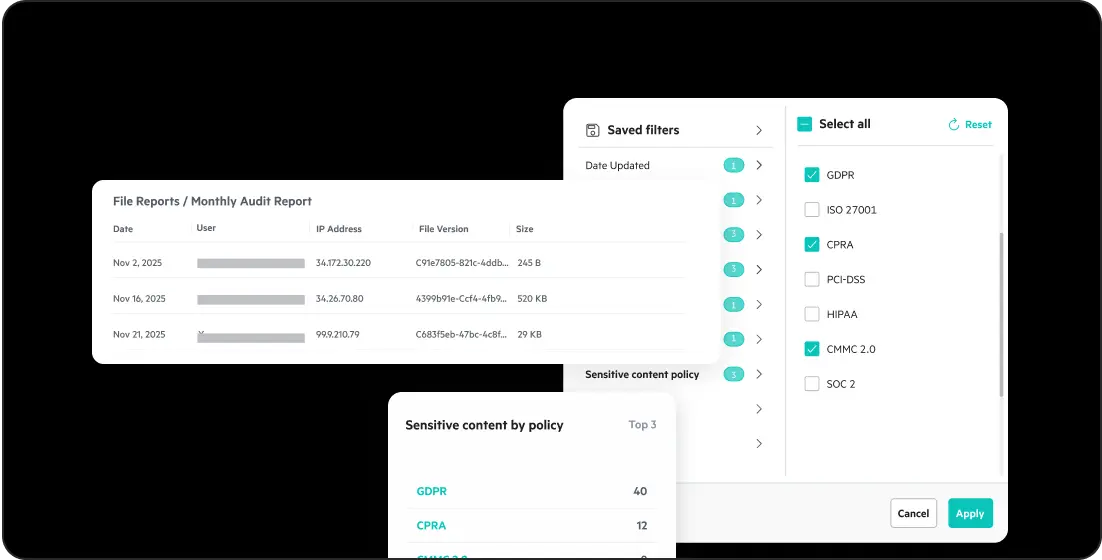


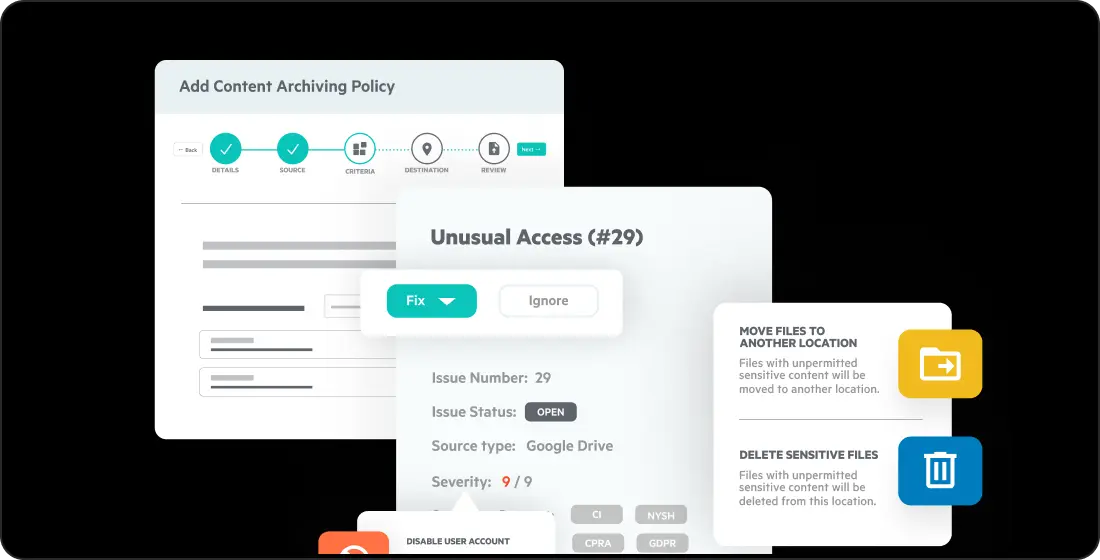


Egnyte delivers a unified content platform for buy-side, sell-side wealth management, banking and credit, and insurance, enabling strong data security and compliance without slowing down high-velocity workflows.
Have more questions? Contact Sales to get the answer you’re looking for.
Egnyte enables brokers, underwriters, and carriers to co-edit policies, endorsements, and bordereaux in a shared governed workspace — with version control and permission-based access ensuring only authorized parties can view or modify each document. Native integrations with Microsoft 365 and Google Workspace mean teams work in familiar tools without routing files through email, and every version change is logged automatically for audit visibility.
Egnyte centralizes claims documents, evidence files, and correspondence in a single governed repository so adjusters and examiners can collaborate in real time — no email chains, no disconnected folders. Flexible permissions scope access by role, ensuring only authorized parties reach sensitive case files, while automated audit trails record every file interaction to support regulatory controls and internal review at any stage of the claims lifecycle.
Egnyte's permission-aware AI lets teams search, summarize, and compare policies, terms, and conditions across thousands of documents without copying or moving sensitive content outside governed systems. AI results are scoped to each user's existing access level, so teams gain insight from their content without creating compliance exposure or routing regulated documents through public AI models that operate outside the firm's control.
Egnyte's fast data-migration tools allow insurance firms to centralize policy, claims, and operational content from acquired entities in under two weeks — without disrupting how integrated teams work. Hybrid cloud support and centralized governance policies bring new content under control immediately while preserving the familiar file-based workflows staff relied on before the acquisition. PIB Group consolidated 40 TB of data from dozens of acquisitions this way, saving thousands of hours of migration work.
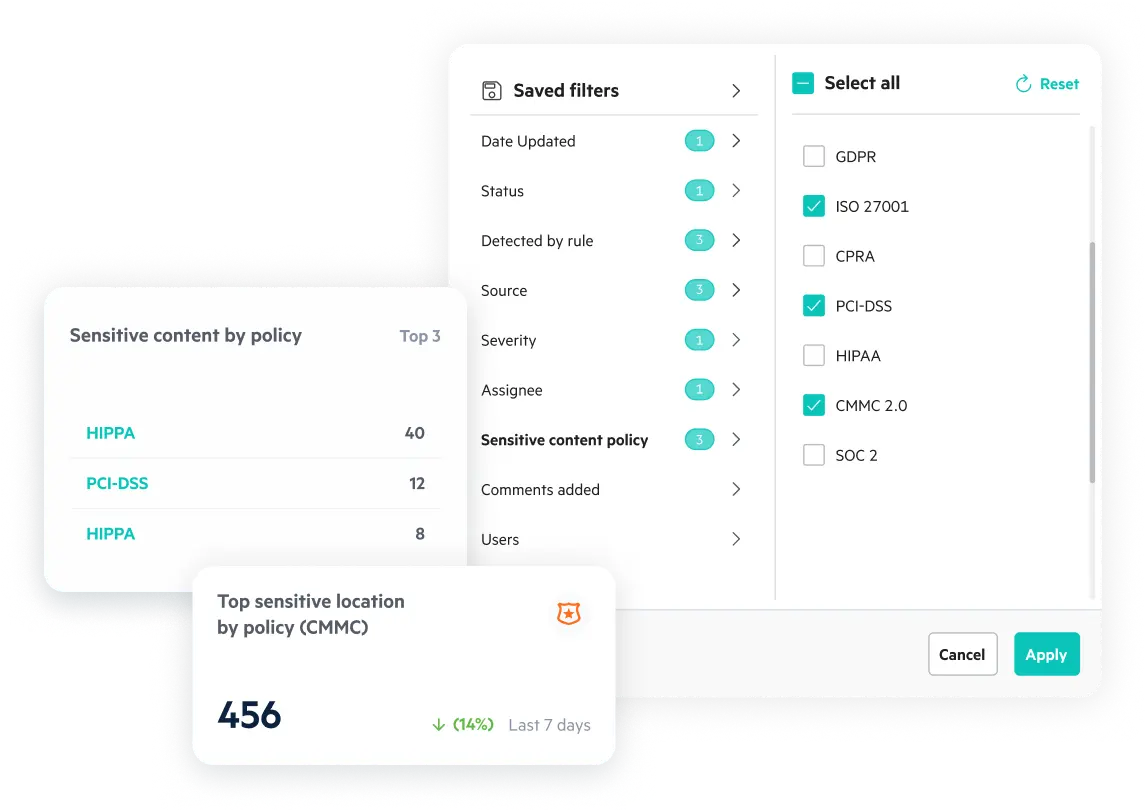
Egnyte automatically detects PII across policy files, claims evidence, and client records without requiring manual tagging — flagging sensitive content as it enters the system and applying governance rules based on data type and classification. Once identified, PII can be restricted by permission, monitored for access, and flagged if shared outside policy. This continuous, automated classification supports compliance with state and federal privacy regulations without adding manual review overhead.
Egnyte identifies abnormal file-access behavior — bulk downloads, unusual access patterns, early ransomware indicators — and alerts security teams before damage spreads. If data is compromised, snapshot recovery lets teams restore files or entire repositories to a clean state quickly, without extended downtime. Every file action is tracked through access monitoring, giving information security teams full visibility across the organization without requiring separate tooling.
Egnyte generates compliance reports automatically from comprehensive activity logs that capture every file action, access event, and permission change across the organization. Insurance firms can demonstrate regulatory compliance on demand — without reconstructing access histories under deadline — and configure automated retention and deletion policies to meet state and federal recordkeeping requirements. The audit log is continuous and immutable, supporting both routine regulatory reviews and ad hoc examinations.
See how Egnyte helps insurance organizations collaborate securely,
apply AI responsibly, and govern content at scale.