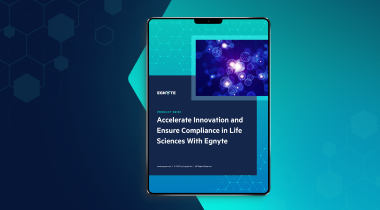



Featured eBook

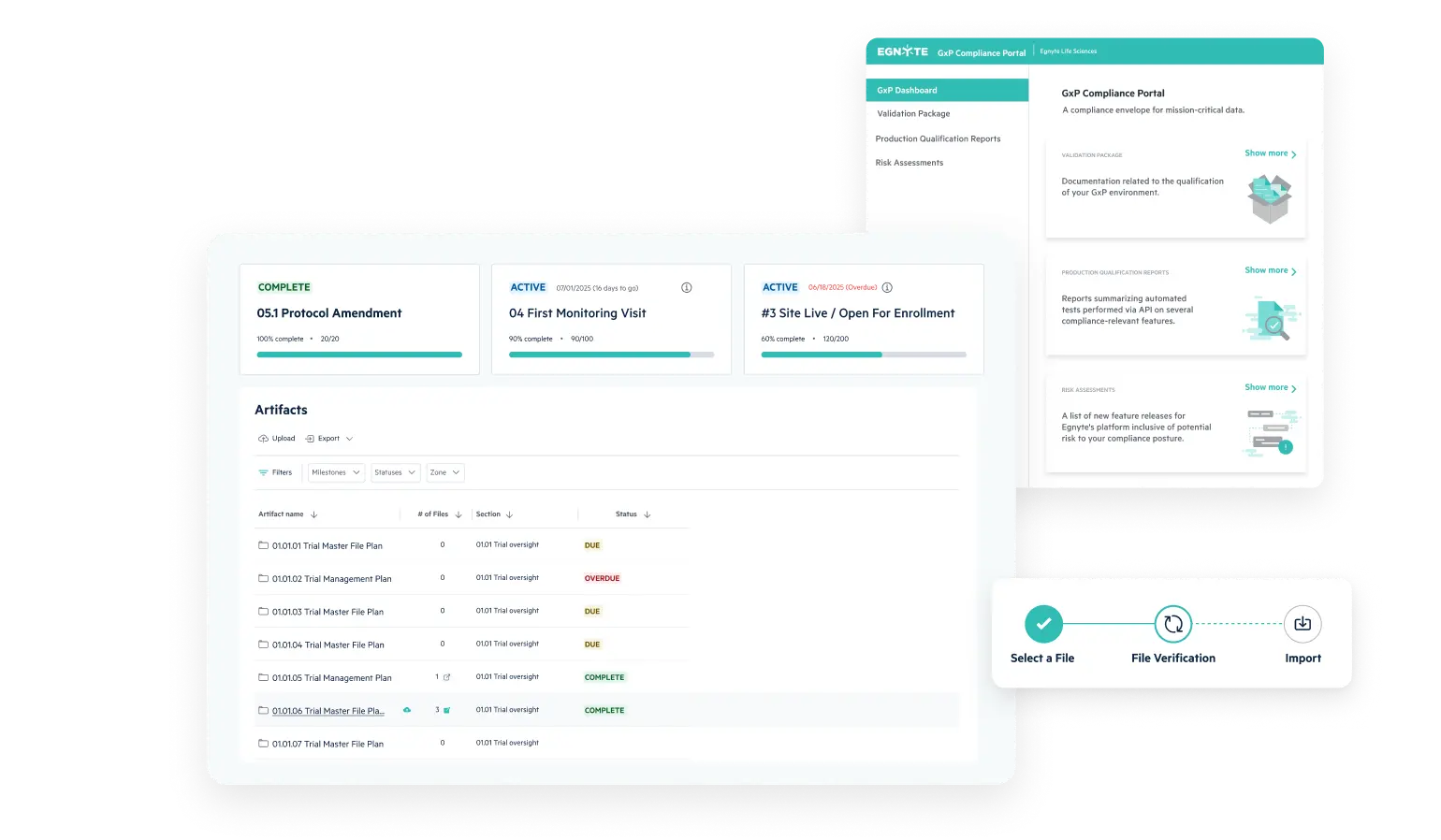

Egnyte helps clinical, quality, and regulatory teams collaborate securely and manage critical data while meeting industry requirements like GxP, ICH E6(R3), and 21 CFR Part 11.
Egnyte gives life sciences teams a secure platform to manage regulated
content, support GxP workflows, and maintain inspection-readiness—all
in one place.
Control regulated content lifecycle with versioning, eSignatures, and review workflows.
Centralize corrective actions, deviations, and controlled documents in one system.
Support employee readiness with audit-ready access to the latest documents.
Streamline quality operations with audit-ready collaboration



“We chose Egnyte for its compliance capabilities and expertise in understanding the rigors of a validated, compliant data management platform.”
“We have over 200 controlled folders in Egnyte permissioned specifically for externalcollaborators and can govern access rights with the click of a button.”
“We can see exactly who has access to what, who is downloading and deleting content, and whether they’re doing so appropriately.”


Have more questions? Contact Sales to get the answer you’re looking for.
A GxP-compliant content platform provides validated controls, audit trails, and document lifecycle management that life sciences regulations require. Egnyte qualifies through configurable document lifecycles, automated audit trails, role-based access, and e-signature workflows — enabling clinical, quality, and regulatory teams to meet GxP, ICH E6(R3), and 21 CFR Part 11 requirements within a single, unified system.
Egnyte supports 21 CFR Part 11 compliance through automated e-signature routing, version control with approvals, change tracking, and complete audit logs. Controlled documents — SOPs, work instructions, and policies — move through configurable review and approval workflows in a validated repository that meets FDA guidelines for electronic records and signatures.
Egnyte manages the full lifecycle of SOPs, work instructions, and policies in a secure repository — including version control with approvals, automated e-signature routing, change tracking, and document logs. When a document is updated, previous versions are retained and traceable, ensuring teams always work from the latest approved revision and can demonstrate a clear change history to auditors.
Egnyte centralizes corrective actions, deviations, and controlled documents in a single system — allowing QMS teams to link CAPAs to related SOPs and work instructions, route them for approval, and store audit evidence together. This reduces the manual overhead of tracking quality issues across disconnected tools and keeps teams inspection-ready at any stage of a quality investigation.
Egnyte maintains real-time audit trails, metadata, and activity logs across all regulated content — so teams can support FDA, EMA, and ICH E6(R3) inspections without last-minute scrambling. Automated anomaly detection and a configurable compliance center help quality and regulatory teams continuously monitor their compliance posture, treating audit readiness as a baseline rather than a deadline.
Yes. Egnyte's training management capability lets organizations track training assignments and completions, link records to the latest controlled documents, and report on gaps — ensuring regulated teams have documented access to current procedures. When a document is updated, training assignments can be linked directly, reducing the risk of employees working from outdated SOPs or work instructions.
Egnyte centralizes content for regulatory submissions — supporting collaboration across internal teams and external stakeholders, including CROs and regulatory partners, with validated file exchange, role-based access controls, watermarking, and full audit trails. Whether preparing an IND, NDA, or BLA, teams can work with external partners without exposing IP or creating the version confusion that comes with fragmented file-sharing tools.
Secure, compliant, and collaborative— Egnyte is built for regulated teams.