





Featured Resource

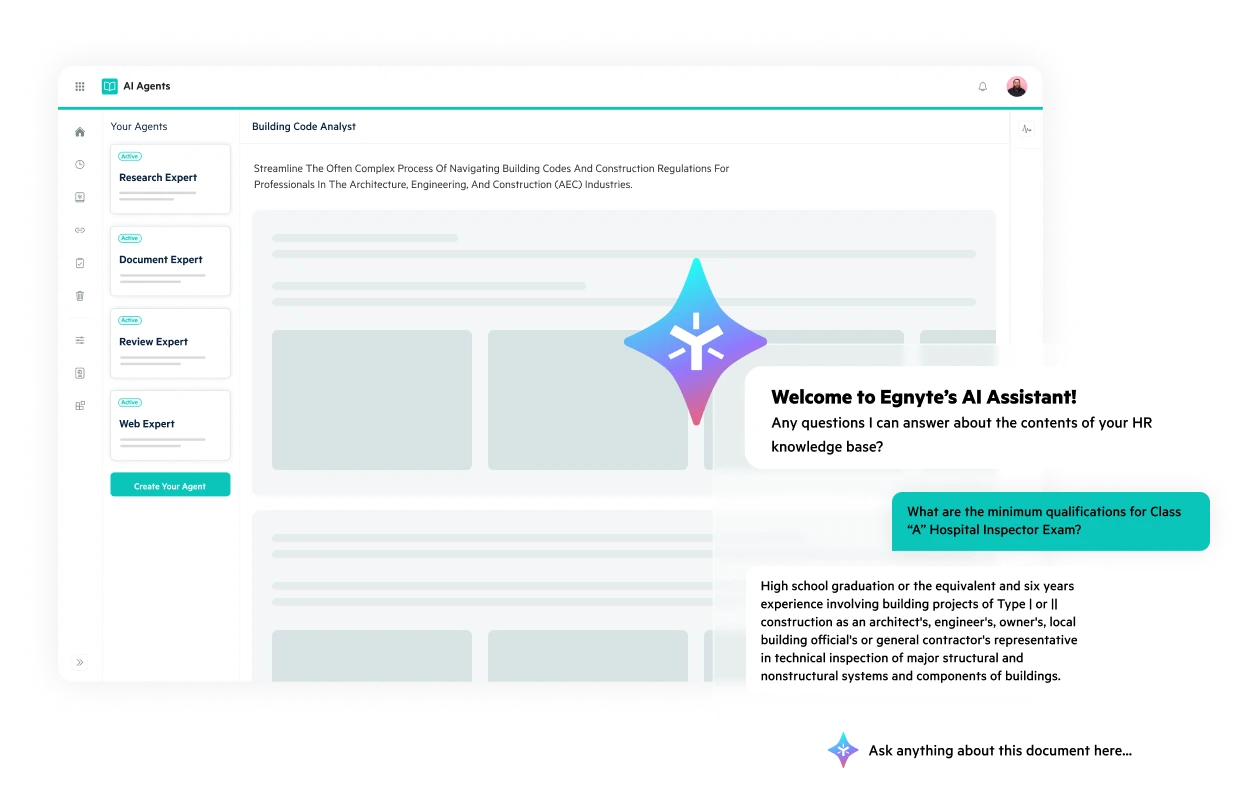
Transform your content into a competitive edge. Enrich data automatically, answer complex
questions in seconds, and turn manual tasks into high-velocity workflows.


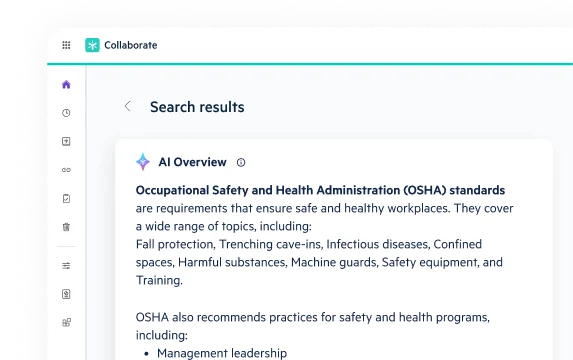
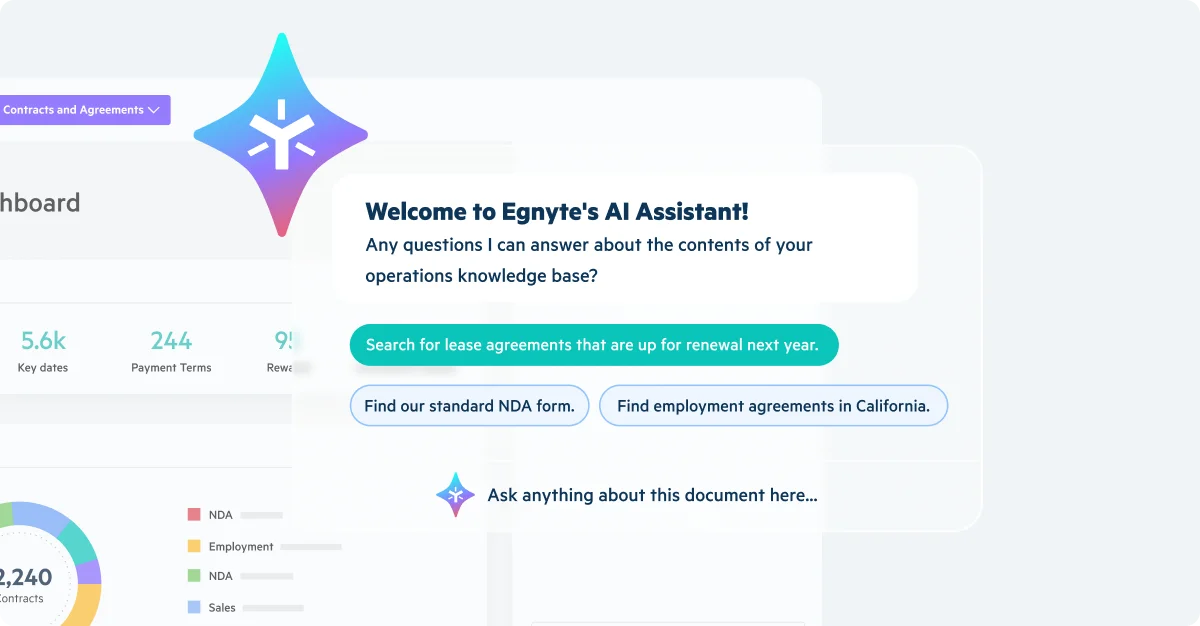
Save time by asking questions and discovering content instantly. Ask AI Assistant for document summaries and fast insights, with guided prompts and reusable libraries to reduce effort. Use AI Search to surface top results across files and folders, find images by metadata, and transcribe audio and video for deeper analysis.
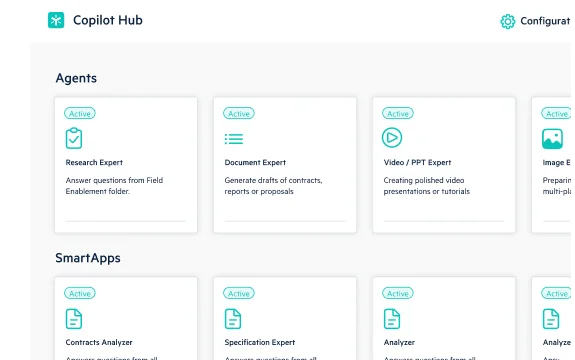
Build or customize AI agents to fit your workflows and automate role-specific tasks. Use Egnyte’s prebuilt, project-focused agents, like Specifications Analyst and Building Code Analyst, or create your own. Instantly extract contract clauses and simplify legal language with the Contract Analyst for faster, Use the images from Intelligence webpage smarter work.
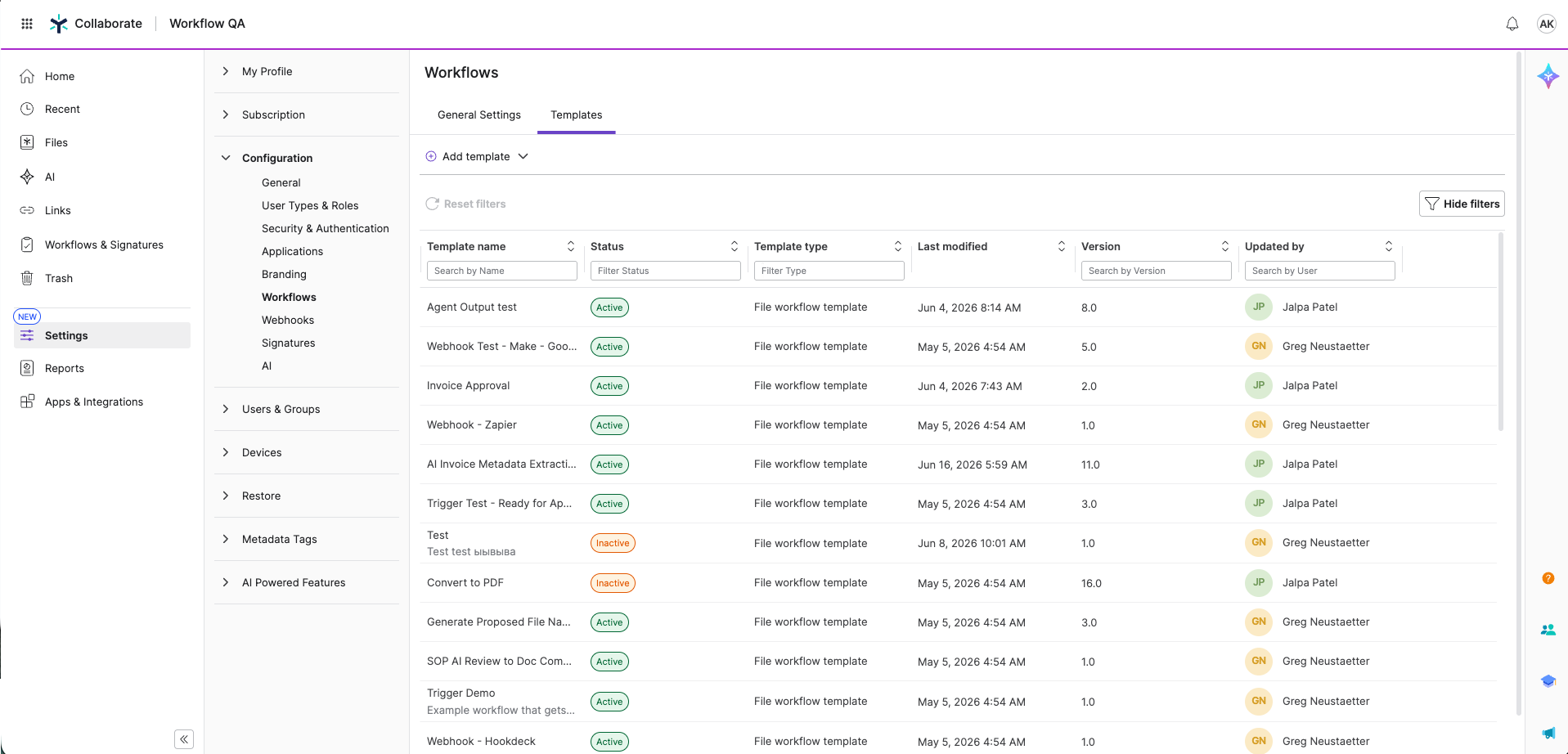
Build and manage workflow templates in one view, and apply them where they need to be. Track where in the flow a process is, and start workflows with AI-applied metadata to guide tasks from the beginning. Trigger AI agent actions or webhooks at any step to streamline operations, save time, and improve efficiency across your team.
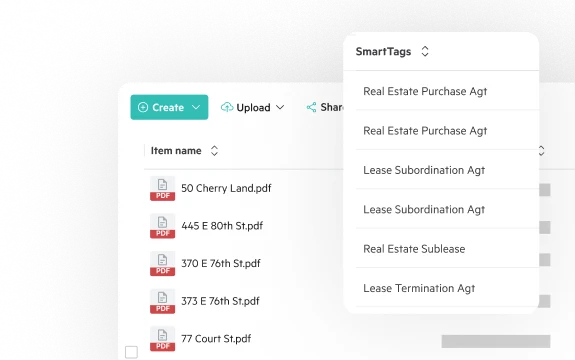
Use industry-specific AI to extract metadata from images and documents. Automatically tag and label content to simplify. Apply labels like Confidential or Legal to improve discovery, search, and protection across DLP and CASB controls.
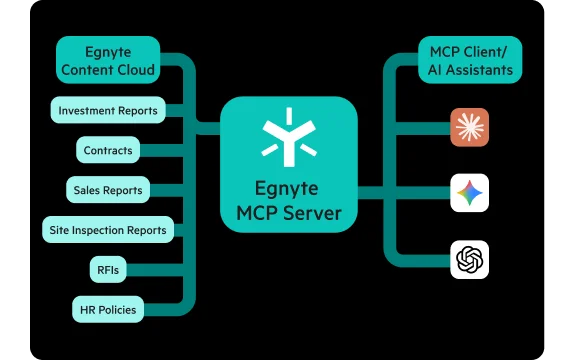
Unlock AI insights while keeping sensitive content secure and compliant. Connect assistants like ChatGPT, Claude, or Gemini directly to your enterprise data. Deploy on your terms with open-source or managed options, ensuring AI respects permissions and accesses only authorized content.
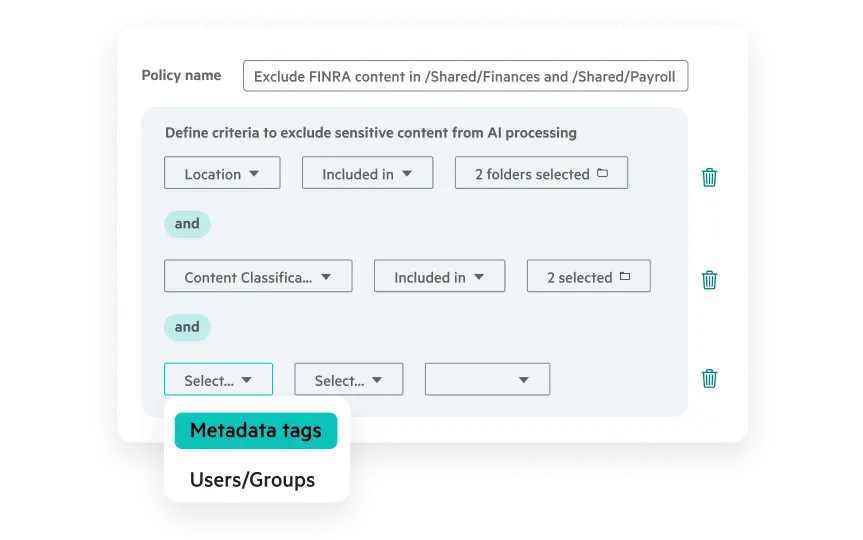
AI Safeguards prevent sensitive data from appearing in AI-generated outputs—whether in Egnyte’s AI Assistant, agents, or MCP Server. You can monitor users across desktop, browser, and mobile environments, to maintain consistent data protection wherever AI’s accessed. Comprehensive reporting makes it easy to track AI governance progress.
Get answers and surface insights faster with AI built into everyday workflows, so teams make better decisions and move faster.

“Egnyte Copilot helps everybody research, understand, and learn, while providing faster service to our clients."

“Clients can get information in an instant and see exactly what steps have been done. This way, they can use that information to do some of their own baseline repairs instead of sending it back to us, which would lengthen the overall process.”
“Once we transitioned to enterprise cloud for our document storage, we were able to work more productively and manage files and workflows much faster, largely because Egnyte handles uploads and transfer of large files really well.”
Want to see what Egnyte has for your organization?
Egnyte enables management of all your mission-critical content by simplifying collaboration, improving productivity with AI, and addressing information governance.






Egnyte is trusted by thousands of IT leaders and end users. We are industry leaders in data security, data governance, cloud content collaboration, and tools for IT managers.

Cloud Content
Collaboration
Data
Security
Data
Governance
Data-Centric
Security
Sensitive
Data Discovery
Autodesk Forma
Integration Partners
Electronic Trial
Master File (eTMF)
Have more questions? Contact Sales to get the answer you’re looking for.
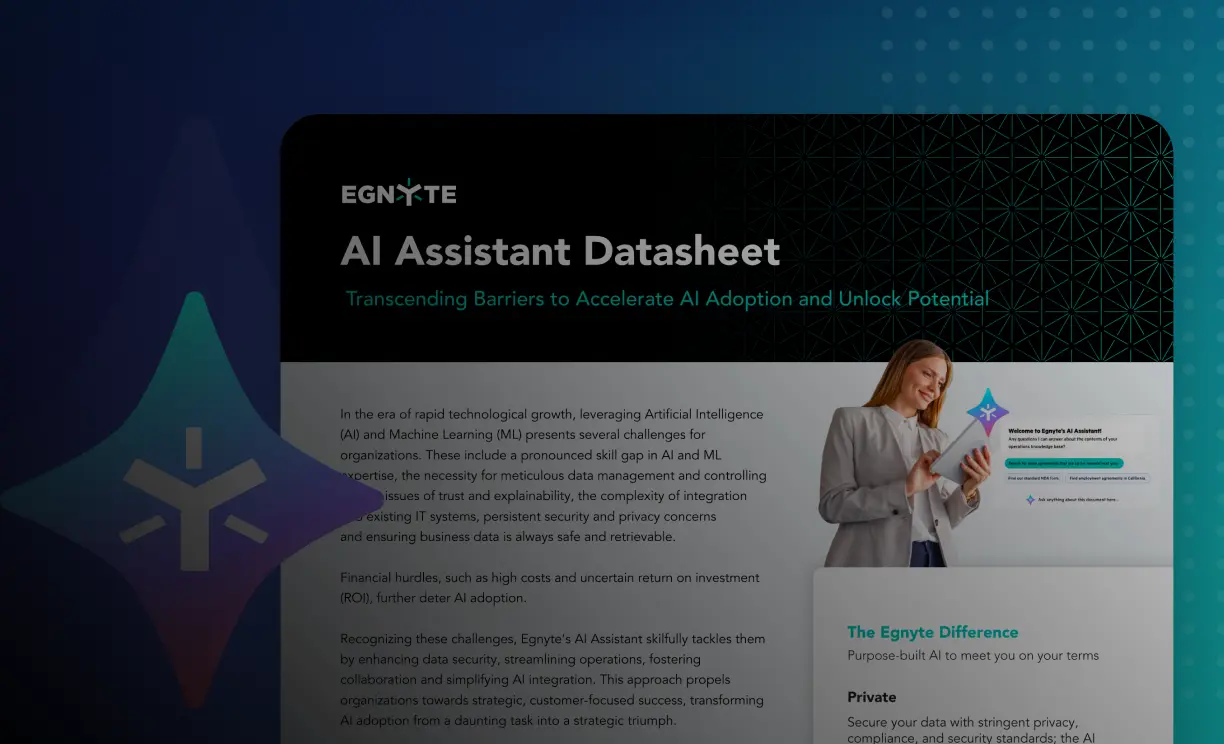
Egnyte's AI Assistant lets teams ask questions and get instant answers grounded in their own organization's content. It delivers document summaries, traceable insights, and guided prompts to reduce manual research time. Teams can also search content by metadata, find images, and transcribe audio and video — all through natural language, without leaving their existing workflows.
Egnyte's AI Agents execute operational tasks that would otherwise require manual handling — reviewing documents, extracting structured data, routing files, and triggering downstream actions based on content signals. Because agents operate within Egnyte's governed environment, every automated action is traceable and subject to the same access controls applied to human users.
Smart Tags and Extractors use AI to automatically analyze files, extract and tag structured metadata such as project names, dates, contract terms, client identifiers, or any custom field.. This makes content AI-ready and searchable at scale, so teams locate what they need instantly and AI tools have clean, structured inputs to produce reliable outputs.
Egnyte's Workflow Orchestration connects AI-generated content signals to downstream actions — automatically routing files, triggering approvals, updating records, or notifying team members based on what's in a document. This removes the repetitive coordination that slows projects down and keeps high-velocity work moving without manual effort at each step.
The Egnyte MCP (Model Context Protocol) Server allows AI, applications and agents — including external LLMs — to securely access and query Egnyte content in real time. Organizations can give AI tools governed access to enterprise content without copying or moving files, while maintaining full security, access controls, and audit visibility throughout every interaction.
Egnyte's AI Safeguards give IT administrators policy-level controls over how AI tools interact with enterprise content. Teams can restrict which files, folders, or content categories are accessible to AI agents and external applications — enabling responsible AI adoption across the organization without exposing sensitive or regulated content to unauthorized systems.
Yes. Egnyte integrates natively with ChatGPT, Gemini, Claude and Microsoft Copilot,, allowing these tools to securely access and act on Egnyte content. The MCP Server extends this further — any compatible AI agent can query enterprise content through Egnyte with full governance controls in place, so teams aren't forced to choose between productivity and security.
Ready to improve productivity? Egnyte’s AI-powered cloud enhances collaboration, automates workflows, and secures your mission-critical content.