
Featured Resource








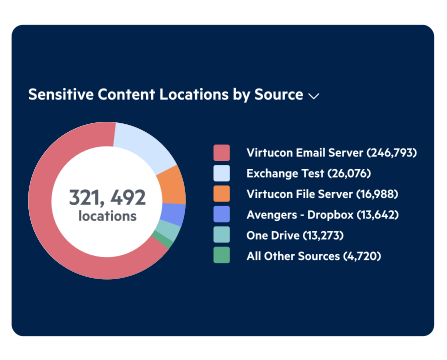
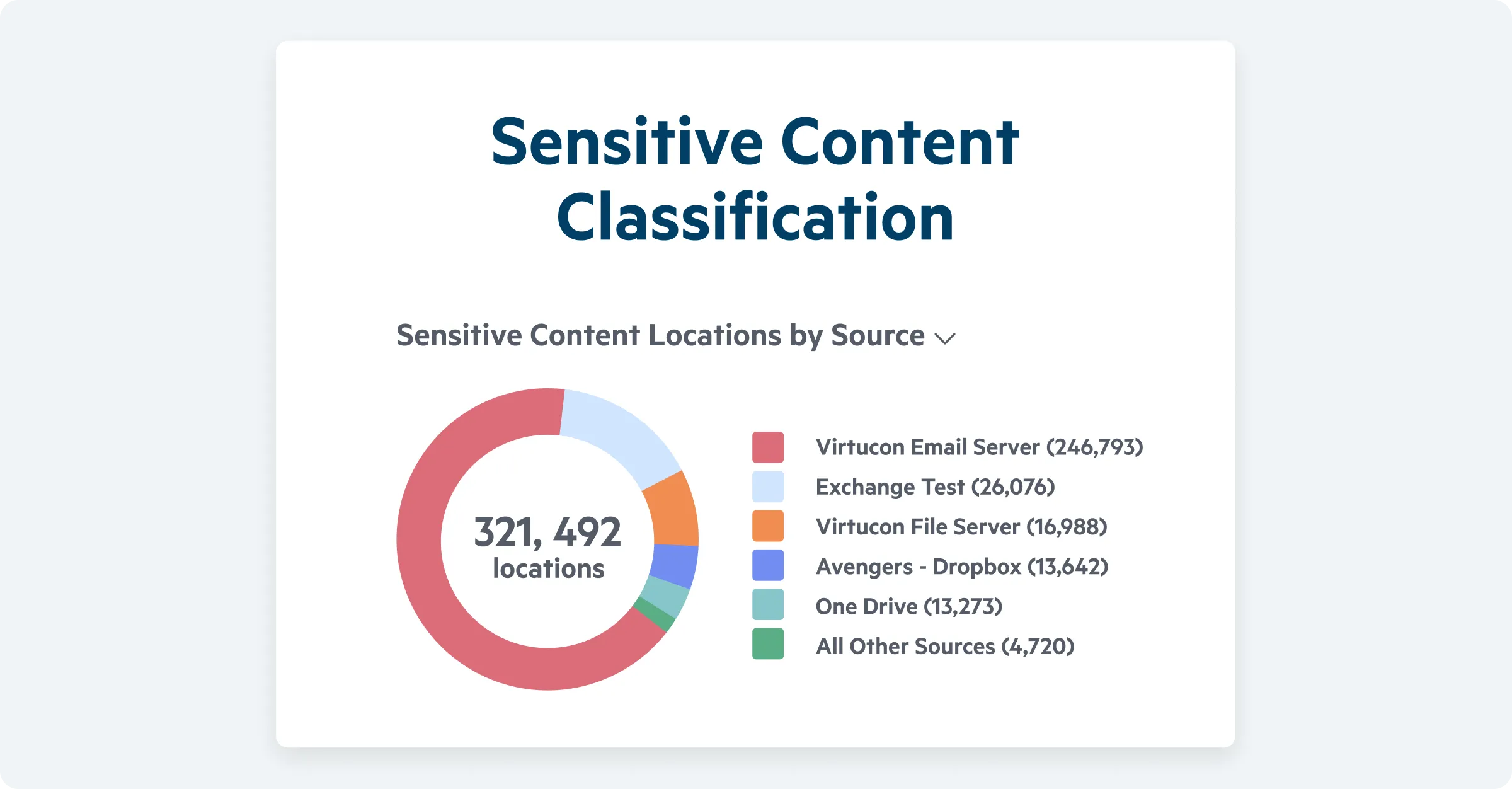
Get a clear, real-time view of where sensitive content lives across your data repositories, so you can assess risk instantly, act on exposed data, and stay aligned with your most critical compliance requirements.
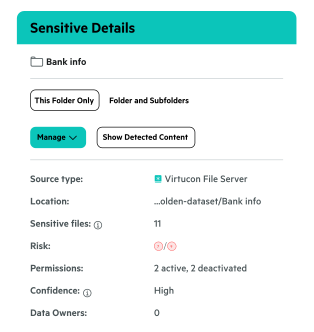
Go beyond visibility to understand risk at the file level. See how many sensitive files exist across folders and subfolders, prioritize protection with clear risk scores, understand applicable cybersecurity and privacy regulations, and identify exactly who can access your most sensitive data.
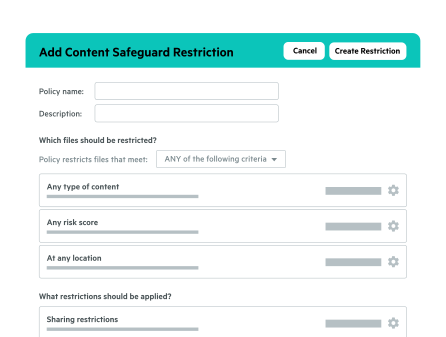
Turn insight into enforcement. Apply data-sharing policies based on content type, risk score, and location in minutes, restrict sharing to authorized users, while supporting flexible exceptions that match your business needs.
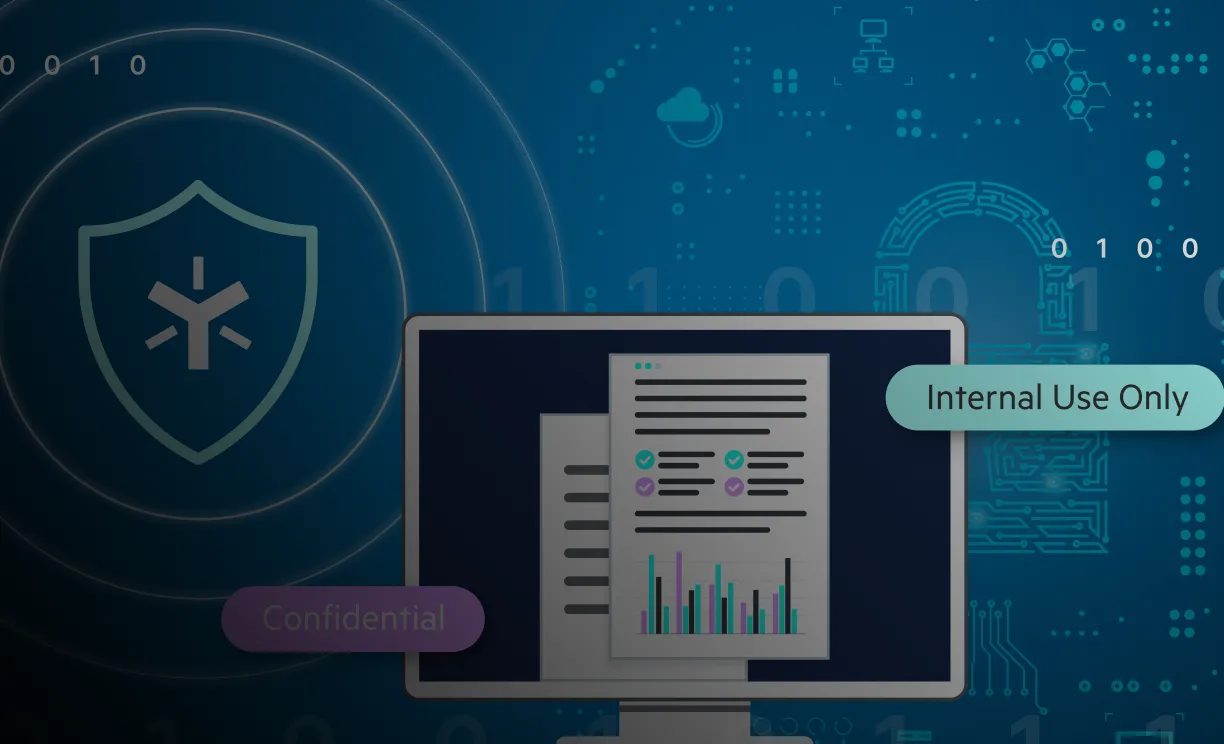
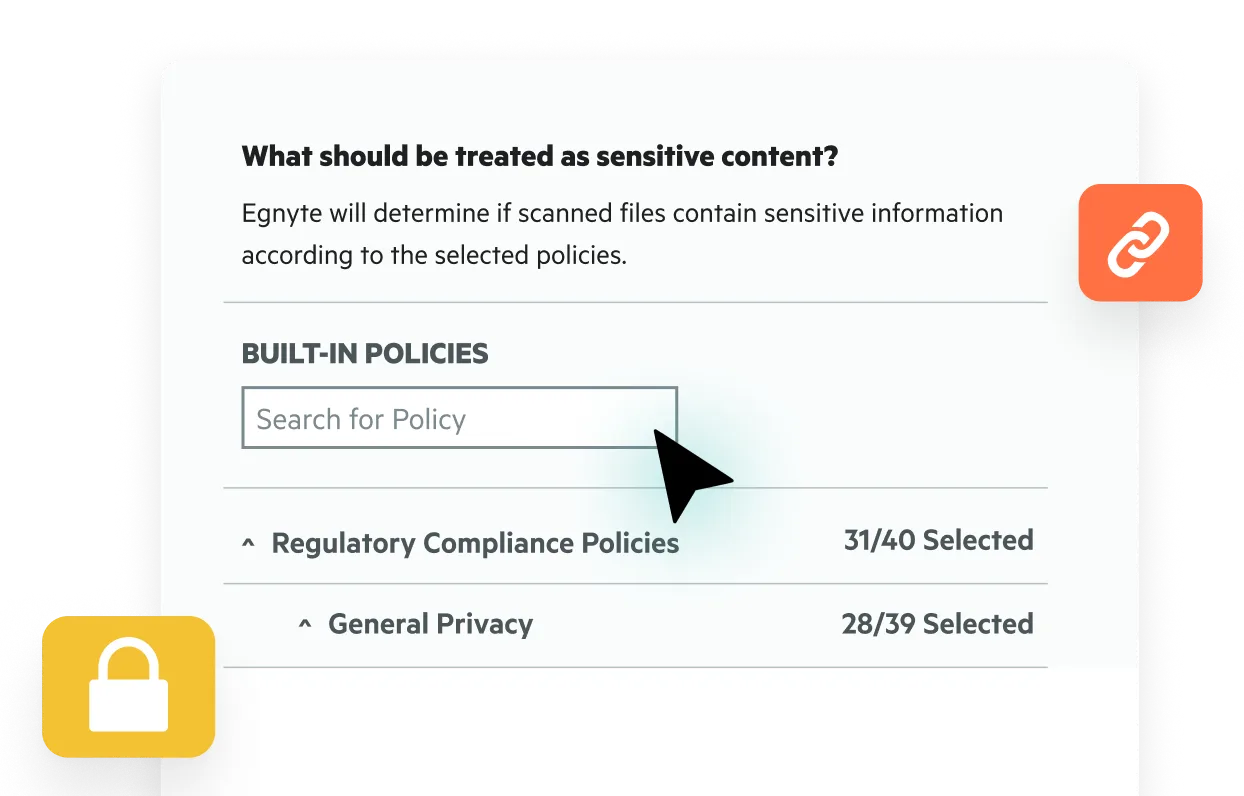
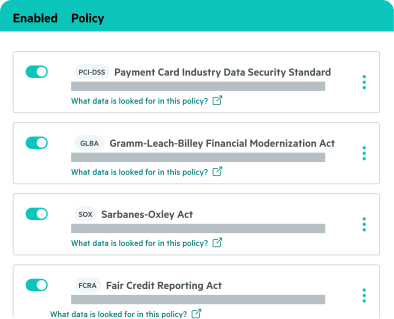
Continuously monitor sensitive content subject to cybersecurity and data privacy regulations such as PCI-DSS, GDPR, CPRA, and SOX. Reduce manual workloads with automated labeling, prioritize content with the highest exposure risk, and enforce content classification policies that align with business requirements.
Protect sensitive, mission-critical data across your IT environment while reducing exposure risk.

“The biggest business accomplishment is the efficiency of freeing up IT resources. Without having to do the labor-intensive work of identifying sensitive content, IT can now concentrate on value-add projects.”
Want to see what Egnyte has for your organization?
Sensitive Data Protection is part of Egnyte’s governance platform. Enhance content protection with these complementary products.
Have more questions? Contact Sales to get the answer you’re looking for.
Egnyte classifies sensitive content as any information that could cause financial or reputational harm if not adequately protected. This includes Personally Identifiable Information (PII) such as driver's license, passport, and Social Security numbers; Protected Health Information (PHI); financial data including credit card information and sensitive personal information as defined under CPRA and similar state privacy laws. Egnyte Secure & Govern extends this classification across all repositories connected to the platform — cloud and on-premises.
Egnyte's Sensitive Content Dashboard provides a continuous, real-time view of where sensitive content exists across your data repositories — so you can assess risk instantly, identify exposed data, and stay aligned with your compliance requirements without manual auditing. Security and compliance teams can see an accurate picture of their data exposure at any point in time, not just during audits.
Yes. Egnyte uses AI-based classification to automatically identify and label sensitive data — including PII, PHI, and financial data — across multiple platforms and repositories. This removes the need for manual tagging, reduces classification errors, and helps to consistently identify sensitive content regardless of where it's stored or who created it.
Organizations without classification programs face the threat of increased exposure: regulatory fines when PII or PHI is leaked, heightened risk from malicious insider activity, and potential legal action from consumers or industry groups that can follow a data breach. Classification programs provide the visibility and control needed to prevent these outcomes before they become incidents — rather than responding after the fact.
Sensitive content classification is the foundation of Egnyte's broader data governance platform. It works alongside Ransomware Detection to flag at-risk content before attacks escalate, Insider Threat Detection to identify unexpected user behavior, and AI Safeguards to prevent sensitive content from being used to generate AI responses — creating a connected protection layer rather than a standalone classification tool.
Sensitive content classification applies across all industries, but is mission-critical for financial services, life sciences, legal, and military defense organizations — where PII, PHI, and confidential IP face the heaviest regulatory scrutiny. Egnyte's Privacy and Compliance Monitoring supports the specific compliance requirements these sectors face, from HIPAA and GDPR to CPRA and sector-specific data protection frameworks like CMMC.
Egnyte's Content Safeguard Policies let administrators set and enforce restrictions on how sensitive content can be accessed, shared, or used — directly within the platform. Policies can be configured to match your organization's specific compliance requirements and risk thresholds, giving security teams granular control over sensitive data without requiring manual review of every file or access request. In addition, Egnyte’s AI Safeguards help to prevent sensitive content from being used to generate AI-related responses.
Ready to improve productivity? Egnyte’s AI-powered cloud enhances collaboration, automates workflows, and secures your mission-critical content.