
Benefits of AI-Powered Contract Workflow Automation
Let’s jump in and learn:
- Main Takeaways
- Why Do Contract Management Processes Struggle at Scale?
- How Does AI Improve Contract Intelligence?
- What Are the Strategic Benefits of Contract Workflow Automation?
- How Do You Move From a Legacy BPM System to an AI-Powered Workflow Platform?
- How Egnyte Supports AI-Enabled Contract Intelligence
Main Takeaways
Contract workflow automation with contract intelligence cuts cycle times, lowers administrative costs, and improves contract outcomes.
Centralizing contract data solves the fragmentation, interpretation, and compliance problems that slow most contract teams down.
AI adds faster review, deeper pattern detection, and predictive risk flagging across full contract portfolios.
Teams moving off a legacy BPM system can index existing contracts with AI search instead of re-platforming everything at once.
Egnyte pairs AI-Assistant, Contract Analyst, and AI Agents with existing repositories to turn static contracts into governed, searchable content.
Why Do Contract Management Processes Struggle at Scale?
Contract teams run into the same three problems as their portfolios grow: data spreads across systems, contract language resists simple indexing, and compliance requirements outpace manual review capacity.
Organizations maintain contract data across an average of 24 distinct systems. That spread creates visibility gaps and makes coordinated workflows hard to run.
Contract language compounds the problem. Dense terms, conditions, and interdependencies defy simple indexing, so most teams fall back on manual review. That review takes an average of 92 minutes per contract, a significant tax on legal team capacity.
Compliance risk follows from the first two. With scattered data and siloed systems enforcing standards, tracking renewals, or responding quickly to an audit request may be difficult. Each of these limitations can result in more operational risk and slow down the organization.
How Does AI Improve Contract Intelligence?
Contract management AI has evolved from a back-office tool into a business-critical capability — and for most organizations, that shift is no longer optional. This change is not a choice but a necessity as the way contracts are created, monitored and managed, has become intrinsic to the value extracted and the risks mitigated across the life cycle of the contract.
42% of organizations have started implementing AI in contracting processes, up from 30% a year earlier. Three capabilities explain the shift.
AI converts natural language into database entries. Natural language processing and machine learning algorithms make the process of analysing hundreds of contracts not just quick but also easy. This technology simplifies the way to extract specific contract clauses and relevant data.
AI is able to go through a contract more quickly than any human can. It can find relevant clauses. It can also learn from previous contracts to find potential risk factors or areas to bargain on beforehand.
Execution speed is increased. Organizations that use AI to manage the contract lifecycle claim that the overall efficiency can be largely improved. Organizations using AI to manage the contract lifecycle report efficiency gains of up to 63%, alongside faster time to deal close.
What Are the Strategic Benefits of Contract Workflow Automation?
AI-powered contract intelligence solves three basic flaws. Includes cost, risk and strategic awareness. This can significantly improve the way organizations manage their contracts.
Benefit 1 – Quick and Cost-Effective
Manual contract creation and approval bogs legal teams down in repetitive, non-strategic activities, and wastes budget. Contract intelligence platforms automate manual handoffs via structured workflows. “Consolidating contract data and establishing approval rules can help to reduce cycle times and remove bottlenecks.” Dashboards and live status updates provide business leaders with ongoing visibility into the portfolio.
AI compounds these gains significantly. Contract AI identifies terms, fills templates and suggests clauses by learning from past patterns, cutting time to a first draft. Organisations report a 30 to 50 percent reduction in cycle times and a 25 to 30 percent decrease in administrative costs after implementing contract workflow automation. [CHECK: compare this cycle-time/cost-reduction range with current product marketing numbers before publishing]
Benefit 2 – Improved Risk Management and Compliance
There are two related failures that give rise to risk in contract management. This includes teams without a consistent view of key clauses and obligations and human reviewers miss variations that place the company at regulatory or financial risk.
Contract intelligence platforms pull useful information from unstructured contract text. They index clauses, deadlines, obligations, and regulatory conditions and make all of it discoverable across the enterprise. AI extends this three ways: machine learning models analyze thousands of contracts to flag atypical terms and correlate clauses with past negotiation outcomes, natural language processing lets risk teams query contract repositories in plain language, and predictive modeling helps anticipate compliance gaps before they become liabilities.
Benefit 3 — Strategic Insights and Decision Support
Contracts are a rich source of signals on supplier performance, pricing trends and negotiation history. Without contract intelligence, most of that remains locked in PDFs and shared drives.
Contract intelligence platforms extract this data into structured formats, which drive analytics and reporting. Executives get visibility into supplier renewal behavior, revenue recognition drivers, and exposure to contractual penalties they'd otherwise only find during a dispute.
AI extends this into forecasting. Contract management software can also be used to prove past results at scale. This can assist in predicting negotiation power, identifying clauses that have been linked to past performance failures and proposing language for future contracts.
AI-powered insights and automated contract processes.
How Do You Move From a Legacy BPM System to an AI-Powered Workflow Platform?
Legacy BPM systems were built for routing forms and approvals, not for reading contract language or flagging risk. Moving off one doesn't require ripping out every existing system at once.
Start with what already exists. Most organizations have contract data spread across an average of 24 systems, including the legacy BPM platform itself. An AI-powered workflow platform can index and search across these existing repositories rather than requiring every contract to be re-entered or re-filed before it becomes usable.
From there, organizations can apply AI-powered extraction and tagging to capture key contract terms and create a structured, searchable contract information pipeline. Legacy contracts can remain searchable alongside the new system or be phased out over time, depending on business requirements.
Egnyte integrates with both cloud and legacy content systems, enabling contracts and related documentation to remain discoverable through AI Connectors while organizations transition away from legacy platforms.
How Egnyte Supports AI-Enabled Contract Intelligence
Egnyte functions as a unified content platform that turns static contracts into searchable, governed content businesses can act on.
Egnyte’s AI software scans large numbers of document libraries quickly to identify key terms, obligations and important details in your contracts. Then it provides you with clear summaries and straightforward answers, so you can make informed decisions easily without sifting through paperwork. With Egnyte’s Contract Analyst you can easily extract critical clauses, dates and obligations saving hours of manual work. Egnyte's AI Agents can handle repetitive tasks such as content extraction, classification, and research while enabling the embedding of custom logic into the process without writing any code.
Egnyte's platform also integrates with existing cloud and legacy content systems, so contracts and related documentation stay discoverable through AI search regardless of where they originally lived. Egnyte serves more than 23,000 customers worldwide.
Frequently Asked Questions
Contract intelligence is not only about storing and tracking contracts. It employs AI to extract clauses, obligations and risks from unstructured contracts and to turn them into searchable, usable data. Traditional contract management is about filing and workflows. Contract intelligence, in contrast, gives you information, predicts and helps you make decisions.
A contract intelligence tool can handle a vast variety of contracts. This includes supplier contracts, customer agreements, employment contracts, NDAs, leases or compliance-related documents. These AI-based models are customizable on the basis of the format and language of the contract. This is done so that information can be extracted from different types of deals and industries.
Yes, AI can take over the mundane tasks of reminding and nagging. The AI tools shall keep track of all the responsibilities and obligations, highlight any deviation, remind of the renewal dates of agreements and help reduce the risk of any fines or legal implications.
AI contract review technologies works well when it comes to checking many documents at the same time. They specialize in extracting information from, categorizing, and recognizing patterns in documents, but they usually aren't designed to make any judgments about them; instead they are meant to assist human analysts. In other words, while they make it possible to substantially speed up review processes with increased efficiency by giving analysts a better-structured document to work with, they do not eliminate the need for human judgment in reviewing contracts.
It is very important to keep a few things in mind. These include accuracy of clause extraction, governance and security controls, integration with other existing systems, scalability, auditability and transparency in use of AI. In addition to these, the platform must be able to provide workflow automation. It should also support contract manageability, traceability, and compliance throughout their lifecycle.
No. Legal teams get a lot out of it but procurement, finance, compliance, sales and leadership all benefit from contract intelligence too. Cross-functional visibility is provided by platforms like Egnyte. It allows organizations to see contracts as strategic business assets rather than simply as isolated legal documents.
Egnyte has experts ready to answer your questions. For more than a decade, Egnyte has helped more than 23,000+ customers with millions of users worldwide.
Additional Resources
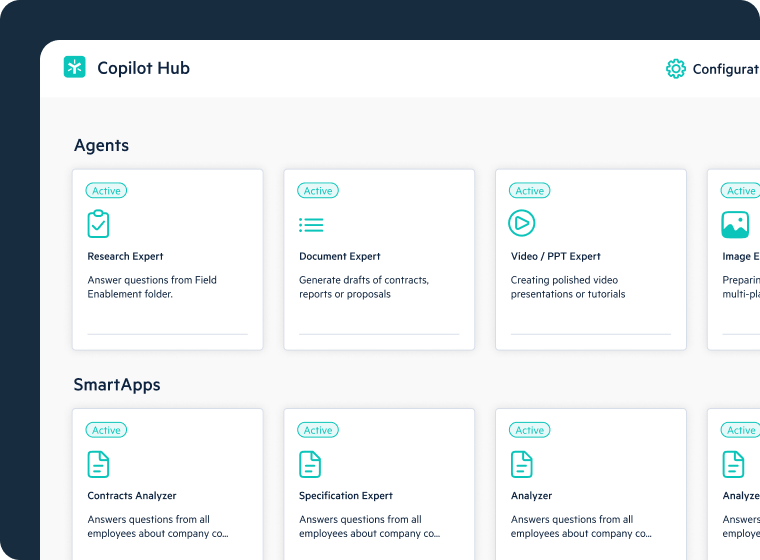
AI Agents
Automate repetitive tasks with secure, no‑code AI agents that streamline workflows and boost efficiency.
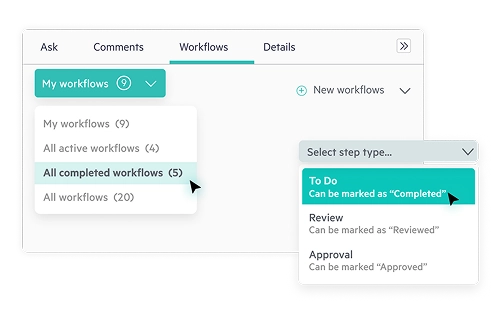
AI Workflow Automation
Automate document tasks with AI‑driven triggers to streamline reviews, approvals, and overall efficiency.

Intelligent Workflow Automation
AI‑driven workflows speed up decisions by reducing manual steps and improving data accuracy.