
Data Loss Prevention Best Practices Using Data Classification Policies
Organizations create and store more sensitive data than ever before. From intellectual property and financial records to personal customer information, the risk of exposure continues to grow. Without strong controls, even a small mistake can lead to serious breaches.
Data loss prevention strategies help organizations detect, monitor, and prevent sensitive data from leaving secure environments. When combined with effective data classification policies, businesses can protect critical information while maintaining productivity and compliance. Let’s better understand data loss prevention, explore how data classification strengthens security programs, and discover how organizations can implement practical policies that reduce risk.
Let’s jump in and learn:
- Main Takeaways
- What Is Data Loss Prevention?
- What Is Data Classification?
- Understanding Data Classification in Preventing Data Loss
- How Does Data Loss Prevention Work?
- Role of Data Classification in Data Loss Prevention
- Step-by-Step Guide to Implementing Data Classification for Data Loss Prevention
- Best Practices for Data Loss Prevention Using Data Classification Policies
- How to Evaluate Your Current Data Classification Policies
- Conclusion
Main Takeaways
- Data loss prevention protects sensitive information from accidental or malicious exposure across endpoints, networks, and cloud environments.
- Data classification policies label data based on sensitivity, enabling targeted controls and stronger governance.
- Organizations that combine classification with modern data loss prevention technology gain better visibility into where sensitive information resides.
- Automated data classification solutions reduce human error and help scale protection across large volumes of unstructured data.
- Effective data loss prevention cybersecurity strategies integrate monitoring, user coaching, access control, and policy enforcement.
- Continuous monitoring and regular policy evaluation ensure protection keeps pace with new threats, SaaS adoption, and remote collaboration.
What Is Data Loss Prevention?
Data loss prevention (DLP) refers to a combination of technologies, processes, and policies designed to prevent sensitive data from being lost, misused, or accessed by unauthorized parties.
Understanding the data loss prevention meaning is essential for modern enterprises managing distributed teams and cloud environments.
What is data loss prevention in cyber security?
- It identifies sensitive information across systems.
- It monitors how users interact with that data.
- It enforces rules that prevent unauthorized sharing or exfiltration.
Typical examples of data loss prevention cybersecurity controls include:
- Endpoint protection
- Prevents users from copying sensitive files to USB drives or external devices.
- Network monitoring
- Inspects outbound traffic for patterns such as credit card numbers or PII.
- Cloud DLP
- Controls how files are shared across platforms like Microsoft 365 or Google Workspace.
- Access enforcement
- Restricts who can view, download, or distribute sensitive files.
Organizations implementing strong data loss prevention strategies often combine these controls with modern data control methods and intelligent monitoring tools.
Platforms like Egnyte enable organizations to unify these protections through integrated data loss prevention solutions, providing visibility across hybrid and cloud environments.
What Is Data Classification?
Before companies can protect data, they must first understand what data they have and how sensitive it is.
This is where data classification becomes critical.
So, what is data classification?
It is the process of organizing data into categories based on sensitivity, value, and regulatory requirements.
Typical classification levels include:
- Public
- Information intended for external sharing.
- Internal
- Business data meant only for employees.
- Confidential
- Sensitive information such as financial records or internal strategies.
- Restricted
- Highly sensitive data such as intellectual property or regulated data.
A modern data classification solution identifies and labels sensitive files automatically using techniques such as:
- Content-based classification
- Detects patterns like Social Security numbers or financial data.
- Context-based classification
- Uses metadata such as file location or ownership.
- User-driven classification
- Allows employees to tag documents during creation.
Organizations that implement effective data classification policies gain several advantages:
- Faster discovery of sensitive information
- Reduced compliance risks
- Better data governance and lifecycle management
- More precise enforcement of data loss prevention policies
Understanding Data Classification in Preventing Data Loss
Strong data classification policies form the foundation of an effective data loss prevention solution.
Without classification, organizations struggle to identify which data requires the highest level of protection.
Key ways classification supports data loss prevention cybersecurity solutions include:
- Identifying sensitive data across repositories
- Many organizations store files across multiple systems and cloud services.
- Prioritizing protection efforts
- High-value information receives stronger monitoring and access controls.
- Reducing unnecessary restrictions
- Non-sensitive data remains accessible for productivity.
For example, consider a healthcare organization handling patient data:
- Patient records are classified as restricted
- Internal reports are labeled confidential
- Marketing content remains public
With this structure:
- Sensitive patient data cannot be shared externally.
- Access restrictions automatically apply to regulated files.
- Compliance with regulations such as HIPAA becomes easier.
Solutions that integrate data classification with data loss protection solutions enable automated enforcement across enterprise environments.
How Does Data Loss Prevention Work?
Understanding how data loss prevention works helps organizations implement the right technology and policies.
Most data loss prevention technology operates through a continuous cycle of detection, monitoring, and enforcement.
A typical workflow includes:
- Data discovery
- Systems scan repositories to identify sensitive information.
- Data classification
- Files receive labels based on content and context.
- Monitoring
- User behavior and data movement are continuously tracked.
- Policy enforcement
- Violations trigger alerts, blocks, or remediation actions.
- Reporting
- Security teams receive audit logs for compliance and analysis.
We can understand this better with an example. Say a user attempts to upload a confidential financial report to a personal cloud account. The system detects the classification label. A policy blocks the upload and notifies the user.
Modern platforms improve this process by adding:
- Real-time user coaching
- Automated remediation
- Behavioral analytics
These capabilities strengthen data loss prevention cybersecurity programs while minimizing disruptions for employees.
Role of Data Classification in Data Loss Prevention
Data classification plays a central role in making data loss prevention policies effective. Once information is labeled, security systems can apply precise controls.
Examples include:
- Access restrictions
- Only approved users can view sensitive files.
- Automated encryption
- Highly confidential data receives stronger encryption.
- Sharing controls
- Restricted files cannot be sent outside the organization.
- Audit tracking
- Sensitive file access is logged for compliance.
Industries that benefit most from classification-driven data loss prevention technology include:
- Financial services
- Healthcare
- Legal services
- Life sciences
- Technology companies
- Architecture, engineering, and construction firms
By integrating classification into security frameworks, organizations can significantly reduce the attack surface and improve governance across distributed environments.
Step-by-Step Guide to Implementing Data Classification for Data Loss Prevention
Organizations adopting a data classification solution for data loss prevention should follow a structured rollout strategy.
1. Assess existing data risks
- Conduct a full inventory of data repositories.
- Identify where sensitive data is stored.
- Map regulatory obligations such as GDPR or HIPAA.
2. Define classification levels
- Establish categories such as public, internal, confidential, and restricted.
- Align labels with business policies and compliance requirements.
3. Implement automated discovery
- Use AI-powered tools to scan files and identify sensitive information.
- Apply labels automatically to existing and newly created content.
4. Integrate with DLP policies
- Connect classification labels to data loss prevention technology.
- Configure actions such as alerts, blocks, or encryption.
5. Train employees
- Educate staff on labeling practices and secure data handling.
- Encourage responsible data sharing habits.
6. Monitor and refine policies
- Review security alerts regularly.
- Adjust policies to reduce false positives.
- Expand classification coverage as new data sources emerge.
Example scenario
A manufacturing firm classified its design files as restricted intellectual property. With classification in place:
- External sharing was automatically blocked.
- Access was limited to engineering teams.
- The company reduced the risk of IP theft and insider leaks.
Best Practices for Data Loss Prevention Using Data Classification Policies
Organizations implementing data loss prevention programs should follow several best practices.
Automate classification wherever possible
Manual tagging is difficult to scale. Automated systems ensure consistent labeling across large datasets.
Apply least-privilege access
Employees should only access the information they need. This reduces accidental exposure and insider threats.
Encrypt sensitive data
Encryption protects files both in transit and at rest. It adds another layer of defense if data is intercepted.
Use contextual policies
Policies should consider user role, location, and device type. This prevents unnecessary restrictions on legitimate workflows.
Provide user guidance
Instead of blocking actions immediately, notify users first. Coaching messages help employees understand policy requirements.
Integrate security tools
Combine endpoint, network, and cloud protections. Integrated data loss protection solutions improve visibility across environments.
How to Evaluate Your Current Data Classification Policies
Regular evaluation ensures data classification policies remain effective. Organizations should measure performance across several metrics.
Data coverage
Are all repositories scanned for sensitive data? Aim for full visibility across cloud and on-prem environments.
Classification accuracy
High false positives indicate poor detection rules. Adjust scanning patterns and policy thresholds.
Policy enforcement
Measure how often policies successfully block risky actions.
Compliance readiness
Ensure audit logs and reporting capabilities meet regulatory requirements.
User adoption
Gather feedback from employees. Ensure policies support productivity while maintaining security.
Continuous monitoring helps organizations refine both data classification and data loss prevention strategies.
Conclusion
Protecting sensitive information today requires a structured and proactive approach. Organizations must first understand where their data resides, classify it based on sensitivity, and apply intelligent controls to prevent misuse or exposure. By combining strong data classification policies with modern data loss prevention technology, businesses can gain clear visibility into critical data, control how it is accessed and shared, and significantly reduce the risk of breaches. As data ecosystems continue to expand across cloud platforms and remote environments, a well-executed data loss prevention cybersecurity strategy becomes essential for maintaining compliance, safeguarding intellectual property, and ensuring business continuity.
Egnyte’s content cloud empowers organizations to implement scalable and effective data loss prevention solutions with ease. By integrating automated data classification, real-time monitoring, and policy-driven enforcement, Egnyte enables businesses to protect sensitive data across hybrid and multi-cloud environments without disrupting productivity. This unified approach helps security teams stay ahead of evolving threats while ensuring that critical data remains secure, compliant, and accessible to the right people at the right time.
Frequently Asked Questions
Start by identifying and inventorying all data across your organization, then define clear classification levels aligned with business and regulatory needs. Use an automated data classification solution to label data at scale, integrate it with data loss prevention policies, and continuously refine based on evolving risks.
Effective data loss prevention combines automated data classification, real-time monitoring, encryption, and least-privilege access controls. A unified approach that integrates endpoint, network, and cloud security ensures stronger protection while adapting to emerging threats.
Ineffective data classification policies leave sensitive data exposed, reduce visibility for security teams, and increase the risk of compliance violations and financial penalties. It also leads to accidental data sharing and slows incident response, weakening overall data loss prevention efforts.
Evaluate your data loss prevention strategy by measuring how much sensitive data is discovered, how effectively risks are blocked, and how accurate detection is. Strong reporting, low false positives, and clear user behavior insights indicate an effective system.
Enhance your data classification by expanding automated scanning across all environments, incorporating AI-driven detection, and aligning labels with enforcement policies. Integrating classification with broader data loss prevention cybersecurity strategies ensures stronger, more adaptive protection.
Egnyte has experts ready to answer your questions. For more than a decade, Egnyte has helped more than 23,000+ customers with millions of users worldwide.
Additional Resources
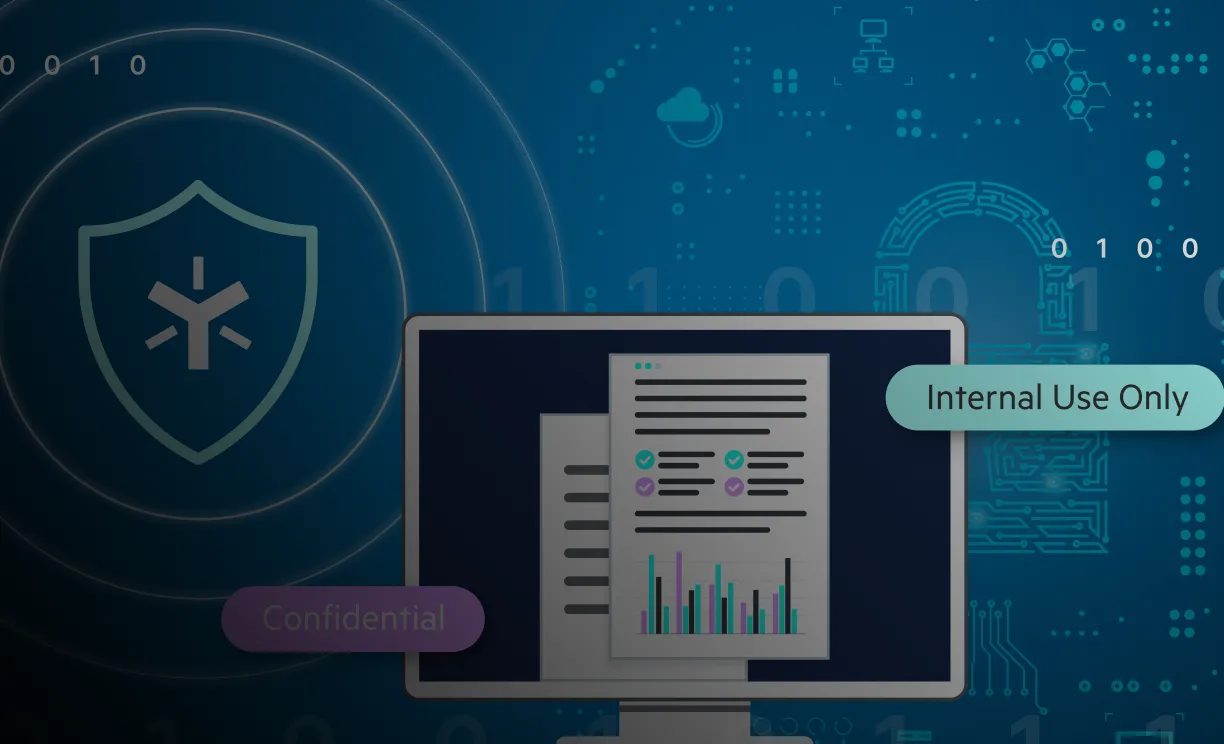
Data Loss Prevention: Strategies, Tools and Best Practices
Discover, classify, monitor, and enforce policies to stop sensitive data from leaving your organization.

What Is Data Classification and Why It Matters
Sort and categorize information assets to improve security, compliance, and faster data retrieval.
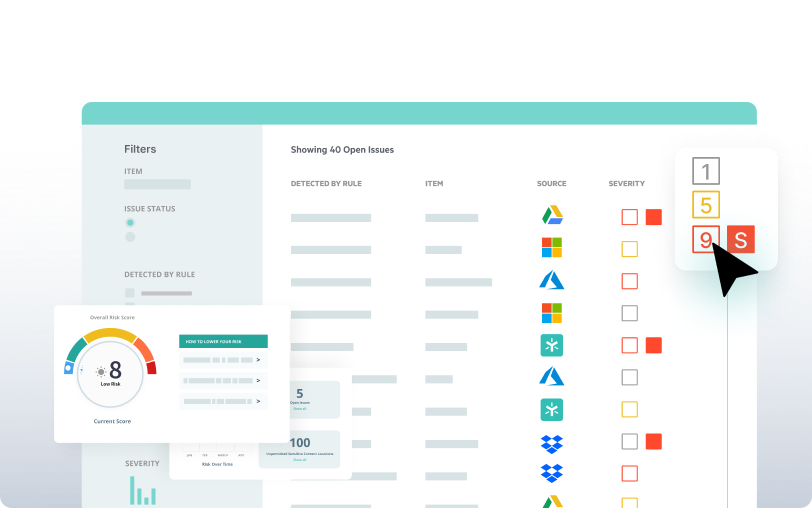
Data Control: Definition, Methods and Benefits
Oversight of sensitive information that reduces accidental data loss and ensures regulatory compliance.