
Maximizing Cross-Functional Collaboration for Business Innovation
Innovation today depends on how effectively teams work together across departments, locations, and systems. Businesses can no longer afford disconnected workflows or siloed decision-making. This is why cross-functional collaboration has become a critical driver of productivity, innovation, and long-term business growth. When marketing, IT, operations, finance, and leadership teams align around shared goals, organizations move faster and make smarter decisions. So, let’s take a look at what is cross-functional collaboration, why modern enterprises prioritize it, and how the right technology can help businesses improve teamwork, security, and operational efficiency at scale.
Let’s jump in and learn:
- Main Takeaways
- What Is Cross-Functional Collaboration?
- Why a Cross-Functional Collaboration Strategy Is Crucial for Business Growth, Teamwork, and Productivity
- How to Develop a Successful Cross-Functional Collaboration Strategy?
- The Role of Cloud-Based Solutions in Fostering Collaboration and Innovation
- Key Factors to Consider in Enhancing Cross-Functional Collaboration
- Increasing Productivity and Innovation with the Right Technological Partner
- Conclusion
Main Takeaways
- Cross-functional collaboration helps organizations break down silos and accelerate innovation
- A strong cross-functional collaboration strategy improves decision-making and productivity
- Modern cross-functional collaboration tools enable secure, real-time teamwork across departments
- Cloud platforms simplify content access, version control, and workflow management
- Organizations that prioritize collaboration often see faster project execution and improved business outcomes
- Platforms like Egnyte help businesses strengthen security, compliance, and enterprise collaboration
What Is Cross-Functional Collaboration?
Definition and Importance
Before we begin, let’s define cross-functional collaboration. It means bringing together teams from different departments to work toward a common business objective. The cross-functional collaboration definition extends beyond simple communication. It focuses on creating aligned workflows, shared accountability, and collective problem-solving.
The cross-functional collaboration meaning becomes clearer when organizations combine expertise from multiple departments. For example:
- Marketing teams provide customer insights
- Product teams shape feature development
- IT teams manage infrastructure and security
- Operations teams streamline execution
This collaborative approach improves agility and allows businesses to respond faster to changing market demands.
Understanding the cross-functional team coordination meaning is essential for modern enterprises. Without collaboration, teams often duplicate work, delay approvals, and struggle with inconsistent communication. Cross-functional alignment helps organizations reduce inefficiencies and improve strategic execution.
Benefits to Business Innovation
So, why is cross-functional collaboration important? The benefits of cross-functional collaboration go beyond productivity improvements. Businesses also gain stronger innovation capabilities and better customer outcomes.
Key advantages include:
- Faster product and service innovation
- Better decision-making through diverse perspectives
- Reduced operational bottlenecks
- Improved alignment across departments
- Higher employee engagement and accountability
For example, many enterprise software companies now rely on cross-functional product squads that include engineering, marketing, customer success, and security teams. This model helps accelerate product delivery while ensuring customer needs remain central throughout development.
Why a Cross-Functional Collaboration Strategy Is Crucial for Business Growth, Teamwork, and Productivity
A well-defined collaboration framework helps businesses create structure around communication, workflows, and shared objectives. Without a clear strategy, collaboration efforts often become inconsistent and difficult to scale.
Boosting Creativity and Innovation
Organizations that encourage collaboration across teams often generate stronger ideas and faster innovation cycles.
Key outcomes include:
- More creative problem-solving
- Faster ideation and testing
- Better alignment between customer expectations and product delivery
- Reduced departmental silos
A retail company, for instance, may combine merchandising, logistics, analytics, and digital marketing teams to improve customer experiences across online and offline channels.
Enhancing Decision-Making Processes
Cross-functional collaboration improves decision-making because leaders gain insights from multiple perspectives before taking action.
Benefits include:
- Faster approvals and project execution
- Improved forecasting and planning
- Better risk management
- Increased organizational transparency
When finance, operations, and sales teams collaborate in real time, businesses can make faster strategic adjustments based on current performance data.
Increasing Business Efficiency
A strong collaboration model also improves operational efficiency.
Businesses can:
- Reduce duplicated work
- Improve workflow visibility
- Accelerate project completion timelines
- Improve communication between distributed teams
These improvements become especially valuable for enterprises managing global teams and large volumes of business-critical content.
How to Develop a Successful Cross-Functional Collaboration Strategy?
Key Steps and Considerations
Businesses asking how to improve cross-functional collaboration across departments should focus on creating clear processes, communication standards, and shared goals.
Important steps include:
- Defining measurable business objectives
- Aligning teams around shared KPIs
- Establishing accountability frameworks
- Encouraging leadership participation
- Creating transparent communication channels
- Providing collaboration training and support
Organizations should also regularly evaluate collaboration effectiveness using metrics such as project delivery speed, employee engagement, and operational efficiency.
Tools and Platforms for Facilitation
Modern enterprises rely heavily on digital platforms to support collaboration at scale. The right digital solutions simplify communication, document sharing, workflow management, and secure content access.
Businesses should prioritize:
- Centralized file management
- Secure remote access
- Real-time collaboration capabilities
- Workflow automation
- Enterprise-grade compliance controls
Many organizations now invest in collaboration tools for business that integrate messaging, content management, and workflow coordination into a single platform.
The Role of Cloud-Based Solutions in Fostering Collaboration and Innovation
The Advantages of the Cloud for Teamwork and Productivity
Cloud technology has transformed the way organizations manage collaboration. Modern enterprises need flexible systems that support remote teams, distributed operations, and secure content sharing.
Team coordination across departments becomes much more practical when employees can securely access files and collaborate from anywhere.
Cloud-based environments provide:
- Faster file access across locations
- Simplified version control
- Improved scalability for growing teams
- Reduced infrastructure complexity
- Better support for hybrid work models
Businesses using cloud file server solutions often improve workflow consistency while reducing IT management overhead.
Organizations also experience the benefits of real-time collaboration, including faster approvals, reduced communication delays, and better project visibility.
Maximizing the Impact of these Solutions
To maximize collaboration success, organizations should combine technology with strong governance and security practices.
Best practices include:
- Implementing role-based permissions
- Standardizing document workflows
- Using automation to reduce manual tasks
- Monitoring collaboration activity and compliance
- Integrating collaboration platforms with existing business systems
For example, an engineering firm using Egnyte’s Content Cloud can securely manage project files across multiple teams while maintaining compliance and visibility throughout the project lifecycle.
Key Factors to Consider in Enhancing Cross-Functional Collaboration
Building a Collaborative Culture
Technology alone cannot create collaboration. Businesses must also build a culture that encourages transparency, trust, and shared accountability.
Organizations can strengthen collaboration by:
- Encouraging open communication
- Recognizing team achievements
- Supporting knowledge sharing
- Creating leadership alignment across departments
A collaborative culture helps teams work more efficiently and adapt faster to changing business priorities.
Promoting Clear Communication
Clear communication remains one of the most important components of successful collaboration.
Businesses should focus on:
- Standardized reporting processes
- Shared dashboards and visibility
- Regular cross-functional meetings
- Consistent project documentation
When communication improves, teams can reduce misunderstandings and execute projects more efficiently.
Increasing Productivity and Innovation with the Right Technological Partner
Boosting Security, Teamwork, and Productivity
As businesses expand collaboration across teams and locations, security becomes increasingly important. Organizations need a secure collaboration tool that protects sensitive information while enabling seamless teamwork.
Enterprise collaboration platforms should provide:
- Granular access controls
- Audit trails and monitoring
- Compliance support for regulated industries
- Secure external sharing capabilities
These features help businesses balance collaboration with governance and data protection requirements.
Empowering Teams for Innovative Outcomes
Modern collaboration platforms also improve innovation by helping teams work faster and more efficiently.
Advanced collaboration capabilities include:
- AI-driven workflow insights
- Real-time file synchronization
- Mobile access for distributed teams
- Automated document management
Organizations that invest in modern collaboration infrastructure often improve operational agility and accelerate innovation across departments.
Conclusion
Collaborative business operations have become essential for organizations that want to innovate faster, improve productivity, and remain competitive in rapidly evolving markets. Organizations that successfully align teams, processes, and technology can reduce operational silos, improve decision-making, and create stronger customer experiences.
A well-executed cross-functional collaboration strategy combines people, workflows, and technology to support long-term business growth. With secure cloud-based platforms like Egnyte, enterprises can simplify collaboration, strengthen governance, and empower teams to work more efficiently from anywhere.
Frequently Asked Questions
A structured collaboration strategy helps organizations align teams around shared goals. It improves communication, accelerates decision-making, and enables faster innovation across departments.
Businesses need a collaboration strategy to eliminate silos, improve workflow efficiency, and support better coordination between teams. It also helps organizations adapt more quickly to changing market demands.
Digital technology enables secure file sharing, real-time communication, workflow automation, and centralized content management. These capabilities help distributed teams collaborate more effectively.
When teams from different departments work together, they combine unique perspectives and expertise. This often leads to faster problem-solving, stronger innovation, and better customer outcomes.
Businesses commonly use cloud-based document management platforms, messaging systems, workflow automation tools, and enterprise collaboration software to improve teamwork and productivity.
Organizations should evaluate security capabilities, scalability, compliance support, integration options, and ease of use when selecting a collaboration platform. The right partner should support both operational efficiency and long-term growth
Businesses should focus on clear goals, team alignment, communication processes, leadership support, and measurable KPIs when developing a cross-functional collaboration strategy. It is also important to choose secure and scalable technology platforms that support real-time collaboration, workflow visibility, and enterprise compliance. Organizations that balance people, processes, and technology are more likely to achieve long-term collaboration success.
The right digital solution improves productivity by simplifying communication, centralizing content access, and reducing workflow delays. Teams can collaborate in real time, automate repetitive tasks, and securely access business-critical files from anywhere. Modern collaboration platforms also support innovation by helping departments work together more efficiently, and enabling faster decision-making and better project execution.
Egnyte has experts ready to answer your questions. For more than a decade, Egnyte has helped more than 23,000+ customers with millions of users worldwide.
Additional Resources

Collaboration Products
Enable seamless teamwork across departments with Egnyte's collaboration tools.
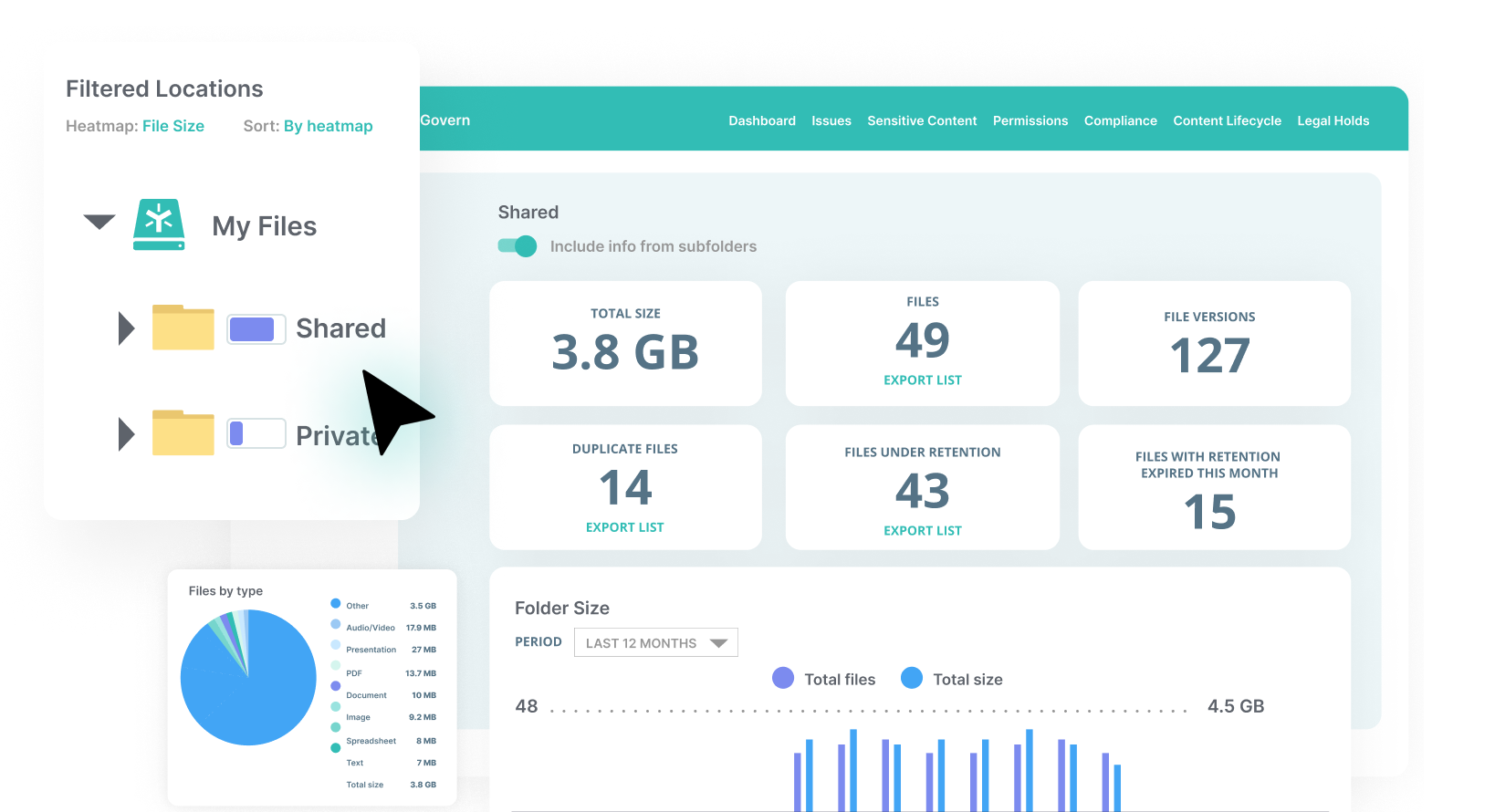
Content Lifecycle Management
Manage, govern, and secure business content throughout its entire lifecycle.

Remote Collaboration Tools
Discover tools that help distributed teams collaborate securely from anywhere.