



Featured Resource








Egnyte helps financial services firms accelerate critical business operations
—turning document-heavy tasks into faster, more connected, revenue-
generating workflows.


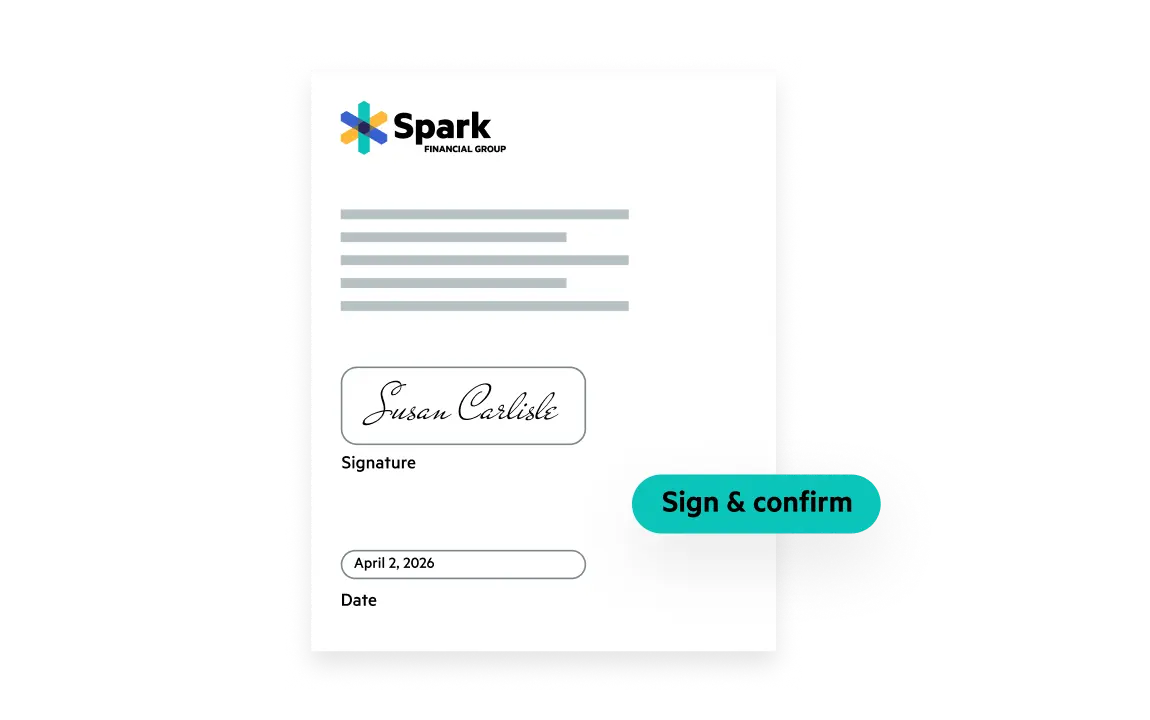
Eliminate back-and-forth email chains and simplify document collection with intuitive, guided workflows. Collaborate in real time across departments or clients with co-editing, templated document requests, PDF comparison, and e-signature. Ensure productivity without retraining or disruption through integrations with desktop and business apps.
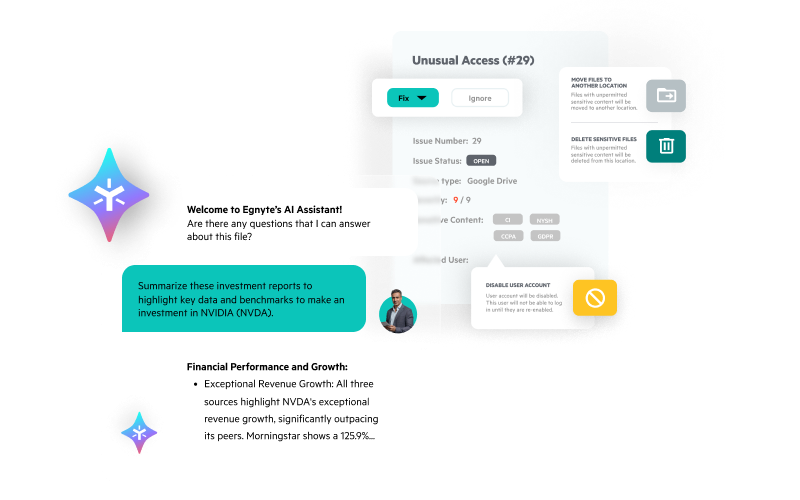
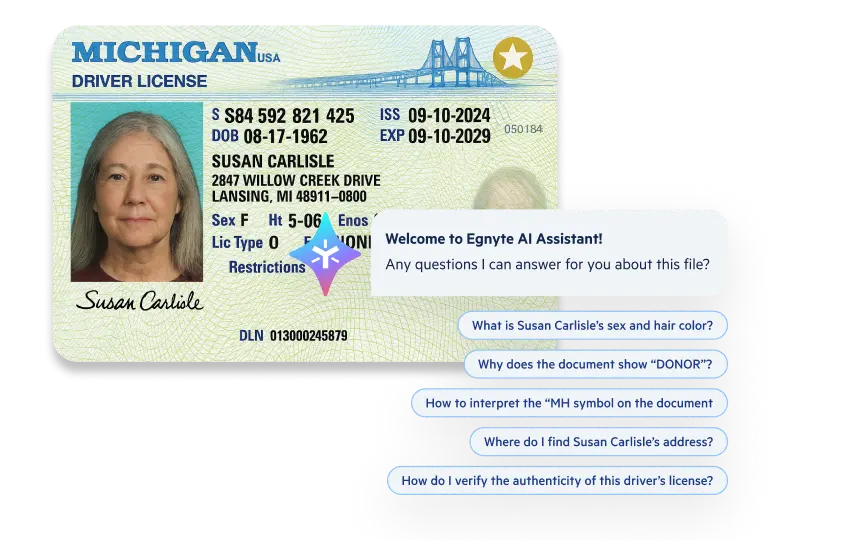
Search in natural language, use conversational AI, and apply prompt libraries to extract insights across content. Agents automate complex, repetitive tasks—streamlining diligence, reporting, and onboarding. Secure AI with safeguards ensures insights adhere to governance policies, enabling faster work without higher risk.
Get centralized audit trails, anomaly/threat detection, and ransomware recovery across hybrid environments. Automate lifecycle retention, classification, and policy management. Egnyte embeds compliance into workflows for SEC, FINRA, GLBA, NAIC, NCUA, and more.
Support growth and reduce IT administration burdens with a cloud-first architecture designed to scale—no library size limits, no sync latency. From your first file to your first petabyte, Egnyte ensures consistent performance and reliability while maintaining data residency requirements and a single, centralized repository that eliminates content silos.

“Pulling files and folders into a single cloud platform—one that we can easily control—has created efficiency gains for our global team.”

“Egnyte checked all the boxes. It performed well, was extremely scalable, and had a great, feature-rich user interface.”

“Egnyte’s sensitive-content detection and ransomware functionality help us stay on top of anything unusual, with constant visibility into who has access to what.”

“Egnyte was disruption-free, which made user adoption so much smoother. I even hadsomeone tell me, ‘I don’t use Egnyte,’ not realizing she was using it every day.”

“My team loves Egnyte. They love the granularity, they love the control, and they lovethat it makes data migration so easy.”
Want to see what Egnyte has for your organization?




Egnyte Supports Industry Associations






$22 / User / Month
Paid annually*
$39 / User / Month
Paid annually*
MOST POPULAR
Advanced AI
$48 / User / Month
Paid annually*
Advanced AI
Contact us for a
custom quote

Egnyte is trusted by thousands of IT leaders and end users. We are industry leaders in data security, data governance, cloud content collaboration, and tools for IT managers.

Cloud Content
Collaboration
Data
Security
Data
Governance
Data-Centric
Security
Sensitive
Data Discovery
Autodesk Forma
Integration Partners
Electronic Trial
Master File (eTMF)
Have more questions? Contact Sales to get the answer you’re looking for.
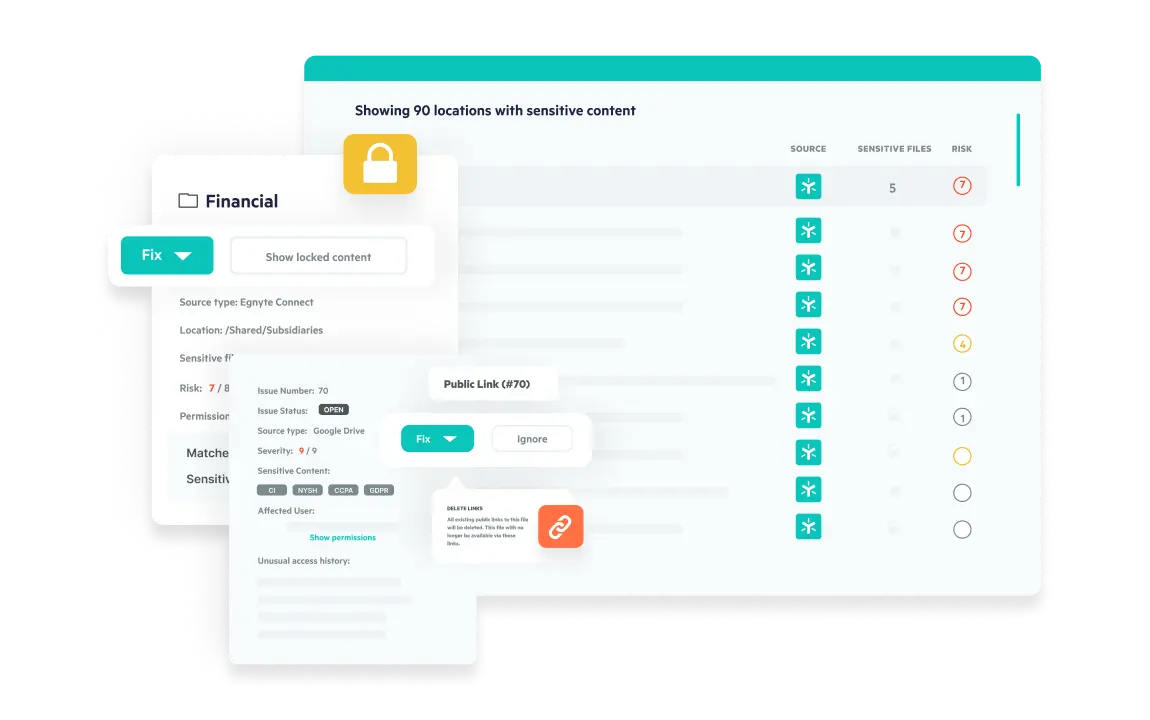
Egnyte protects sensitive financial data through automated classification that detects PII, transaction records, and confidential documents across every repository — applying permissions and governance policies without manual tagging. A sharing dashboard gives administrators real-time visibility into what has been shared and with whom, while behavioral anomaly detection flags unusual access patterns before a breach can spread. Every file action is captured in an immutable audit trail available for regulatory review on demand.
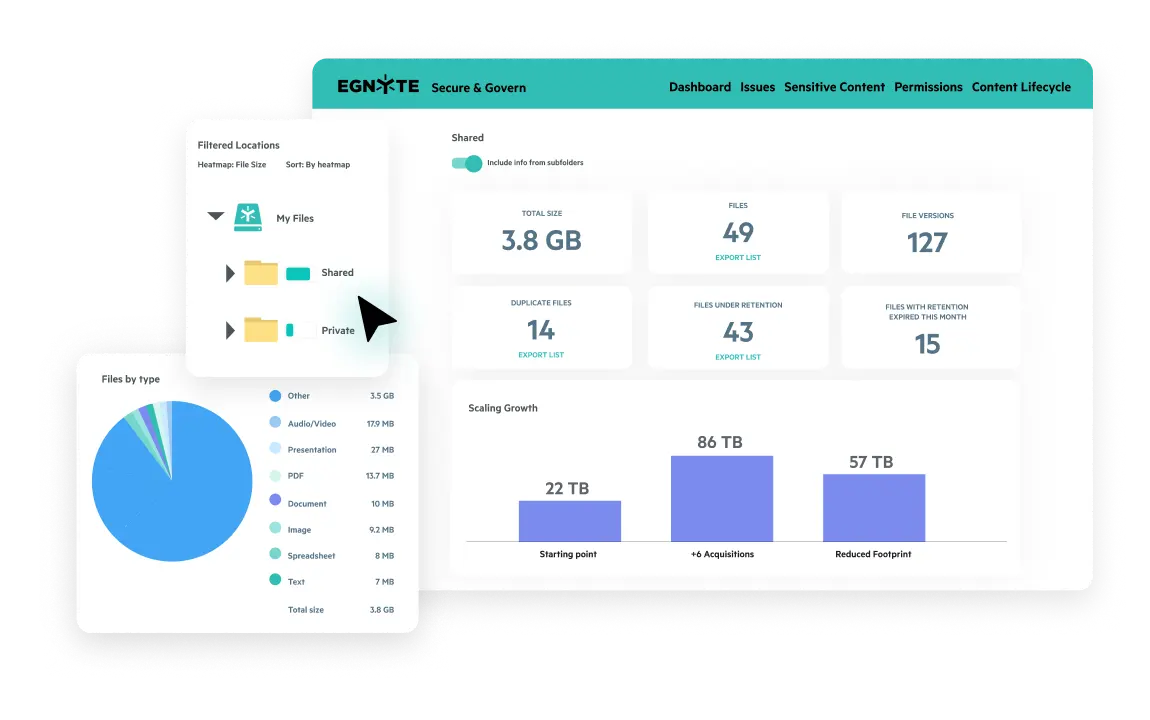
Best practice starts with policy-driven lifecycle management — defining retention schedules by record type based on SEC Rule 17a-4, FINRA, GDPR, CCPA, and other applicable regulations, then automating enforcement rather than relying on manual administration. Egnyte applies these policies uniformly across cloud, hybrid, and legacy repositories, enforces legal holds for litigation preservation, and logs every deletion event for audit proof — reducing both compliance risk and long-term storage overhead.
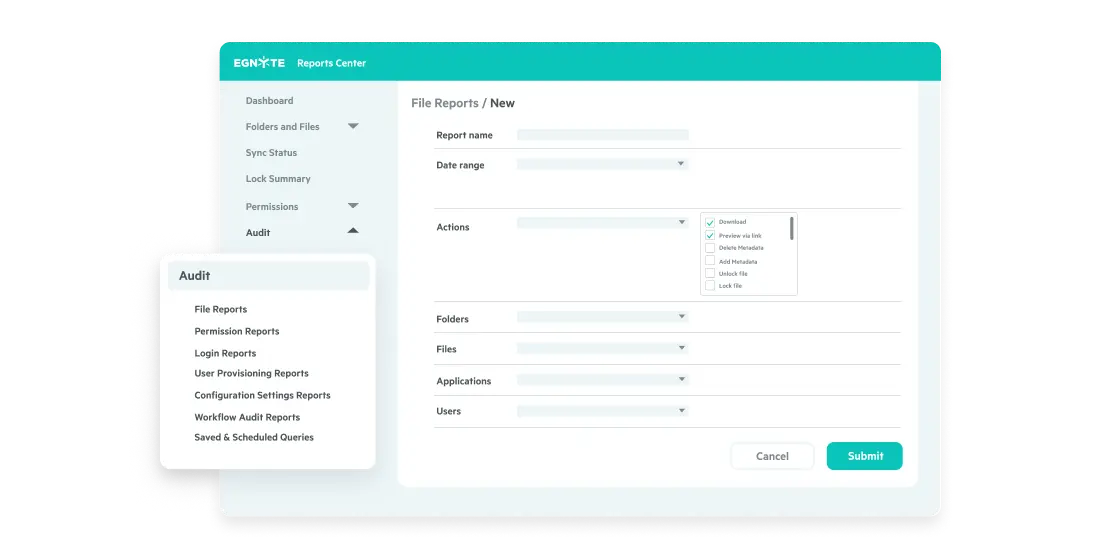
Egnyte builds compliance into the content platform rather than treating it as a separate layer. Immutable audit logs capture every file action, permission change, and access event. Automated data classification enforces policies on sensitive content from the moment it enters the system. Policy-driven lifecycle management handles retention and deletion aligned to SEC, FINRA, GLBA, GDPR, and CCPA so firms can demonstrate regulatory readiness on demand rather than reconstructing records under deadline pressure.
Egnyte's permission-aware AI lets teams search, summarize, and extract insights from financial documents without copying or moving sensitive data outside governed systems. AI results are scoped to each user's existing access level so that no regulated content is routed through public models, and no data leaves the firm's governed environment. This lets firms operationalize AI across document-heavy workflows like underwriting, due diligence, and compliance review while maintaining the data governance controls regulators require.
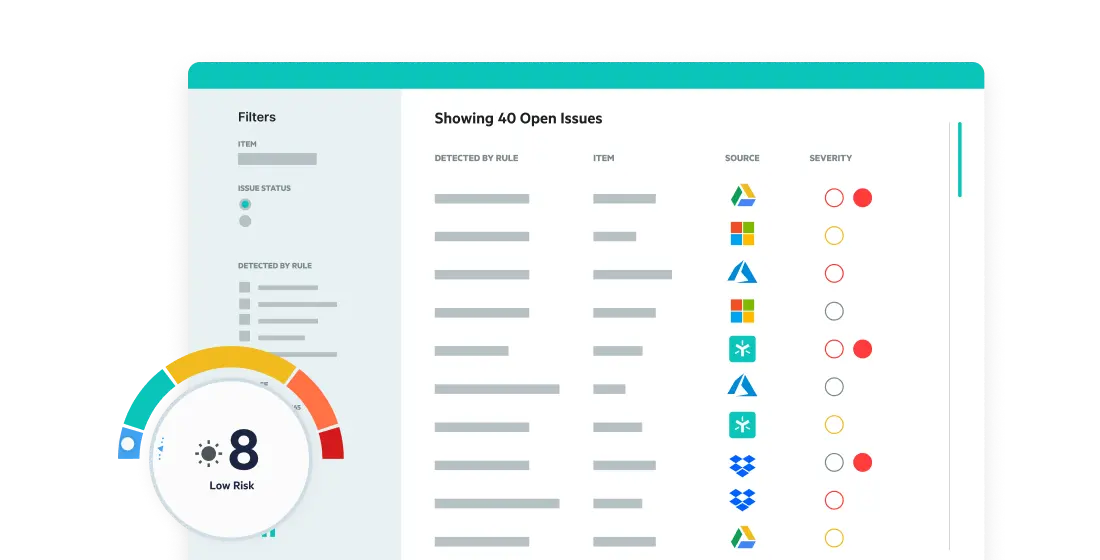
Egnyte's behavioral anomaly detection identifies ransomware early flagging mass file modifications, unusual encryption activity, and abnormal access patterns in real time and alerting security teams before damage spreads. If an incident occurs, snapshot recovery lets teams restore individual files or entire repositories to a clean pre-attack state without extended downtime. Insider threat monitoring adds a second layer, detecting bulk downloads and unusual sharing activity that traditional perimeter defenses miss.
The most effective path is migrating to a platform that preserves how financial teams already work with desktop access, mapped drives, familiar applications while adding the governance, AI, and compliance automation that legacy file servers can't provide. Egnyte enables this without workflow disruption: teams continue working in Excel, Word, and desktop apps while gaining centralized access controls, automated classification, and the AI-ready content infrastructure needed to scale through acquisitions, spinoffs, and distributed team growth.
Beyond encryption, financial firms need granular permissions, a sharing dashboard that surfaces every active share in real time, and the ability to revoke external access retroactively. Native integrations with Salesforce, Microsoft 365, SharePoint, and Google Workspace reduce adoption friction and keep governance inside tools teams already use. Audit trails that capture every file interaction are not just logins but combined with e-signature and PDF comparison in the same governed workspace are what separate purpose-built financial content platforms from general-purpose file sharing tools.
See how Egnyte helps financial services firms cut manual work, accelerate client service, and embed compliance into workflows—without duct-taping tools or moving content.