



Featured Resource

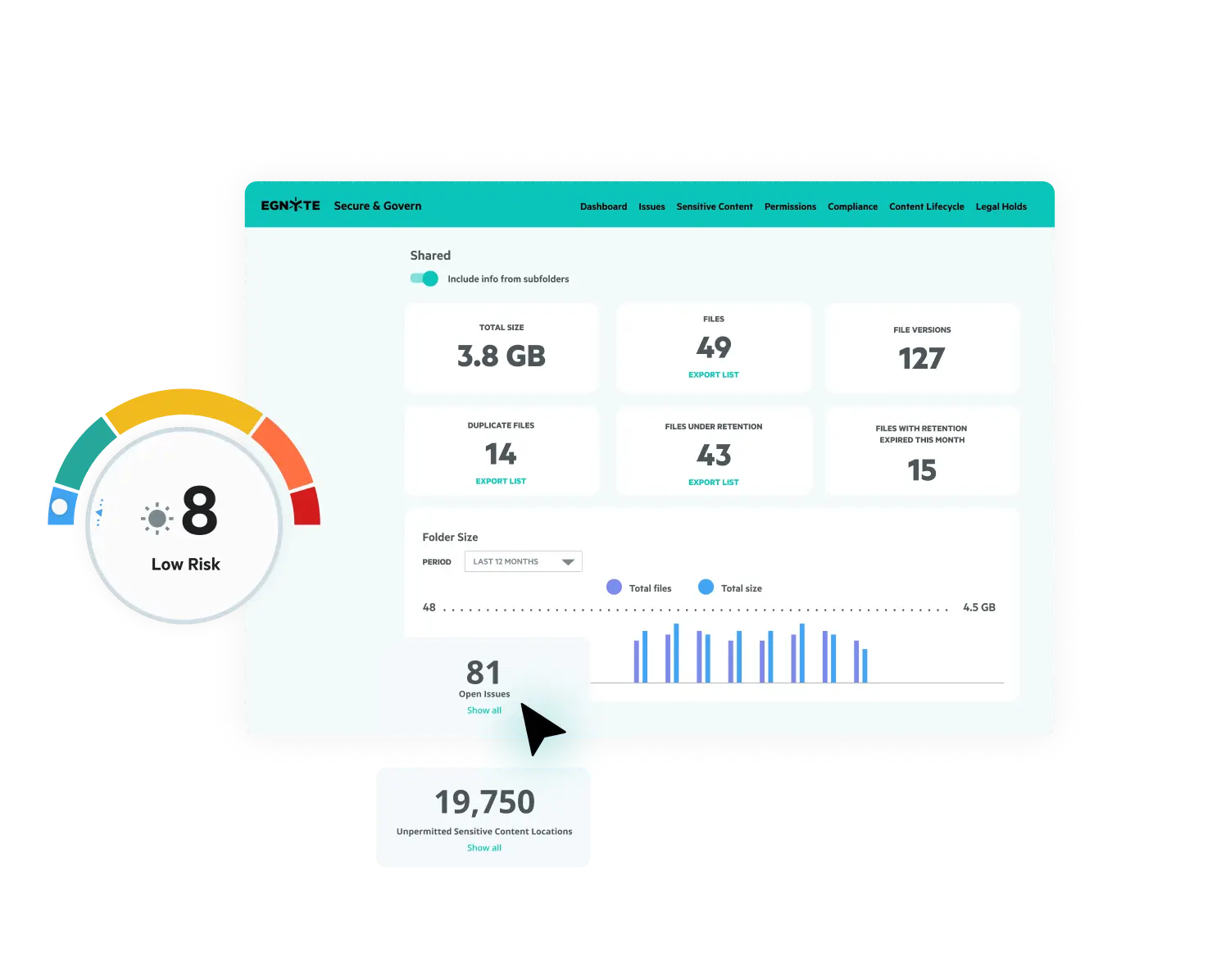









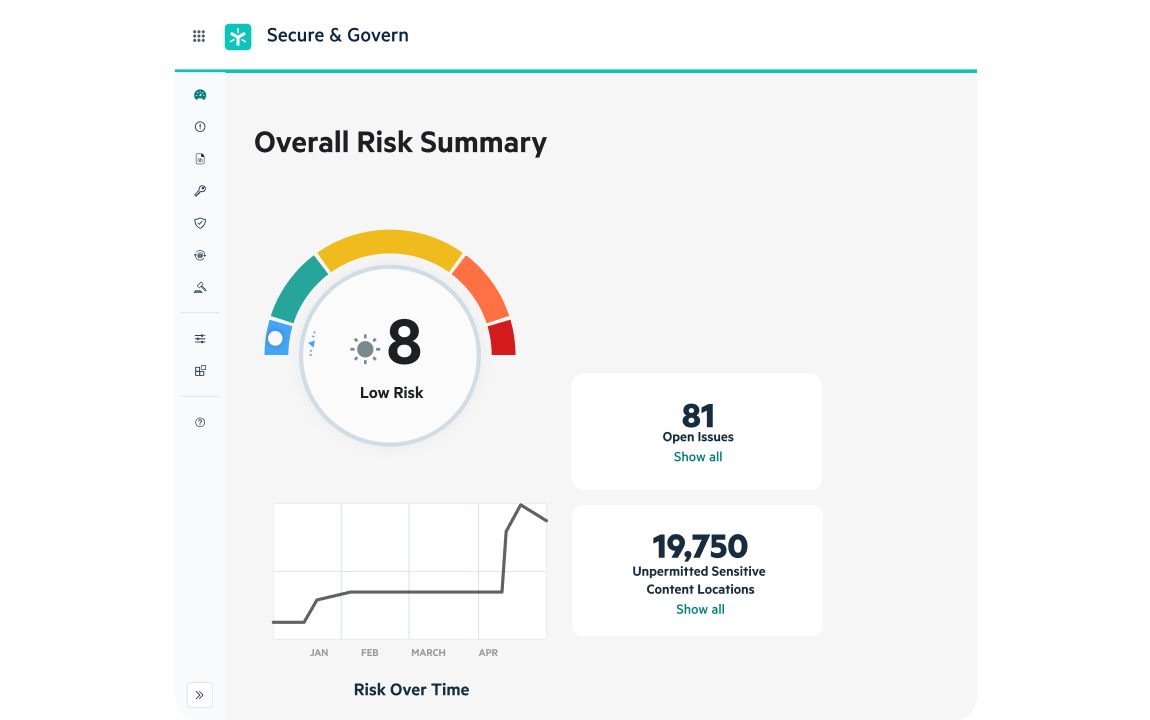
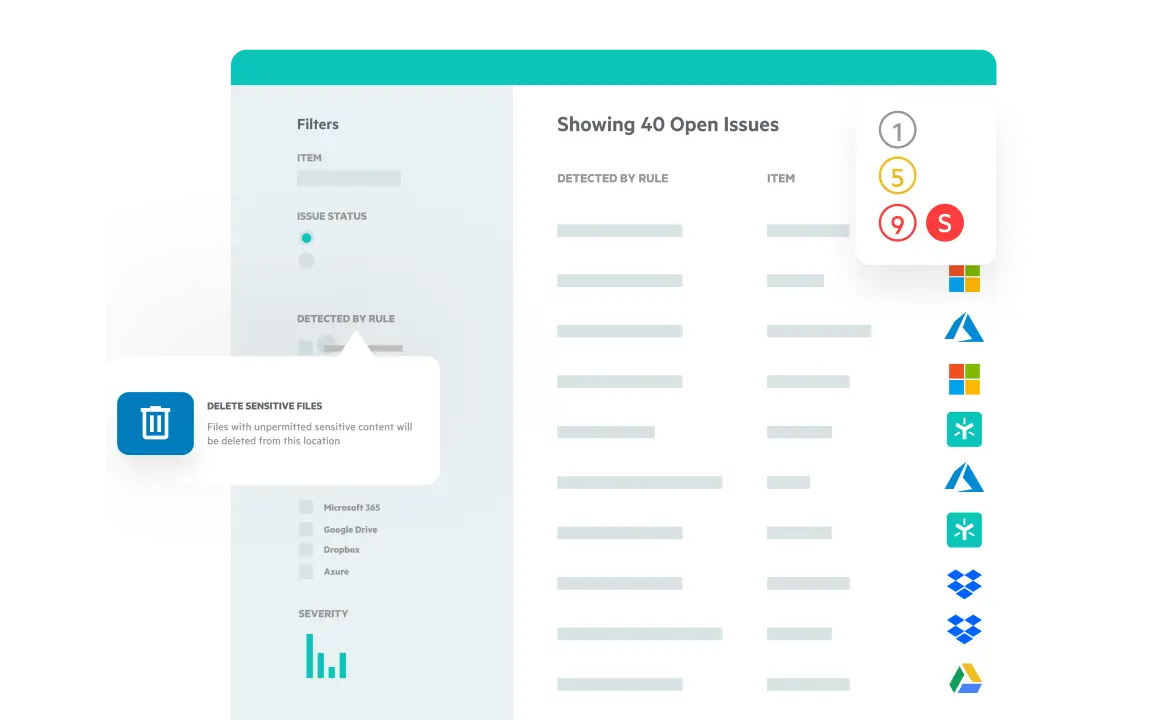
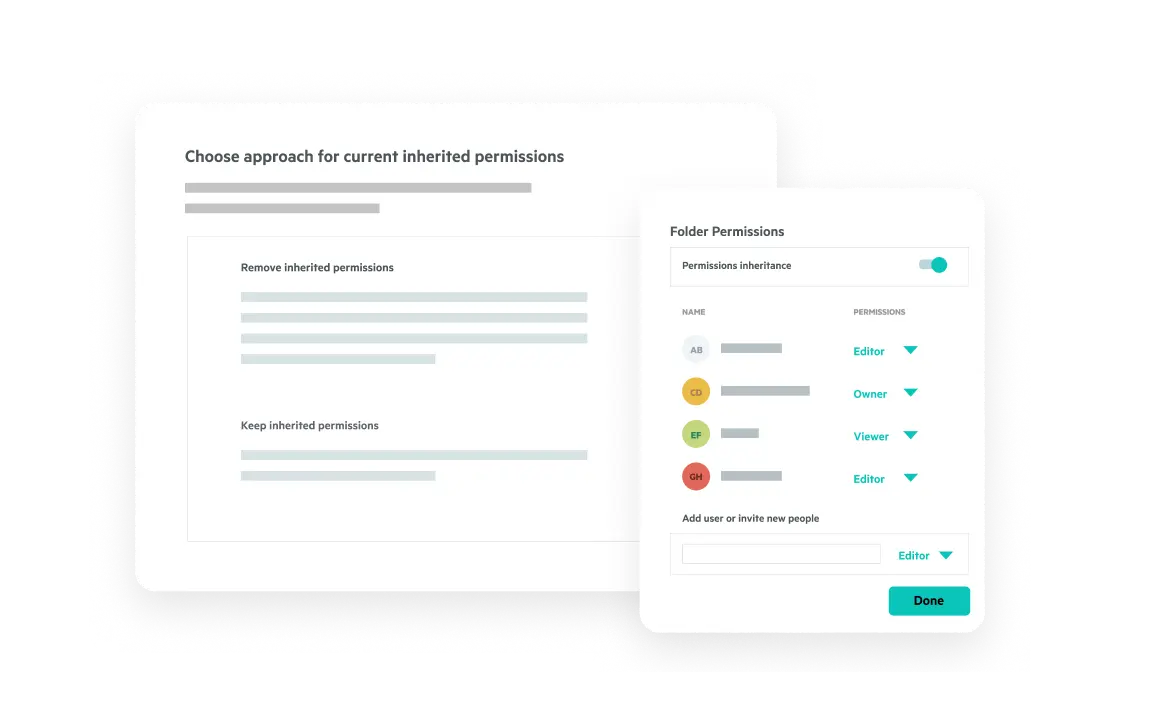
Limit users’ file access based on “business need to know” and reduce your ransomware attack footprint. Use classification patterns to locate and classify sensitive files, enabling comprehensive protection. Minimize access paths to sensitive data in advance to further reduce exposure.
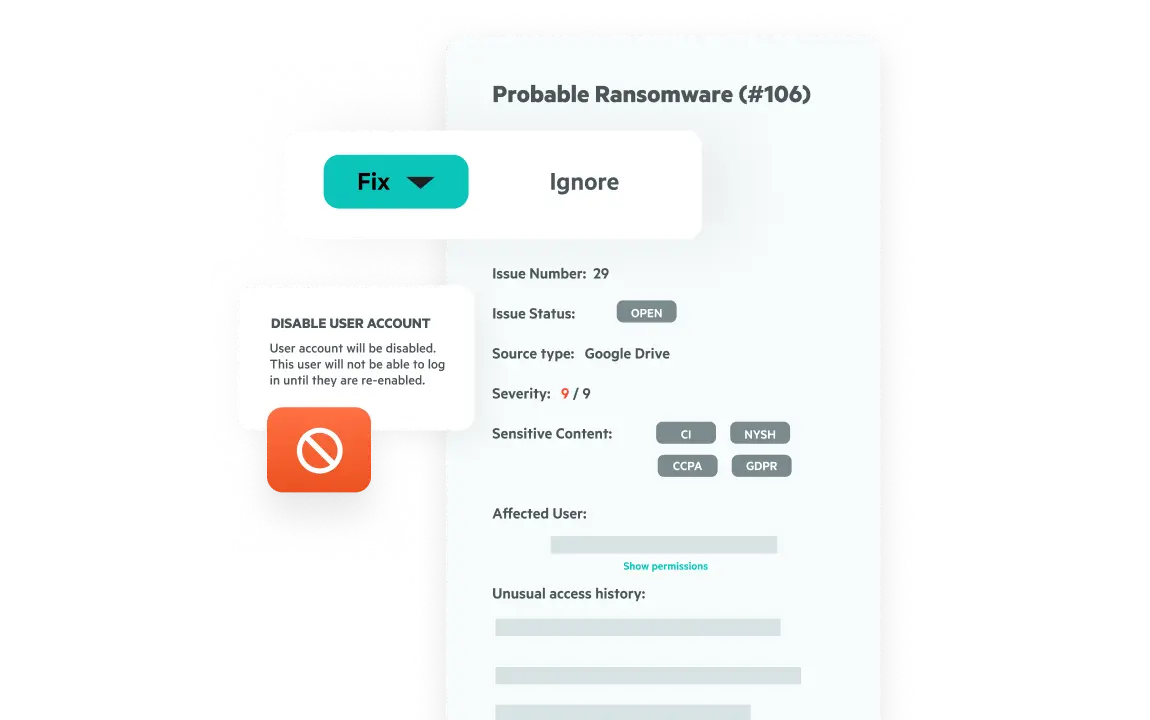
Use signature-based detection to scan folders and flag files with patterns commonly associated with ransomware. Identify previously unknown ransomware variants through behavioral analytics, and access continuously updated, cloud-based protection, without the overhead that results from maintaining it yourself.
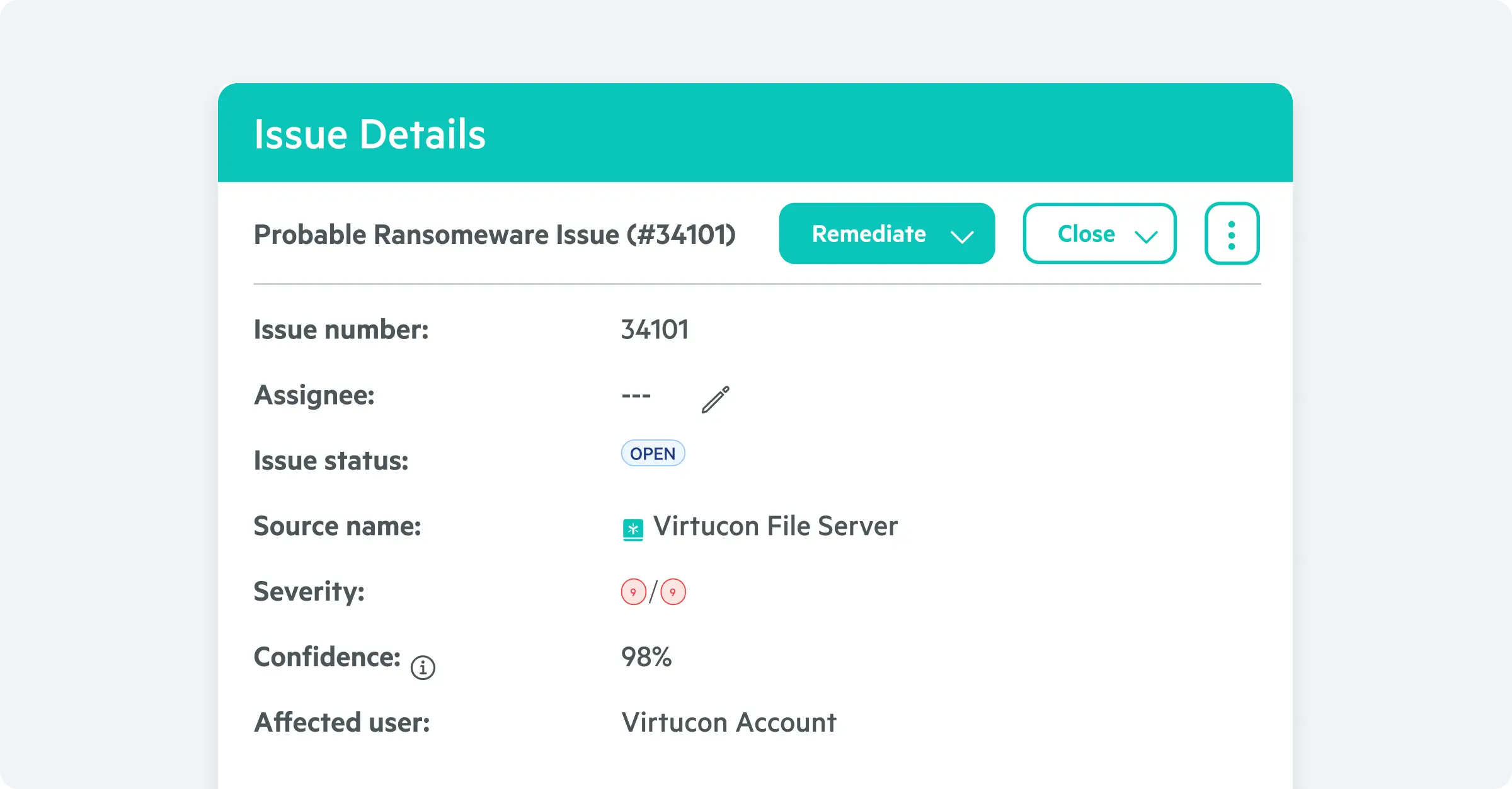
Accelerate incident investigation and simplify recovery with a detailed audit trail of compromised users, files, and sensitive data. Restore your environment to a snapshot taken just before the attack to recover more rapidly and minimize disruption.
Rely on the latest advances in data protection and ransomware detection, backed by Egnyte’s dedicated team of experts. Leverage proprietary, AI-powered models purpose-built to detect ransomware and identify early signs of data encryption.
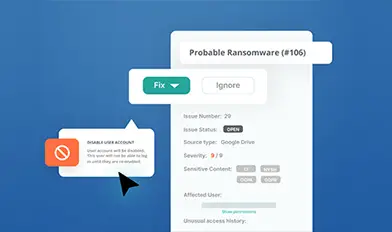
Protect against ransomware by identifying impacted users and taking immediate action to prevent attacks from spreading.

“My team loves Egnyte. They love the granularity, they love the control, and they love that it makes data migration so easy. Egnyte is definitely up there with the best modern cloud applications.”

“If someone moves or deletes a large number of files, or if there’s a ransomware signal, our security team gets a notification. Those alerts automatically feed into our help desk ticketing system so the team can track and investigate.”
Want to see what Egnyte has for your organization?
Ransomware Protection is part of Egnyte’s governance platform.
Enhance data protection with these complementary products.
Have more questions? Contact Sales to get the answer you’re looking for.
The three main ransomware detection types are: signature-based detection, which analyzes files for malicious extensions tied to known ransomware strains; artifact-based detection, which scans content against known ransom note patterns; and behavioral detection, which analyzes user and file activity — such as mass encryption and bulk renaming — to identify attacks in real time. Egnyte supports all three detection methods within a single governance platform.
When Egnyte detects ransomware activity, it can automatically suspend the affected user's account to contain the threat before it spreads, when customers have given Egnyte permission to auto-remediate. In all circumstances, administrators and security teams are alerted immediately to begin damage assessment and recovery efforts. The automated containment response that’s available through auto-remediation is critical — as the first minutes of an attack determine how much data is compromised and how long recovery might take.
Egnyte's snapshot recovery maintains versioned file snapshots so organizations can restore clean copies quickly after an attack — without paying a ransom. Snapshots allow selective or full restoration of affected files from a point in time before infection. This approach supports the 3-2-1 backup principle that’s detailed in the following question by keeping recovery copies available even if an attacker gains access to a large volume of company files through ransomware, fast-tracking the return to productivity.
The 3-2-1 rule requires at least three copies of important data, on two different media types, with one stored off-site. Security experts add that at least one copy should be kept offline and inaccessible from your network — so an immutable recovery copy survives even if an attacker gains access to a significant volume of company data. Egnyte's snapshot recovery mechanism supports this principle, enabling fast data restoration from ransomware attacks without ransom payment.
The five steps are: (1) Detection — identifying affected users and systems; (2) Containment — revoking impacted users’ access or isolating vulnerable systems to halt the spread; (3) Restoration — using snapshot recovery to restore files and return teams to productivity; (4) Notification — engaging legal counsel, cyber insurance, and relevant authorities per your incident response plan; (5) Post-mortem review — reviewing the company’s response to close gaps and reduce future exposure.Click here to learn about key elements of an incident response plan.
Egnyte reduces ransomware exposure proactively by limiting users’ file access based on business need-to-know — so a compromised account can only reach a narrow slice of data. AI-powered classification locates and classifies sensitive files across repositories, enabling targeted permission controls before an attack begins. Minimizing access paths to sensitive content limits the attack surface and keeps ransomware from spreading laterally through the organization. Fundamental data hygiene best practices- such as deletion and archival of data that’s no longer being used by the organization- significantly limits the attack surface.
Look for multi-type detection coverage (signature-, artifact-, and behavioral-based), automated account suspension upon detection (when customers have authorized auto-remediation), snapshot-based recovery without requiring a full backup restore, role-based access control that limits per-user exposure, and full audit trails that support post-incident review and forensics. Egnyte Secure & Govern combines all of these capabilities within a single governance platform — purpose-built for ransomware detection and recovery, not added as a bolt-on security layer.
Ready to improve productivity? Egnyte’s AI-powered cloud enhances collaboration, automates workflows, and secures your mission-critical content.