
How Data Classification Tools Fit Into a Modern Sensitive Content Classification Tech Stack
Data classification is the process of identifying, labeling, and categorizing data based on sensitivity, risk, and regulatory relevance. In modern enterprises, data classification is not the end goal but a prerequisite for enforcing controls across systems.
Classification is necessary because security tools cannot differentiate between low-risk and high-risk content. Access control, monitoring, retention, and incident response all depend on accurate classification signals. As a result, classification functions as the foundation upon which sensitive data management and governance controls are built.
Let’s jump in and learn:
- Main Takeaways
- Different Types of Data Classification
- Why Do You Need Data Classification for Stack Integration?
- Challenges in Modern Data Classification
- How Classification Tools Integrate into the Security Tech Stack
- Future-Proofing Your Sensitive Content Strategy
- How Egnyte Supports Modern Sensitive Content Classification
Main Takeaways
- Data classification tools are foundational components of a modern sensitive content classification tech stack.
- Classification establishes enforceable access control, monitoring, and lifecycle governance across systems.
- Automation is critical to classify sensitive data accurately at an enterprise scale.
- Integrated classification reduces misclassification risk and improves sensitive data management.
- Platforms like Egnyte turn classification signals into consistent governance enforcement across environments.
Different Types of Data Classification
Organizations employ multiple types of data classification, each playing a distinct role in the tech stack. Those include:
- Content-based classification, which inspects file contents to detect regulated or confidential information
- Context-based classification, which uses metadata like owner, location, or usage patterns
- Policy-based classification, which assigns labels based on business rules or regulatory requirements
Each classification type feeds different downstream systems. For example, sensitivity labels derived from content- and context-based classification inform access enforcement, while policy-based classification drives retention and archiving decisions. A modern stack typically combines all three to improve accuracy and coverage.
Why Do You Need Data Classification for Stack Integration?
Data classification is required in stack integration to make security and governance tools effective at scale. Without classification, controls are distributed and fragmented, creating either excessive restriction or insufficient protection. Classification allows systems to:
- Enforce least-privileged access based on data sensitivity levels
- Prioritize monitoring and alerting for high-risk content
- Automate lifecycle actions such as archiving or deletion
- Support defensible compliance and auditability
While classification can improve awareness, its primary role in this context is to establish enforceable, system-level control across the stack.
How Modern Sensitive Content Classification Tech Stacks Use Classification Signals
In modern enterprise tech stacks, data classification tools sit upstream of enforcement layers and downstream of discovery mechanisms. Different tech stacks serve dedicated purposes to function as one cohesive security system. For example:
- Discovery and scanning components identify sensitive data across repositories, cloud platforms, and collaboration systems.
- Classification engines assign sensitivity context using content inspection, metadata analysis, and policy rules.
- Access control systems consume classification signals to enforce least-privileged permissions and sharing restrictions.
- Monitoring platforms use classification context to prioritize alerts and detect risky activity involving sensitive data.
- Archiving solutions apply retention, immutability, and lifecycle controls based on data sensitivity.
Governance workflows rely on classification signals to support auditability, compliance reporting, and policy enforcement. This architectural role is what makes data classification foundational rather than optional. Without it, security and governance tools operate in isolation, lack context, and fail to scale as data volumes and regulatory pressure increase.
Benefits of Classifying Information – Security, Compliance, and Operational Efficiency
When classification is integrated into the tech stack, downstream tools can act with precision rather than with broad assumptions. Benefits include:
- Increased Awareness and Responsibility: Classification allows systems (not users) to determine how data should be handled. This reduces reliance on manual judgment and embeds responsibility into the platform layer rather than individual behavior.
- Enhanced Compliance with Regulations: Accurate classification supports the classification of sensitive information required under privacy and industry regulations. Compliance controls become enforceable and auditable rather than policy-driven and manual.
Challenges in Modern Data Classification
Modern environments introduce complexity that traditional classification methods cannot address. These challenges include:
- Data Sprawl and Silos: Sensitive data exists across cloud platforms, collaboration tools, and legacy systems. Without centralized classification, visibility remains fragmented, and controls are applied inconsistently.
- Unstructured Data and Varying Formats: Most sensitive data is unstructured. Emails, documents, images, and collaborative files require classification approaches that extend beyond file location or naming conventions.
- Training and Awareness for Employees: Traditional classification relies on employees to label data correctly, which does not scale in modern environments. As content moves across tools and teams, user-driven classification becomes inconsistent, making automated data classification crucial for consistent labeling and enforcement.
Why Traditional Approaches to Data Classification Fall Short
Legacy approaches depend on static rules, manual tagging, or periodic scans. These methods fail to keep pace with content creation, movement, and reuse, resulting in misclassification and governance gaps.
How Classification Tools Integrate into the Security Tech Stack
Modern data classification tools operate as signal providers for security and governance systems rather than isolated utilities. These tools integrate via the following necessary nodes.
Data Security and Classification
Classification allows security systems to distinguish between benign and high-risk activity. Access control, monitoring thresholds, and response workflows depend on classification context to operate effectively.
The Role of DSPM in Data Classification
Data Security Posture Management (DSPM) platforms rely on classification to map risk across environments. Classification data allows DSPM tools to identify exposed sensitive data, prioritize remediation, and track risk reduction over time.
Integration with Cloud Data Security Controls
Classification integrates with cloud-native security controls to enforce sharing restrictions, monitor access patterns, and apply policy-based actions. This integration is critical for maintaining consistent data security and governance in distributed environments.
Future-Proofing Your Sensitive Content Strategy
Classification strategies must adapt as data volumes, regulations, and architectures evolve. The following practices help future-proof these strategies.
- Continuous Data Discovery and Classification: Modern environments require continuous discovery rather than point-in-time scans. Sensitive data scanning tools must re-evaluate content as it moves, changes, or is reused.
- Model Training and Development for Ongoing Accuracy: Accuracy is maintained through improved models and automation, not repeated user training. Continuous tuning of classification logic reduces false positives and coverage gaps.
- Governance and Security Alignment: Classification must align with governance policies and security enforcement. When governance and security operate independently, classification signals are underutilized.
What to Look for in Data Classification Software
Data classification software should be evaluated primarily on how well it fits into an existing security and governance architecture, not on isolated feature sets. In modern environments, classification must function as an upstream signal that other systems can consume and enforce. Key requirements include:
- Integration with access control, monitoring, and archiving systems: Classification outputs should be natively consumable by access management, security monitoring, and archiving tools.
- Support for automated classification and reclassification: The software must classify data continuously and update classification activities as content is changed, moved, or reused. Static or one-time classification models quickly become inaccurate in dynamic environments.
- Scalability across unstructured data environments: Effective tools must handle large volumes of unstructured data across cloud platforms, collaboration systems, and file repositories without performance degradation or coverage gaps.
- Auditability and policy alignment: Classification decisions should be traceable to policies and produce audit-ready evidence.
When classification software meets these requirements, it becomes an enforcement enabler rather than a reporting tool. This distinction determines whether sensitive data controls remain theoretical or operate consistently at scale.
How Egnyte Supports Modern Sensitive Content Classification
Egnyte supports sensitive data classification by embedding classification-aware governance directly into enterprise content workflows. Rather than operating as a standalone tool, Egnyte:
- Integrates classification with access control, monitoring, and lifecycle management.
- Establishes consistent enforcement across active and less active content within a governed document management system.
- Uses classification signals to drive sharing restrictions, monitoring, and retention decisions.
- Functions as a data security and governance platform where classification drives enforcement, not only reporting.
- Reduces misclassification risk, limits sensitive data exposure, and supports scalable sensitive data management across cloud and hybrid environments.
Frequently Asked Questions
Data classification determines how sensitive or regulated information is managed, and assigns it a category that drives security, access, and retention controls. Data labeling applies visible tags or markers to reflect that classification. Classification informs enforcement, while labels help users and systems recognize how data should be handled.
Common sensitivity levels include public, internal, confidential, and highly restricted. Public data poses minimal risk, while internal data is limited to employees. Confidential data requires stronger control, and highly restricted data includes regulated or critical information that needs strict access, monitoring, and retention policies.
Automated tools scan content continuously, analyze patterns, and apply consistent rules without relying on manual input. This reduces human error, scales across large data volume, and adapts as content changes. Automation also supports real-time reclassification, ensuring sensitivity labels remain accurate throughout the data lifecycle.
Best practices include classifying data before applying access control, enforcing least-privileged permissions, monitoring user activity, and automating retention rules. Continuous discovery and reclassification help maintain accuracy as data moves. Encryption, audit trails, and policy-based enforcement further reduce exposure in distributed cloud systems.
Industries handling regulated or high-risk data benefit the most. These include healthcare, financial services, legal, government, technology, and retail. Sensitive data scanning tools help those sectors identify personal, financial, or proprietary information, apply proper controls, and meet strict compliance and security requirements.
Egnyte has experts ready to answer your questions. For more than a decade, Egnyte has helped more than 23,000+ customers with millions of users worldwide.
Additional Resources

What Is Data Classification and Why It Matters
Sort and categorize information assets to improve security, compliance, and faster data retrieval.
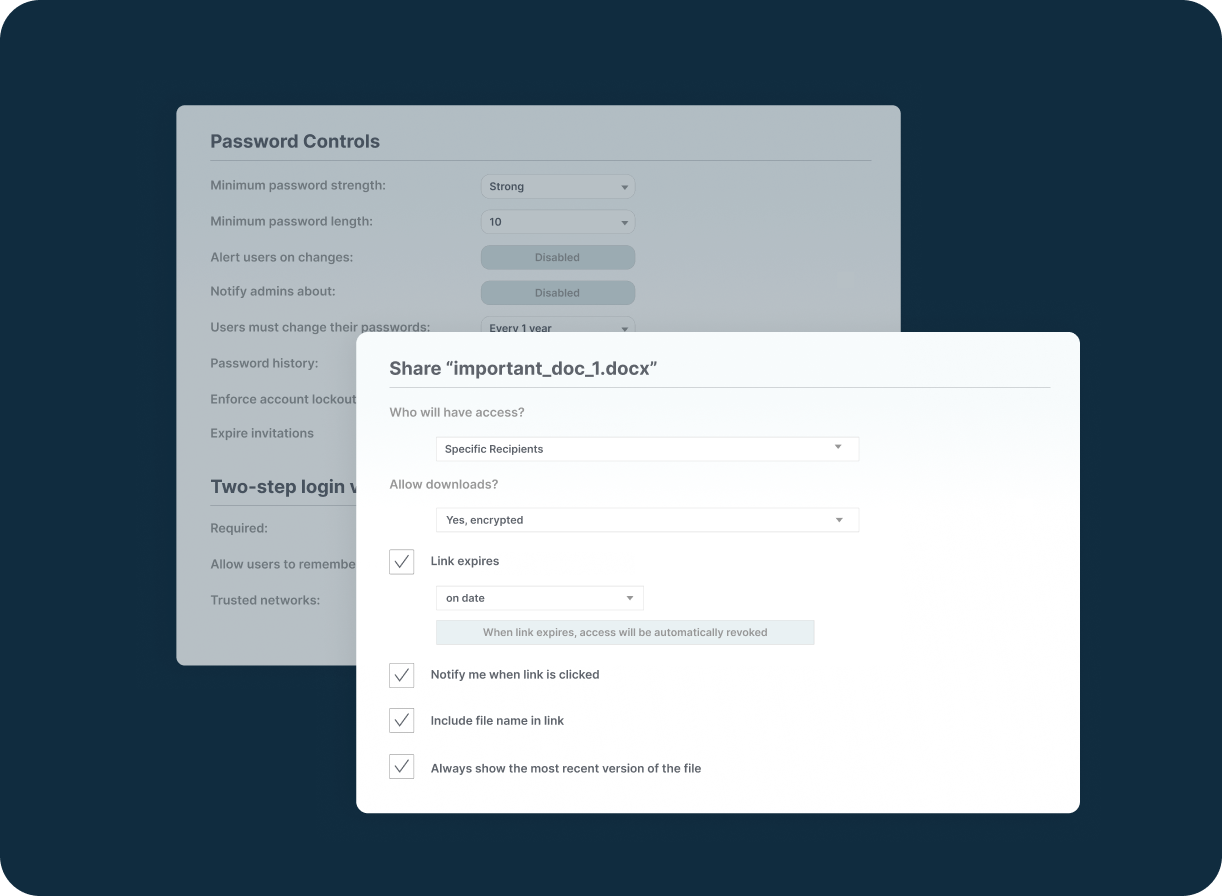
What Is Sensitive Data and How to Protect It
Learn to identify, classify, and safeguard sensitive data to prevent breaches and ensure compliance.
Sensitive Information: Types, Risks and Protection Strategies
Understand what sensitive information is and how to protect it from mishandling and unauthorized disclosure.