
Data Subject Access Request (DSAR) Guide for Compliance
Most organizations are not caught off guard by regulations. They are caught off guard by the regulation request. A single Data Subject Access Request (DSAR) can lead to days of searching, redacting, and cross-checking across fragmented systems. As privacy regulations like GDPR and CCPA gain global traction, the volume of these requests continues to grow. According to Statista’s 2024 data, 36% of internet users exercised their DSAR rights, up from 24% in 2022, clear evidence that public expectations are rising.
This shift makes DSAR compliance more than a legal requirement. It is a clear test of an organization's ability to manage data with transparency, speed, and accuracy. From identity verification to secure data delivery, a well-designed DSAR process reflects operational discipline and reinforces trust. When executed effectively, it turns regulatory demand into an opportunity to lead in data privacy.
Let’s jump in and learn:
What is DSAR (Data Subject Access Request)?
A Data Subject Access Request (DSAR) is a formal request made by an individual to access the personal data an organization holds about them. It is a core right granted under data protection laws like the General Data Protection Regulation (GDPR) and the California Consumer Privacy Act (CCPA).
DSARs are more than just paperwork; they’re a fundamental part of data transparency. Individuals can ask to see:
- What data is collected
- How it’s used
- Who it’s shared with
- And request its correction or deletion
Efficient DSAR privacy management ensures businesses stay compliant, build trust, and avoid fines.
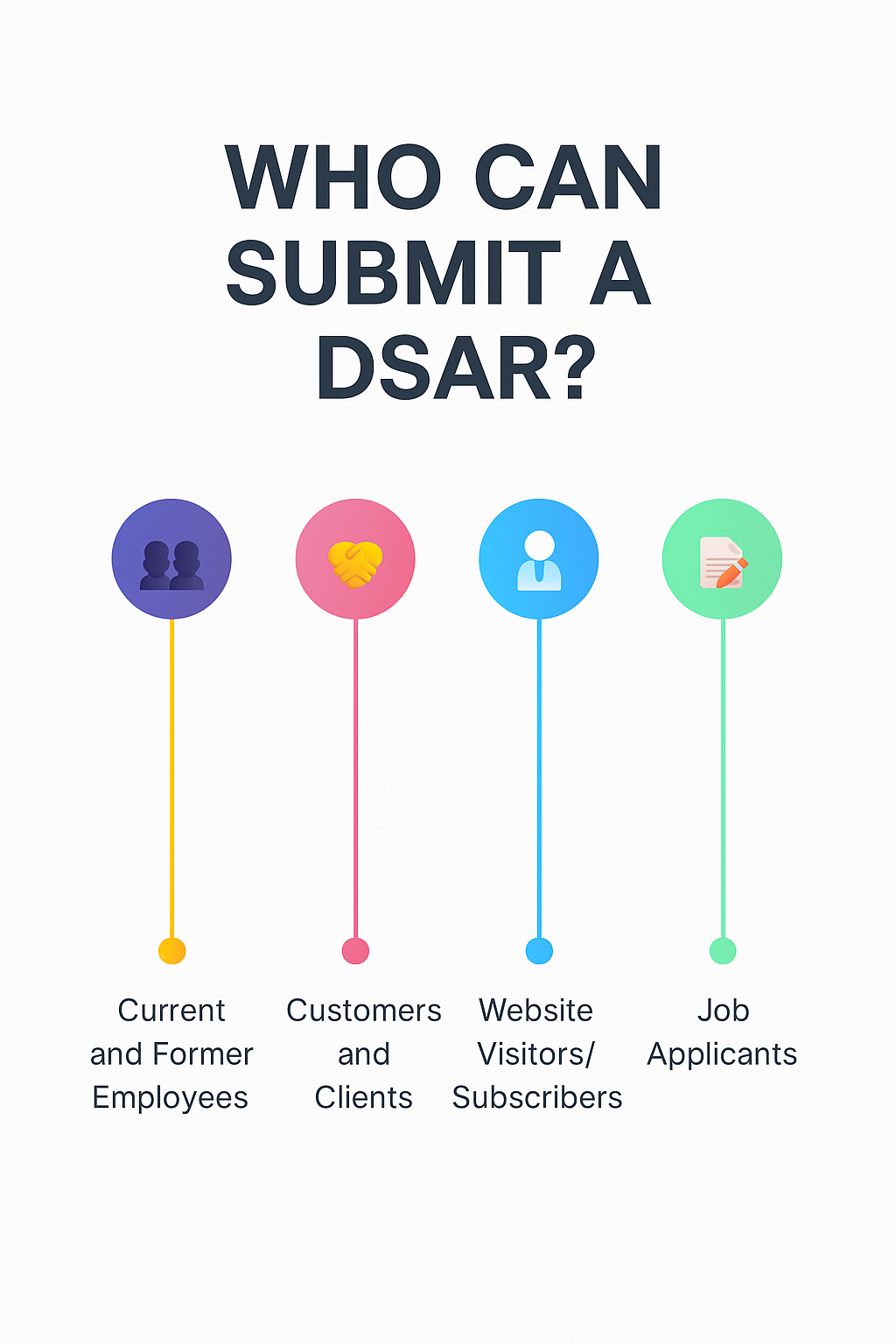
Who Can Submit a DSAR
How to Be Prepare for a DSAR?
A proactive approach reduces legal risk, reinforces trust, and streamlines operations when a request is received. Here are the key steps to ensure DSAR readiness:
- Establish a DSAR Policy - Clearly documented steps for handling requests to ensure consistency and legal compliance.
- Assign Roles and Responsibilities - Designate a point person, typically the Data Protection Officer or a member of the legal/compliance team, to oversee all DSAR-related matters.
- Keep Data Organized for Easy Accessl - Implement systems that allow quick and accurate access to personal data across departments.
Train Employees to Handle Requests - Ensure staff can identify DSARs and immediately forward them to the responsible authority
How to Respond to a DSAR?
Responding to a Data Subject Access Request (DSAR) requires procedural discipline, secure handling, and legal awareness. A well-structured response not only ensures compliance but also reinforces credibility and trust.
Step 1: Verify the Requester’s Identity
Begin by confirming that the individual making the request is entitled to the data. Acceptable verification methods include:
- A valid government-issued ID (passport, driver’s license, etc.)
- Secure login credentials via an existing customer portal
- Pre-set security questions or account verification tokens.
This step is critical to avoid unauthorized disclosures.
Step 2: Acknowledge and Track the Request
Send a written acknowledgement within 7 days (or as soon as reasonably possible) confirming the request has been received and is being processed.
Step 3: Collect and Review Personal Data
Identify and retrieve all personal data related to the requester from internal systems, cloud platforms, emails, HR records, customer support tools, and other storage points. Collaboration with multiple departments may be necessary.
Step 4: Apply Legal Exemptions and Redactions
Review the data for:
- Legal exemptions
- Third-party information that may require redaction
- Document reasons for any exclusions.
Step 5: Prepare and Deliver the Response Securely
Compile the requested data in a clear and accessible format (PDF, secure portal, etc.) and deliver it securely. Ensure the information is understandable and includes any necessary context.
Timeframes:
- GDPR: 30 days to respond, extendable to 90 days for complex cases
- CCPA: 45 days to respond, extendable by another 45 days if necessary
Step 6: Handle Partial Disclosures
If only part of the request can be fulfilled (e.g., due to confidentiality), provide the data that can be shared and include a clear explanation for what was excluded and why.
Step 7: Refuse the Request
You may lawfully decline a DSAR if it is:
- Manifestly unfounded or excessive
- Repetitive without reasonable justification
- Likely to expose another person’s data without a legal basis
Provide a written explanation outlining the reason for refusal.
Step 8: Determine If a Fee Applies
DSARs must generally be fulfilled free of charge. However, a reasonable fee may be charged if:
- The request is repetitive
- It imposes a significant administrative burden.
Common DSAR Challenges and Solutions
Some common challenges include:
- High Volume of Requests - organizations often face a flood of DSARs, putting strain on their internal resources.
- Identity Verification Issues - Confirming the authenticity of each requester is critical to prevent data breaches.
Tracking Data Across Systems - Data scattered across tools, teams, and platforms makes retrieval complex.
To overcome this, organizations use:
- Using Automation Tools - Streamline DSAR processes, from intake to delivery, saving time and effort.
- Cloud-based data governance - Allows for consistent control and visibility of personal data across the organization.
- Role-based access controls - Ensure only authorized personnel can handle sensitive data during the DSAR process.
DSAR Example: Step-by-Step Response
Scenario: A former employee submits a DSAR requesting all performance records, communications, and HR documentation.
Response:
- HR verifies the ID - Confirms the identity of the former employee before processing the DSAR.
- Pulls emails, reviews HR files - Collects relevant communications and examines HR records for completeness.
- Redacts confidential third-party references - Removes sensitive information that pertains to other individuals.
- Responds within 30 days via secure PDF - Sends the requested data within the legal timeframe in a protected digital format.
This process, when well-managed, not only meets legal obligations but also reinforces professionalism and transparency.
How Egnyte Simplifies DSAR Compliance
DSARs are no longer occasional obligations. They’re fast becoming a constant operational pressure. As public awareness grows and regulations become tighter, organizations must respond faster, more accurately, and with minimal room for error. Delays, missteps, or incomplete responses can result in fines, reputational damage, and erosion of trust.
Egnyte helps mitigate that risk. Its unified platform automates the DSAR lifecycle, from secure intake and identity verification to data discovery, redaction, and audit-ready delivery. With centralized visibility, role-based access controls, and built-in policy enforcement, Egnyte gives teams the clarity and confidence to meet every request with speed and precision.
Frequently Asked Questions
Q. Who Should Respond to the DSAR?
Organizations must assign a trained and authorized individual or team, typically the Data Protection Officer (DPO), legal, or compliance team, to manage and fulfill DSARs. This role involves verifying identity, coordinating data retrieval, and ensuring timely and secure responses.
Q. What are the Penalties for Not Responding to a DSAR?
Non-compliance can result in serious financial and reputational consequences. Under the GDPR, penalties can reach €20 million or 4% of the company's global annual revenue, whichever is higher. Under the CCPA, fines can reach up to $26,625,000 per violation. Repeated failures may also lead to audits and legal action.
Q. What is the Timeframe and Deadline for Responding to a DSAR?
- GDPR: Organizations must respond within 30 calendar days. An extension of up to 60 additional days may be granted for complex requests.
- CCPA: The response period is 45 calendar days, with a possible 45-day extension if necessary. Any delays must be clearly communicated with justification.
Q. What is the Purpose of a DSAR?
A DSAR allows individuals to access the personal data an organization holds about them. It promotes transparency, enables informed decision-making, and gives individuals the ability to correct, delete, or restrict how their data is used, in accordance with privacy regulations.
Q. What is the Difference Between a DSAR and a SAR?
A DSAR is a specific type of Subject Access Request (SAR) governed by privacy laws like GDPR and CCPA. While SAR is a broader, more general term, DSARs have defined legal requirements and structured response expectations under modern regulations.
Egnyte has experts ready to answer your questions. For more than a decade, Egnyte has helped more than 22,000+ customers with millions of users worldwide.
Additional Resources
Stay Ahead of DSAR Requests
Proactive tools and workflows to manage data subject access requests efficiently and maintain compliance.

Subject Access Requests
Steps to process and respond to data subject access requests in Egnyte for compliance and privacy ...
Data Subject Access Requests
Manage and fulfill DSARs efficiently with Egnyte to ensure privacy compliance and secure data handling.