Connecting the Office and Field: A Better Approach to Construction Data Management
Construction projects depend on timely decisions. When a superintendent needs the latest drawing set, a project engineer must review submittals, or a project manager wants to reference lessons learned from a past project, access to accurate information directly impacts project outcomes.
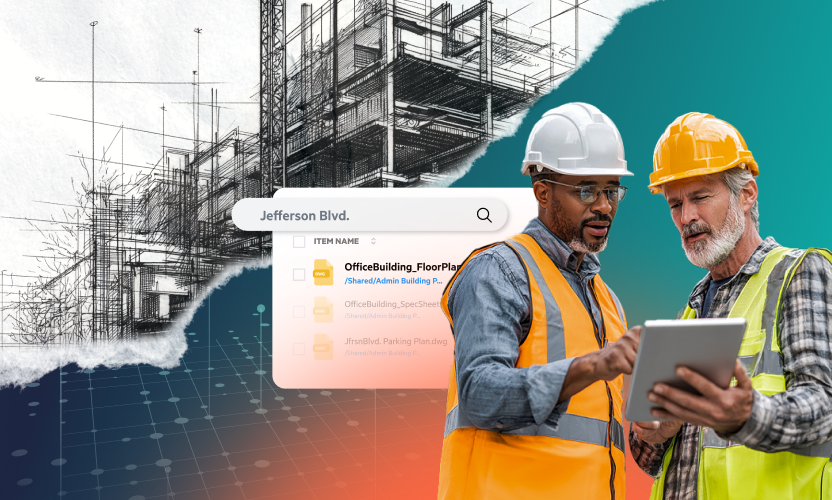
Yet many construction firms still struggle with information scattered across jobsite photos, RFIs, specifications, BIM models, emails, and project management systems. When project data is stored in disconnected locations, teams in the office and the field often work from different information, leading to slower decision-making, rework, and increased project risk.
As labor shortages, compressed schedules, and tighter margins continue to challenge the industry, construction firms need a better approach to construction data management, one that ensures project teams can securely access trusted information from anywhere.
Why Construction Firms Struggle to Connect the Office and Field
The success of a project often depends on how quickly teams can access and act on information. Unfortunately, many construction firms still struggle with disconnected systems and manual processes that make collaboration difficult.
Common challenges include:
- Field teams working from outdated drawings or specifications
- Jobsite photos, drone imagery, and field documentation stored in separate systems
- Delays caused by VPN access requirements or slow file transfers
- Difficulty locating project information across project management systems, collaboration platforms, and network drives
- Limited visibility into project status and field activity
When information is scattered, project teams waste valuable time searching for data instead of building. Small communication gaps can quickly become schedule delays, costly rework, or missed opportunities to mitigate risk.
Construction Projects Depend on Both Planning and Execution
Every construction project begins in the office: Estimators develop budgets, preconstruction teams review specifications, project managers establish schedules, and design teams create drawings and models that define how the project should be delivered.
Once construction begins, the field creates an equally important layer of project information through RFIs, site photos, daily reports, coordination decisions, inspections, and observations from the jobsite.
The challenge is that these two environments often operate independently. When office teams and field teams can’t easily share information, project knowledge becomes fragmented. Teams spend more time searching for answers, reconciling information, and managing document versions instead of focusing on project execution.
The most successful contractors create a connected information environment where planning, execution, and collaboration happen from a shared source of project truth.
How Connected Construction Workflows Improve Collaboration
Leading contractors take a different approach to project information. Rather than managing drawings, specifications, RFIs, photos, and project records in separate systems, they are creating connected construction data environments that make information accessible across the entire project lifecycle.
Modern construction data management focuses on five key factors:
- Centralizing access to project documents and records across teams
- Connecting project information across business and project systems
- Enabling visibility and collaboration on large files across active projects
- Establishing governance and security controls that support collaboration
- Turning project data into construction intelligence
The goal isn’t to replace existing construction systems. It’s to ensure information moves seamlessly between them so project teams can make decisions with confidence.
“The integration of Egnyte and Procore has been positively received by all. At a stroke, it has eliminated the challenges we had in the field with data storage and archiving project documentation.”
David Pratt, Director of Corporate and Operational Technology, Robins & Morton
How Egnyte Connects the Office and Field
Egnyte helps construction firms bring connected workflows to life by unifying project and business information on a secure platform designed for construction collaboration, governance, and real-time access.
Next, we’ll look at how the Egnyte platform addresses the five key steps you should include in your construction data management plan.
1. Creating a Single Source of Project Information
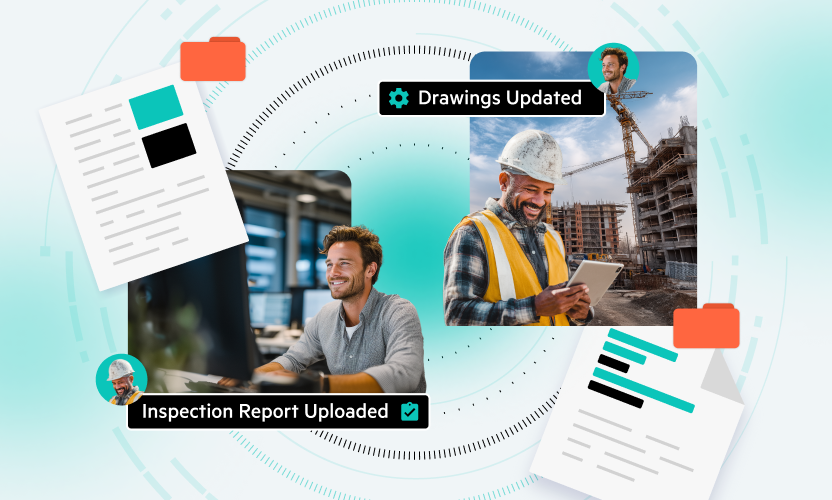
Egnyte centralizes project information across office and field teams, providing secure access to drawings, specifications, RFIs, submittals, BIM models, photos, and project communications from anywhere.
Whether teams are working in the office, on the jobsite, or at home, everyone works from the same current information. Built-in permissions, secure external sharing, and project-based access controls ensure the right people can access the right information without sacrificing security.
By bringing project files, communications, and business information into a unified platform, Egnyte eliminates the need for teams to search across multiple systems to find the information they need.
2. Connecting the Construction Technology Ecosystem
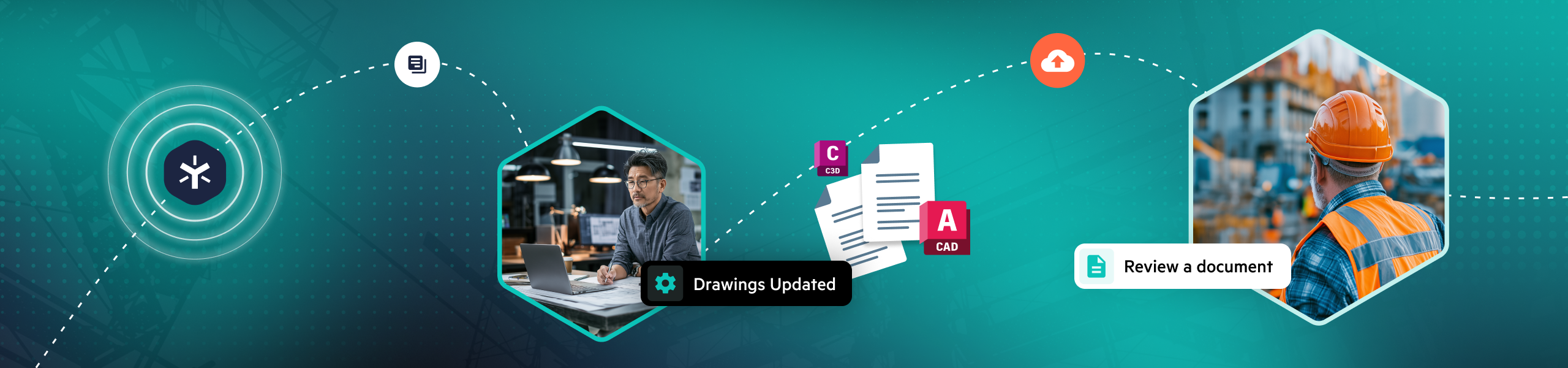
Construction firms rely on dozens of systems to manage projects. Rather than creating another silo, Egnyte serves as a governed information layer that connects project management, business systems, collaboration platforms, and project records into a unified environment.
Prebuilt integrations help synchronize project files, automate project creation, maintain metadata consistency, and connect information across systems without requiring teams to duplicate work.
Egnyte integrates with leading construction technologies, including:
- Procore
- Autodesk Forma, formerly Autodesk Construction Cloud
- Deltek VantagePoint
- Bluebeam
- Microsoft 365
- Authoring tools and BIM applications
By connecting project management, ERP, collaboration, and design systems, Egnyte helps ensure project information remains synchronized across the organization.
3. Accelerating Large File Collaboration
Construction teams regularly work with massive CAD, BIM, point cloud, and reality capture datasets that can challenge traditional file-sharing approaches. Adaptive Block Caching (ABC) intelligently streams and caches only the portions of large CAD and BIM files that users actively need. Rather than downloading entire files across the network, teams can open, edit, and save large project files with local-like performance while maintaining a single authoritative version in the cloud.
Egnyte's purpose-built AEC capabilities, which include Adaptive Block Caching, help teams:
- Open and save large files faster
- Reduce synchronization delays
- Maintain version control
- Support distributed project teams
4. Governing and Protecting Critical Project Information
Connecting the office and field requires more than accessibility—it requires trust. Granular permissions, audit trails, ransomware protection, and lifecycle governance help firms maintain control over project information while supporting collaboration across internal and external stakeholders.
Egnyte helps firms:
- Detect and recover from ransomware threats
- Control access permissions
- Maintain detailed audit trails
- Preserve project knowledge throughout the project lifecycle
The result is a secure, governed environment that supports collaboration without sacrificing control.
5. Transform Project Information Into Institutional Knowledge
Construction firms generate valuable knowledge on every project, but much of it remains trapped in project files, email conversations, and completed job records. Connected information environments make it easier to preserve lessons learned, identify recurring risks, and apply expertise across future projects. Over time, project information becomes a strategic asset that helps teams make faster, more informed decisions.
Imagine Every Team Working From the Same Information
Imagine a project manager, superintendent, and project engineer all working from the same trusted project information, regardless of location.
Imagine office teams, field teams, and external partners working from a single, trusted source of information throughout the project lifecycle.
Imagine project information flowing seamlessly between systems, teams, and workflows without manual coordination.
This is what connected construction workflows make possible.
When project information flows seamlessly between office and field teams, firms can reduce rework, improve coordination, and execute projects with greater confidence.
Connected information improves collaboration, reduces rework, and helps project teams make decisions faster.
But connected information creates something even more valuable than faster collaboration. It creates the foundation for organizational learning. When project information is connected, governed, and accessible, firms can preserve lessons learned, identify patterns across projects, and make better decisions based on past experience rather than institutional memory alone.
That's where the next phase of digital transformation begins.
Ready to Modernize Your Construction Data Strategy?
Learn how Egnyte helps construction firms centralize project information, connect workflows, strengthen governance, and build the foundation for future construction intelligence initiatives.